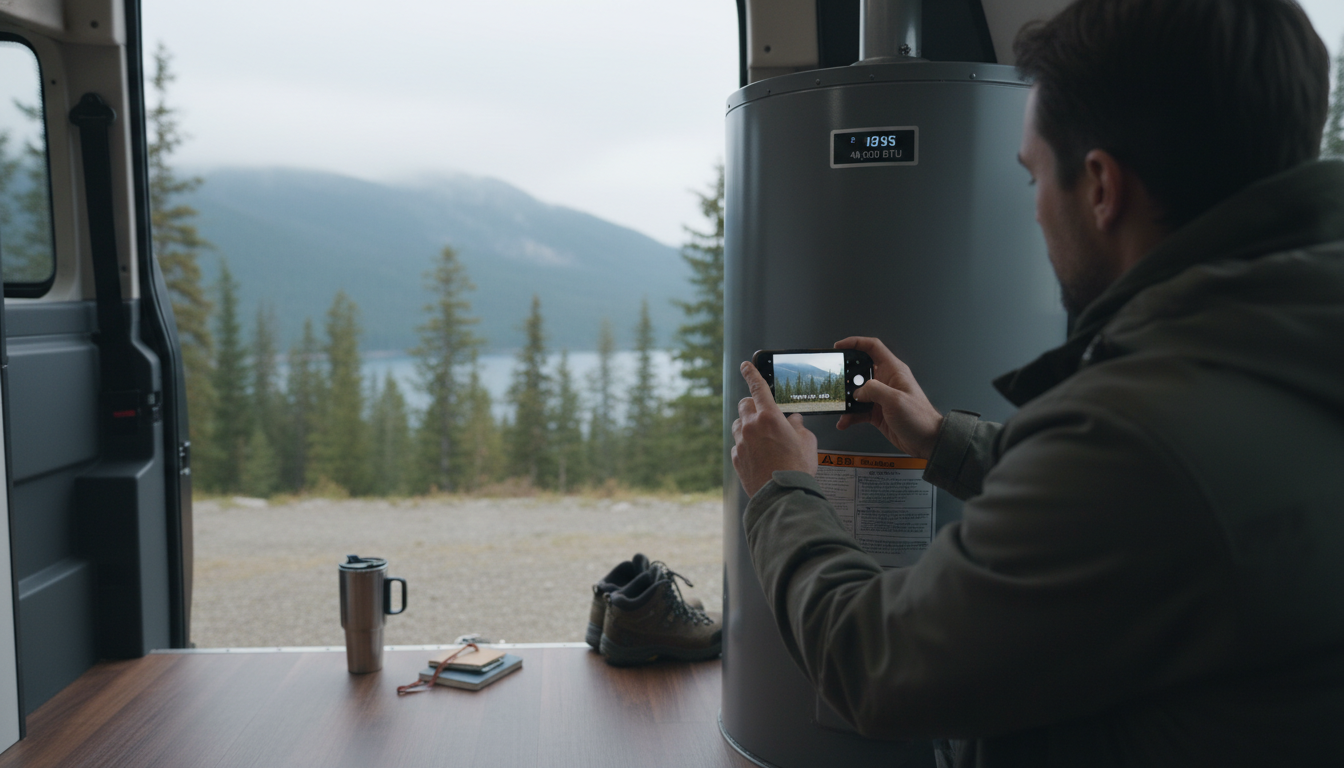
Most 50-gallon water heaters with a 40,000 BTU gas burner take about 45 to 75 minutes to heat a full tank from cold to a typical shower-ready temperature. A common real-world expectation is around one hour for a normal “cold-to-hot” recovery, assuming the unit is operating correctly and the tank is starting near incoming water temperature.
Heating speed depends on how many degrees the water must rise (the “temperature rise”). For example, raising 50 gallons by about 70°F (such as 50°F incoming water to 120°F setpoint) takes roughly 29,000 BTU of heat in the water. While the burner is rated at 40,000 BTU, not all of that becomes usable heat in the tank due to normal efficiency losses, so the effective heating rate is lower. That’s why the result often lands near the 1-hour mark rather than 45 minutes every time.
Incoming water temperature: Winter water can be much colder, increasing the temperature rise and extending heat-up time.
Thermostat setting: A higher setpoint (like 130–140°F) takes longer to reach than 120°F.
Efficiency and condition: Venting, burner tuning, and sediment buildup can all reduce heat transfer and slow recovery.
How “cold” the tank really is: If the tank is partly warm (not fully drained), recovery can be much quicker.
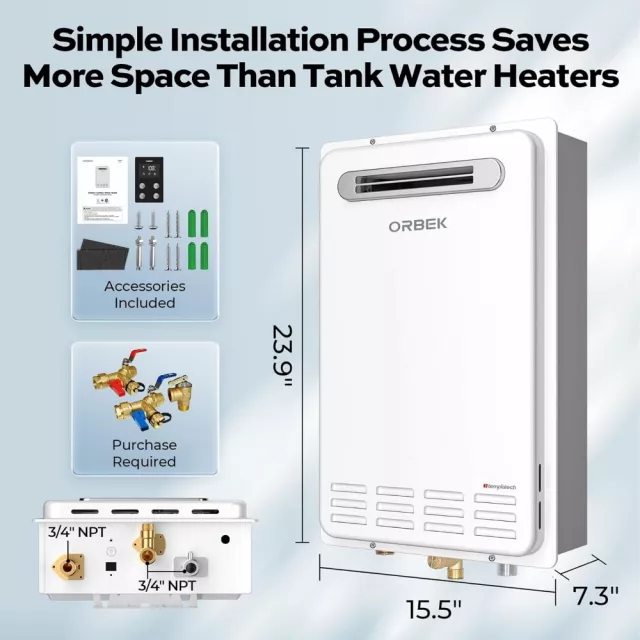
A storage tank heats a fixed volume, then you draw from it. If you’re comparing options—especially for continuous hot water—see this guide on tankless performance and sizing: 120,000 BTU outdoor propane tankless water heater (5.1 GPM) guide.
Many 40,000 BTU 50-gallon gas models recover roughly 35–50 gallons per hour at a 90°F temperature rise, depending on efficiency and design. A smaller temperature rise can increase that number, while colder inlet water can reduce it.
If you have any questions, here are some useful links:











Leave a comment