How do you install an LED lighted vanity mirror on a bathroom wall?
Installing an LED lighted vanity mirror is mostly about safe mounting and proper electrical prep. The exact steps vary by mirror size, weight, and whether it plugs into an outlet or is hardwired, but the workflow is consistent: locate studs, set the mounting hardware level, hang the mirror, then connect power.
1) Confirm power type and shut off electricity
Check whether your mirror is plug-in or hardwired. For hardwired models, turn off power at the breaker for the bathroom circuit and verify the wires are not live. If you’re replacing an existing wired mirror or light fixture, remove it and confirm you have access to the junction box and enough wire length for connections.
2) Measure, mark, and level
Decide the mirror height (commonly centered above the vanity and aligned with the faucet). Use painter’s tape to mark reference lines and a level to draw a straight mounting line. Measure the mirror’s mounting points (bracket slots, keyholes, or hanging bar) and transfer those measurements to the wall so the mirror lands exactly where intended.
3) Find studs and install anchors (if needed)
Use a stud finder to locate studs behind the drywall. If the mounting points don’t align with studs, use the wall anchors recommended by the manufacturer for the mirror’s weight and bathroom conditions. Drill pilot holes carefully to avoid plumbing or wiring, then install anchors or screws as required.
4) Mount the bracket and hang the mirror
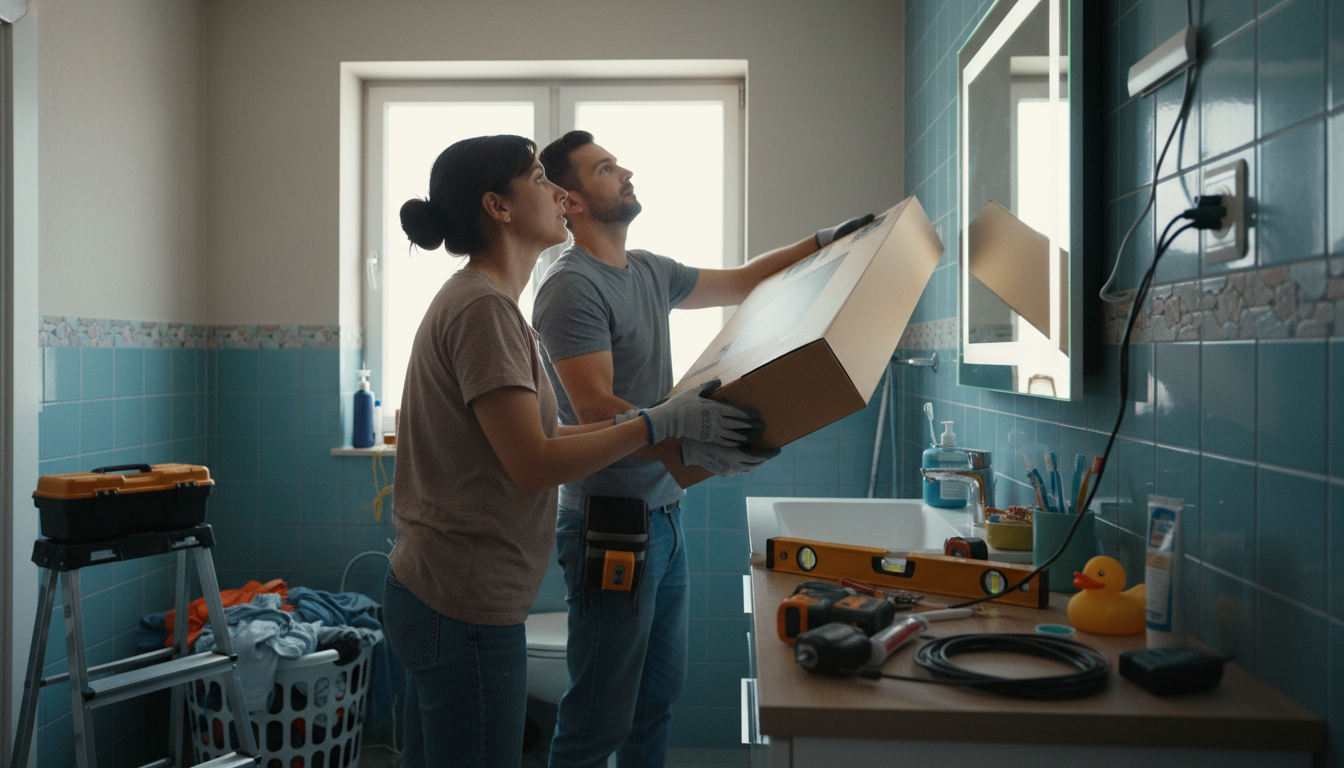
Attach the mounting bracket or hanging bar to the wall, rechecking level before fully tightening screws. Lift the mirror onto the bracket (a second person helps prevent drops and wall damage), then secure any locking screws or safety clips included with the hardware.
5) Make the electrical connection and test
For plug-in mirrors, route the cord neatly to a GFCI outlet and manage slack so it doesn’t pinch. For hardwired mirrors, connect ground, neutral, and hot wires using approved wire connectors, tuck wires into the junction box, and install any cover plate. Restore power and test lighting, dimming (if included), and features like anti-fog.
For feature and wiring considerations (including anti-fog and lighting options), see the detailed guide: https://emanuelo.com/guide-lighted-anti-fog-vanity-mirror-guide/.
FAQ
Do LED lighted vanity mirrors need a dedicated circuit?
Most don’t require a dedicated circuit, but they should be on a properly protected bathroom circuit and, when applicable, connected according to local code. If the mirror includes a heater/defogger and high output lighting, confirm the amperage requirements before wiring.
Recommended for you












Leave a comment