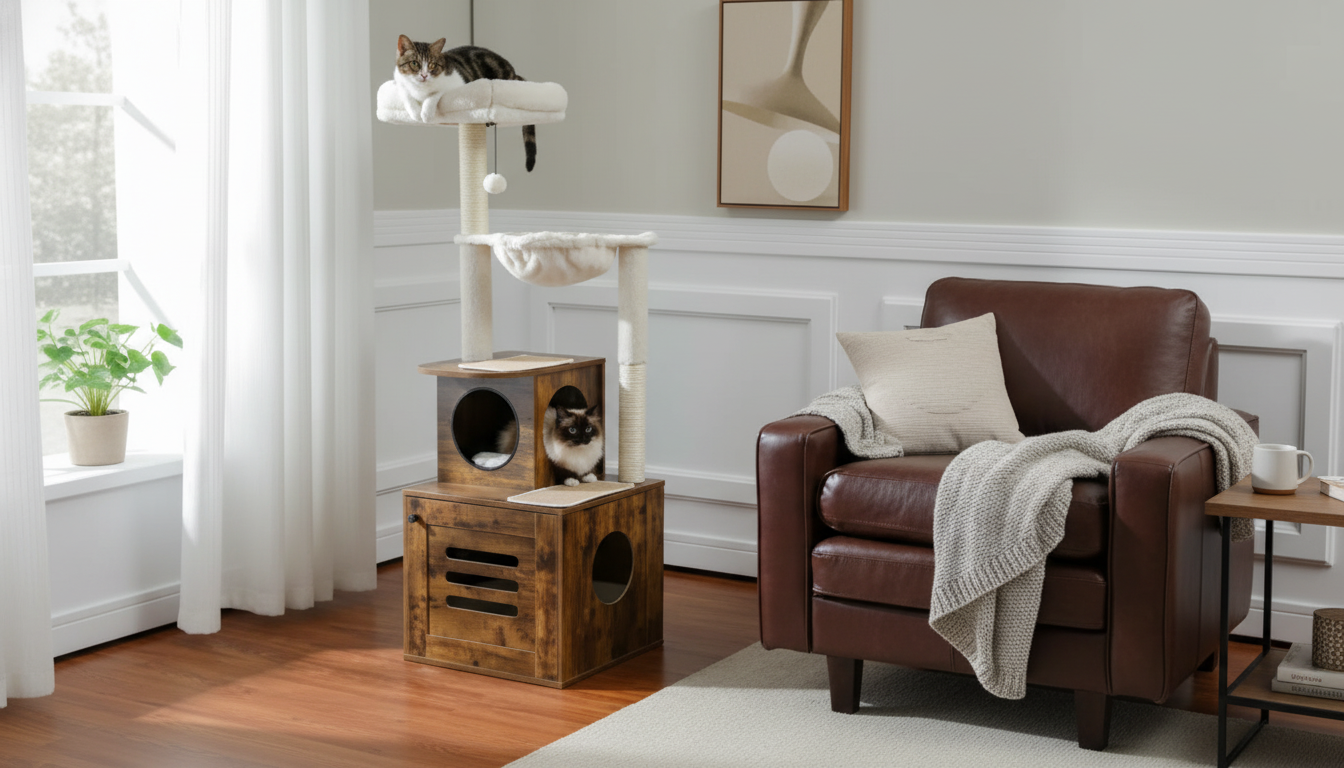
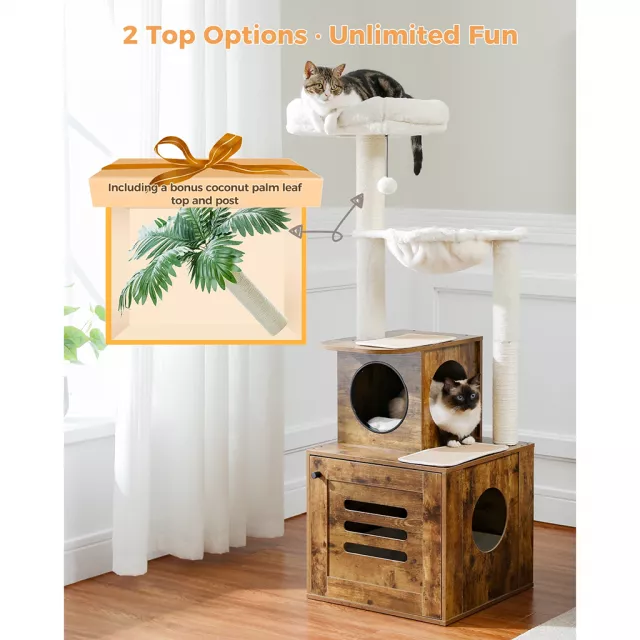
A single tower that combines climbing, lounging, scratching, and a hidden litter area can reduce clutter while giving cats a dedicated “home base.” This wooden cat tree tower is designed for households that want a sturdier, furniture-style look with practical features for everyday use.
A cat tower with an integrated litter compartment does more than stack platforms upward. It combines vertical territory with a private bathroom zone, which can help keep litter needs out of open living areas while still giving your cat a consistent, easy-to-find routine spot.
When a tower is doing double duty—cat furniture plus litter concealment—small details make a big difference in day-to-day satisfaction. A deluxe wooden unit should feel like stable home furniture, not a wobbly add-on.
| Feature | Why it matters | What to verify before buying |
|---|---|---|
| Enclosed litter compartment | Adds privacy and helps reduce visual clutter | Door/entry size, interior clearance, and access for cleaning |
| Multiple platforms | Encourages climbing, play, and rest | Platform spacing and usable surface area for your cat’s size |
| Scratching posts | Protects furniture and supports nail health | Post height, number of posts, and scratch material durability |
| Stable base | Prevents wobbling and tipping | Overall footprint, weight, and anti-tip options if needed |
| Easy-clean surfaces | Simplifies daily upkeep | Finish type, removable mats/panels (if included), and wipeability |
For many households, the biggest win is not just the hidden litter area—it’s how a consolidated tower can support calm, predictable habits. Cats thrive on reliable “stations” in the home, and a combined setup can make it easier to maintain that rhythm.
For guidance on litter box routines and what cats typically prefer, these resources are helpful: American Association of Feline Practitioners (AAFP) — Litter Box Management, ASPCA — Litter Box Problems, and International Cat Care — Litter tray tips.
Placement affects whether a built-in litter compartment feels inviting or “too exposed.” Aim for a spot that’s easy for your cat to access but not right in the middle of household traffic.
Most cats adjust quickly when the transition feels familiar. The goal is to keep scent, texture, and access predictable while your cat learns that the new tower is their new go-to spot.
Most cats adapt well when the tower is introduced gradually, the same litter is used, and the entry is easy to find. Keep it clean during the transition so the new compartment quickly becomes part of your cat’s routine.
It can if scooping is inconsistent, since odors may concentrate in enclosed spaces. Daily scooping, keeping airflow around the unit, and regular wipe-downs typically keep smells manageable.
Wood surfaces are often easier to wipe clean, especially around the litter area. The key is protecting the finish by cleaning up moisture quickly and sticking to a simple cleaning schedule.
If you have any questions, here are some useful links:











Leave a comment