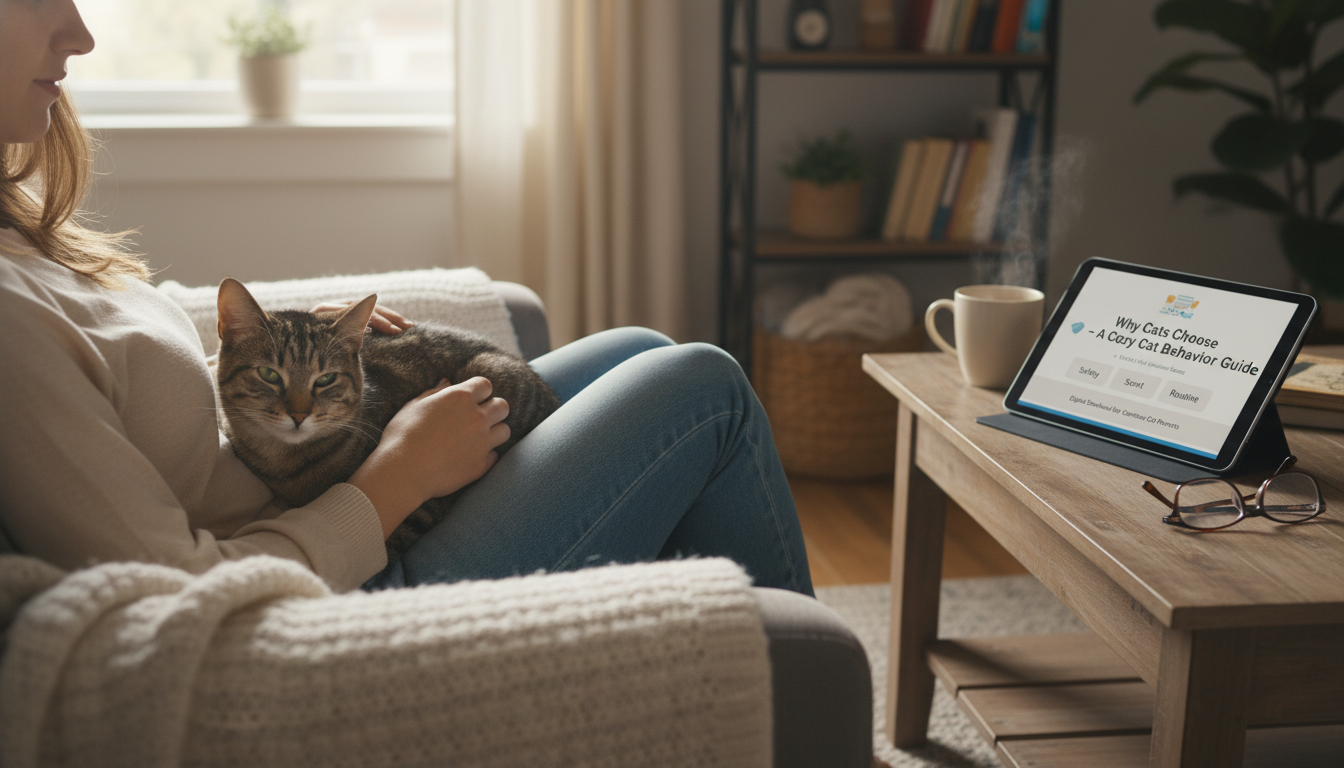
Lap choice can look like “favorites,” but cats usually make a practical decision based on safety, comfort, scent, and the way a person moves and responds. Once those pieces line up, a lap becomes a predictable “good spot” rather than a popularity contest. Understanding the signals behind lap preference helps reduce jealousy in multi-person homes and makes cuddle time more predictable and enjoyable.
To a cat, a lap isn’t just affection—it’s a resource. It’s warm, slightly elevated, and often less exposed than the floor, which can reduce how much vigilance a resting cat feels it needs.
Cats are excellent “pattern readers.” The lap they choose most often usually belongs to the person who feels safest and most consistent in the cat’s daily life.
| What the cat does | What it can mean | What to try |
|---|---|---|
| Steps on one lap, then moves to another within minutes | First lap felt unstable, noisy, or too hands-on | Stay still; let the cat settle before petting |
| Chooses the same person but only in one chair | Location matters as much as the person | Recreate that setup: blanket, lighting, and quiet |
| Sits facing outward with ears rotating | Enjoys contact but wants to monitor the room | Avoid leaning over; offer gentle cheek scratches |
| Avoids a lap after being picked up | Handling reduced sense of control | Invite with a pat on the blanket; avoid lifting |
| Chooses the person with the laptop/blanket | Warmth and soft surfaces are the real draw | Add a heated pad or fleece throw to other laps |
Cats are experts at selecting rest spots with strong “escape logic.” A lap that provides security and an easy exit is often the winner—especially in busy households.
Cats don’t just “like” a person—they like what that person reliably brings to the moment: familiar smells, gentle sounds, and a repeating pattern that predicts comfort.
For more on how everyday routines shape behavior, reputable references like the Cornell Feline Health Center and International Cat Care offer practical behavior insights grounded in feline needs.
If it helps to have a quick, printable reference for your family, consider Why Cats Choose Certain Laps – A Cozy Cat Behavior Guide | Cat Lap Preference Explained | Digital Download for Curious Cat Parents, designed to turn “favorites” into observable comfort cues and repeatable routines.
And if your home has both cats and dogs, calmer evenings can help everyone settle; When the House Is Quiet but Your Dog Isn’t – Nighttime Barking Guide | why does my dog bark at night | Calm Evenings Digital Download can be a useful companion for reducing nighttime disruptions.
Not usually. Most lap choices reflect comfort factors like stillness, warmth, scent, and predictable handling, plus the routines your cat has learned around a specific person or seat.
Use a consistent setup (same chair and blanket), stay calm and still, and keep petting light and consent-based. Reward the approach with a tiny treat and end sessions before your cat gets restless so the experience stays positive.
Often it’s overstimulation or a dislike of how/where they were touched. Try fewer strokes, switch to cheek or chin scratches, and pause frequently while watching for signals like skin twitching, tail flicks, or sudden tension.
If you have any questions, here are some useful links:












Leave a comment