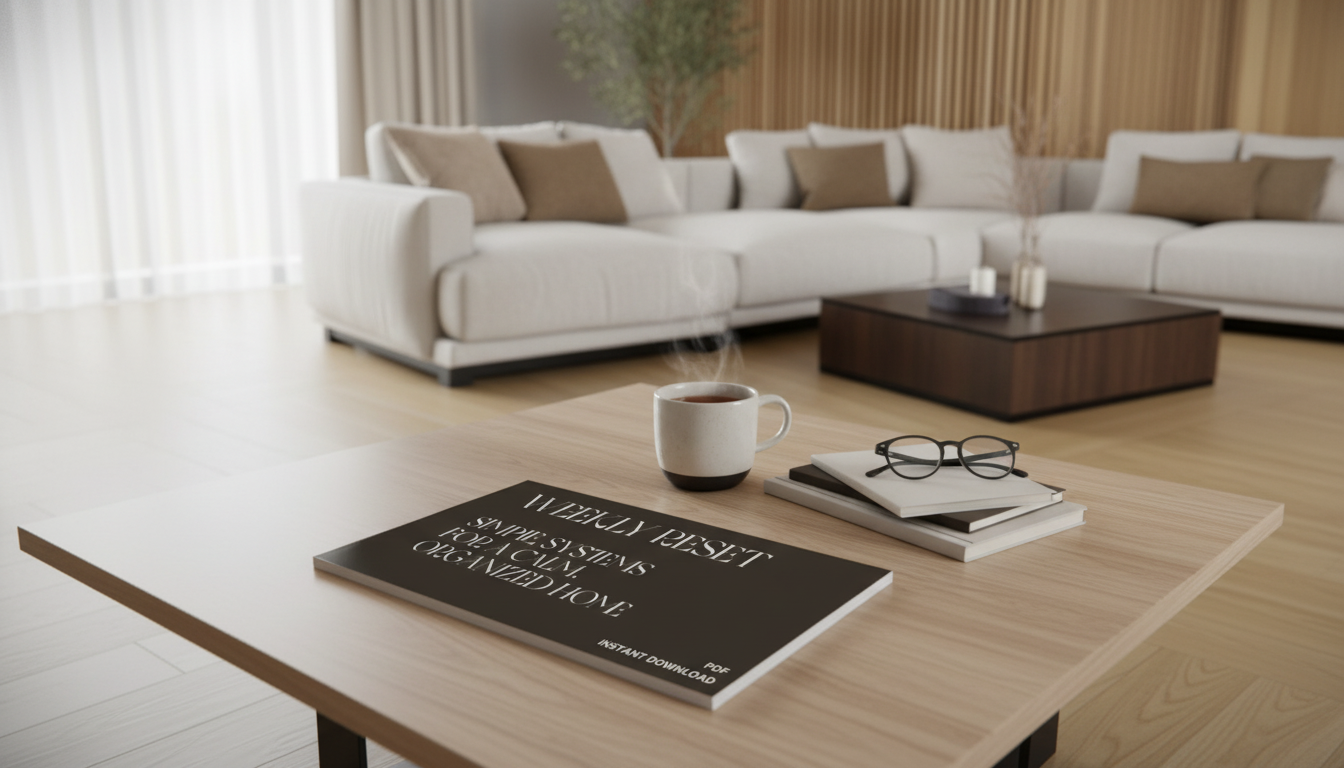
A home can feel peaceful without daily deep-cleaning or marathon tidying. A weekly reset creates a predictable rhythm: clear the clutter, refresh key spaces, plan the week, and start Monday feeling steady. This digital guide and printable routine planner is built for realistic homes—busy schedules, shared spaces, and the kind of mess that returns unless the system is simple. For more guidance, see [PDF] HOUSING HANDBOOK – University of Wisconsin – Stevens Point.
A weekly reset is a short, repeatable routine that brings your home back to “baseline”—not perfect, just reliably functional. When you know you’ll reset the same way each week, it becomes easier to keep up during the in-between days because you’re not constantly deciding what to do next. For further reading, see [PDF] Memphis Police Department Policy and Procedures.
Instead of trying to do everything, a reset targets high-impact tasks: clearing surfaces, keeping laundry moving, refreshing bathrooms and the kitchen, and handling the small “launch points” (like the entryway) that affect every day. The order matters, too. Doing the same sequence each week reduces decision fatigue, helps other household members predict the routine, and prevents clutter and backlog from quietly compounding into an all-day project.
If you want guidance on healthy cleaning and disinfecting basics—especially for kitchens and bathrooms—the CDC’s cleaning and disinfecting recommendations and the American Cleaning Institute’s cleaning resources are solid references.
The Weekly Reset: Simple Systems for a Calm, Organized Home (Digital Guide + Printable Routine Planner) is designed to be repeatable with minimal adjustment. You set up a few simple “homes” for common clutter, then run the same reset each week using printable pages that turn vague chores into a clear sequence with checkboxes and notes.
The emphasis is system-forward: set up once, then maintain with less effort. It also scales well across households—solo, couples, families, or shared living—because you can assign roles or shrink/expand the time block without changing the core flow.
| Element | Purpose | Best time to use it |
|---|---|---|
| Weekly reset checklist | Keeps the routine consistent and prevents missed basics | Reset day (weekend or midweek) |
| Routine planner pages | Plans time blocks and sequences tasks to avoid overwhelm | Before starting the reset |
| Home baseline prompts | Defines what “reset” looks like in each room | First setup, then quick review weekly |
| Notes/adjustments space | Captures what needs to change next week so the system improves | After finishing the reset |
A reset works best when it’s more like a loop than a list: you move through the same stages each time, so you’re never reinventing the process.
Do a fast pass with a bin (or a bag) per room. Your only job is to gather out-of-place items from surfaces and floors—no sorting yet. Then do a second pass returning items to their “homes.” This two-pass approach keeps you from getting stuck reorganizing a drawer while the rest of the house waits.
Start one load early so it’s finished by the time you’re wrapping up. Fold and put it away before bedtime to prevent the classic “clean pile” from becoming a new clutter hotspot. Then set up next week’s hamper flow so clothes land where they belong (even if it’s just one clearly labeled basket).
Focus on the spaces that create the most visual noise: kitchen counters and sink, a quick bathroom wipe-down, and taking out trash and recycling. When these areas feel clean, the whole home reads as calmer—even if not every room is spotless.
Reset the place where the day begins: keys, shoes, bags, jackets, work items, school items. If the “launch pad” is functional, mornings get smoother, and the household stops scattering essentials across counters and chairs.
Check the calendar, jot a few meal or grocery notes, and flag appointments that affect home routines (early mornings, late evenings, sports, travel). This is where the reset becomes more than cleaning—it becomes a stabilizing rhythm.
If you’re building a bigger whole-home approach (beyond just the weekly baseline), Reclaiming Your Home from the Mess Bundle: 10 Essential Guides & Checklists expands the same calm-and-consistent mindset into multiple focused guides.
Most homes can do a useful reset in 30, 60, or 90 minutes depending on the week. Start with the highest-impact areas (trash, dishes/sink, surfaces, laundry flow) and use timers in a consistent order to stay focused.
Yes—the planner works as a flexible template you can run on any day you have the time block. Consistency helps, but the sequence stays the same even if the day shifts week to week.
Assign simple roles (trash, laundry start, surface sweep) and use shared drop zones so the system has fewer steps. Keeping the reset short also makes it easier for others to join without feeling like it’s an all-day commitment.
If you have any questions, here are some useful links:














Leave a comment