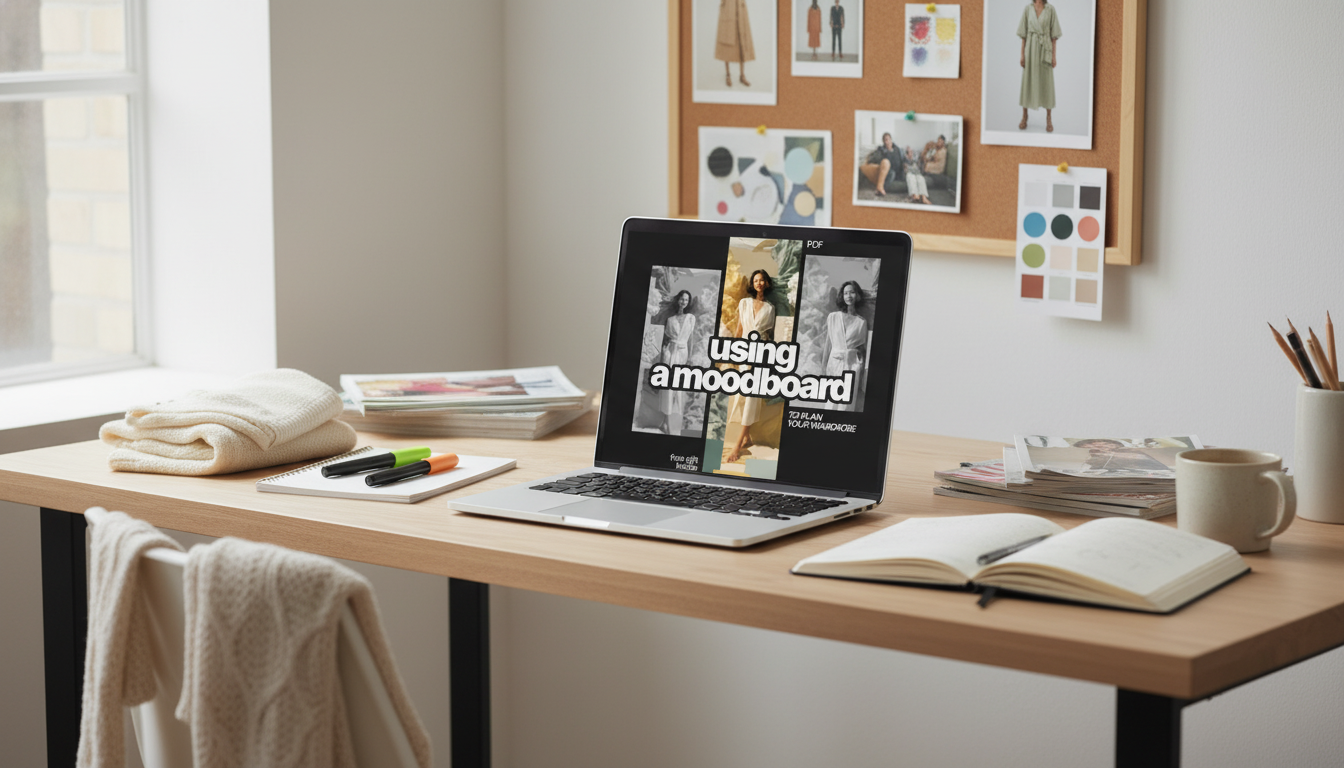
A moodboard turns vague style inspiration into a clear, repeatable wardrobe plan. Instead of buying random pieces that don’t combine into outfits, a good board helps define your colors, silhouettes, fabrics, and overall “outfit mood” in a way that matches real life—workdays, weekends, events, and your climate—so getting dressed becomes simpler and more personal. For more guidance, see How to Make a Fashion Mood Board — Designer Guide – StudioBinder.
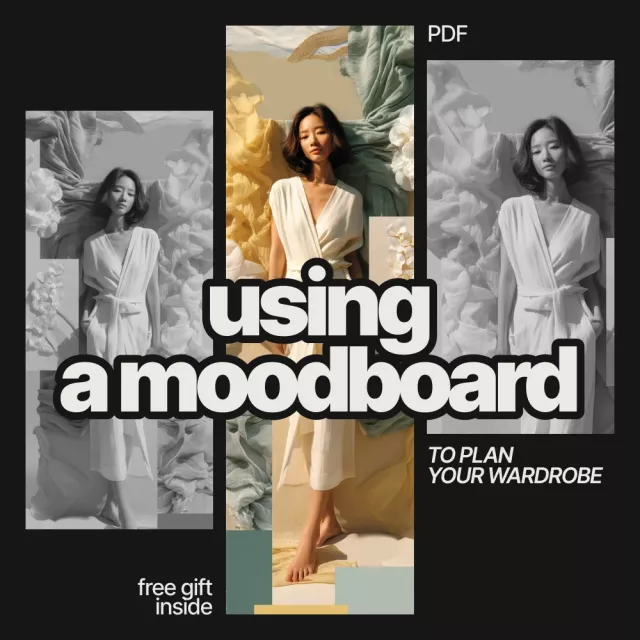
If you want a guided, step-by-step workbook-style approach, the digital guide Using a Moodboard to Plan Your Wardrobe: A Complete Guide for Stylish, Personalized Wardrobe Planning is designed to help you go from inspiration to a wearable plan without overbuying.
Think of your wardrobe moodboard as a visual “north star.” It’s not about copying looks exactly; it’s about capturing the consistent thread that makes outfits feel like you.
Before you save a single photo, set boundaries so the board reflects your calendar, not a fantasy closet.
For digital organization tips, Pinterest’s official guidance on boards can help you keep categories tidy and easy to update: Pinterest Help Center.
The collecting phase should be generous; the curating phase should be ruthless. That contrast is what makes the final board useful for shopping and outfit building.
If you like the idea of a physical board (or a style corner in your closet), you can also turn favorite outfit photos into something you see daily. The creative guide Frame It Your Way – diy photo frame decorating ideas Guide is a practical way to display printed looks, palette swatches, and styling notes without making it feel cluttered.
This is where the moodboard becomes a wardrobe plan. You’re translating visuals into rules that make shopping and closet editing faster.
| Moodboard element | What to look for | Wardrobe action | Example |
|---|---|---|---|
| Color palette | Repeated neutrals and 1–2 standout tones | Set a shopping filter and closet edit rules | Cream + black + olive, with a rust accent |
| Silhouettes | Common proportions (cropped/long, fitted/loose) | Choose 2–3 “default” outfit formulas | Wide-leg trousers + fitted knit + long coat |
| Textures | Surfaces that create the mood | Prioritize fabric upgrades over more items | Swap thin tees for ribbed cotton or merino |
| Footwear vibe | Toe shape, heel height, bulk vs. sleek | Limit to 2–3 shoe families | Loafers + clean sneakers + heeled boots |
| Accessories | Metal tone, bag scale, sunglasses shapes | Pick a consistent accessory “set” | Gold hoops, structured tote, square sunnies |
If you like tech-assisted planning (notes, checklists, automations for organizing your images and rules), Practical AI Toolkit for Non-Technical Minds can be a helpful companion for keeping your style blueprint, shopping list, and outfit formulas in one system—without needing to be tech-savvy.
Collect about 40–80 images to see your true patterns, then curate down to 12–25 core images. A smaller final set creates clearer shopping rules and makes your palette and silhouettes easier to repeat.
Start with bridge pieces—items that match your preferred silhouette or fabric even if the color needs adjusting. Use styling tweaks and small alterations, then phase in new pieces season by season instead of replacing everything at once.
Yes. A moodboard is one of the fastest ways to define a tight color palette and 2–3 outfit formulas, which then turns into a small, intentional list of essentials and a few high-impact upgrades.
If you have any questions, here are some useful links:








Leave a comment