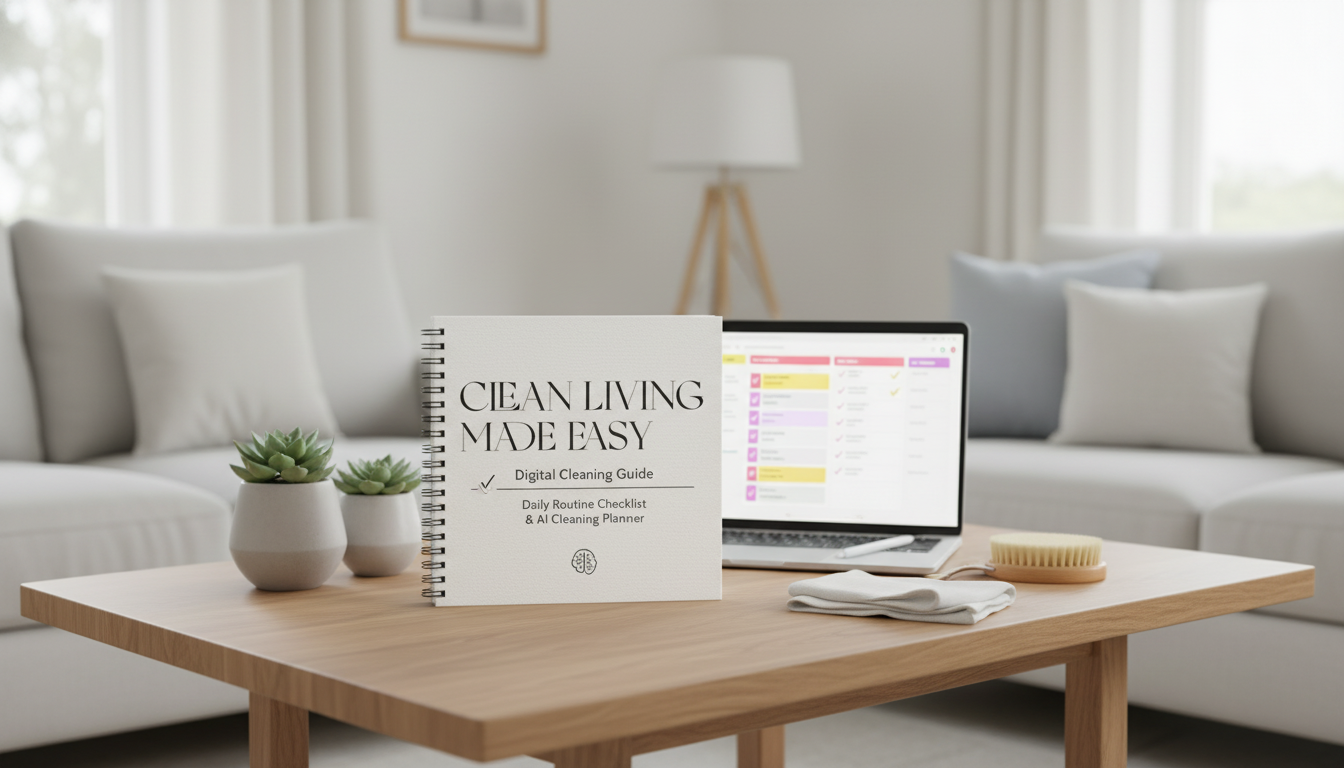
A tidy, organized home becomes far easier to maintain when cleaning is broken into small, repeatable actions. A digital guide paired with daily routine checklists and an AI-powered planning approach can reduce decision fatigue, keep clutter from snowballing, and help each room stay “company-ready” with less effort.
Most homes don’t get messy because people don’t care—they get messy because the plan is unclear. When cleaning tasks feel too big, too vague, or too time-consuming, it’s hard to start, which makes it easier for clutter to multiply.
When you reduce the number of decisions you have to make each day, cleaning becomes a rhythm instead of a weekend event.
Clean Living Made Easy digital cleaning guide, daily routine checklist, and AI cleaning planner is designed to turn “I should clean” into a short list of actions that actually fit real schedules.
| Component | What it does | Best for |
|---|---|---|
| Digital cleaning guide | Explains what to clean, how to clean it, and the order to do it | Reducing overwhelm and avoiding missed steps |
| Daily routine checklist | Turns chores into quick, repeatable habits | Busy days and staying on track |
| AI cleaning planner | Helps prioritize tasks and adjust the plan based on time and energy | People who want a flexible, personalized schedule |
A five-zone map keeps planning simple. Instead of managing dozens of “rooms,” you manage five categories that cover almost every home layout.
Once each zone has a definition of “done,” it becomes much easier to maintain, even when life gets busy.
Daily cleaning works best when it’s small on purpose. Think of it as “resetting” the home, not scrubbing everything spotless. Save heavy lifting for weekly rotation and seasonal deep cleans.
| Time block | Top tasks | Target time |
|---|---|---|
| Morning | Beds, quick pickup, start laundry (optional) | 5–10 min |
| Afternoon | One surface reset, quick sweep in a high-traffic spot | 2–5 min |
| Evening | Kitchen reset, living room pickup, bathroom wipe (rotation) | 10–20 min |
For anyone who wants to get more comfortable using tools like this (without being tech-savvy), Practical AI Toolkit for Non-Technical Minds can help you build confidence and keep the process simple.
When you’re choosing cleaning products or planning disinfecting routines, it’s also smart to follow credible health guidance. The CDC provides practical recommendations for cleaning and disinfecting in different settings (CDC — Cleaning and Disinfecting Your Facility). For safer chemistry benchmarks, the EPA’s Safer Choice program is a useful reference (EPA — Safer Choice Standard).
| Day | Focus | Examples |
|---|---|---|
| Mon | Floors | Vacuum high-traffic areas, spot-mop kitchen |
| Tue | Bathrooms | Toilet + sink scrub, mirror, towel refresh |
| Wed | Dust + surfaces | Wipe shelves, electronics, entry table |
| Thu | Kitchen detail | Stovetop, microwave, cabinet fronts |
| Fri | Laundry + linens | Sheets, towels, fold/put away |
| Sat/Sun | Flex + reset | Declutter one hotspot, plan next week |
If you want a single place to pull these pieces together—clear steps, repeatable checklists, and a flexible planning approach—Clean Living Made Easy is built to keep your home steady without turning cleaning into a second job.
For most households, 10–30 minutes total per day is enough when it’s split into small time blocks. The daily reset maintains order, while a weekly rotation handles deeper tasks like bathrooms, floors, and kitchen details.
No—checklists build habits through repetition, while an AI plan helps you prioritize and adapt when time or energy changes. Used together, the checklist keeps consistency and the AI plan keeps the day realistic.
Do a quick sequence: toss trash, remove dishes, gather laundry, clear the most visible surfaces, straighten pillows/blankets, then do a fast floor pass in high-traffic spots. Focus on what the eye notices first—open surfaces and the floor.
If you have any questions, here are some useful links:













Leave a comment