Allowance can disappear fast between snacks, rides, subscriptions, and last-minute school needs. A simple system—planned categories, weekly check-ins, and a few rules for “fun money”—helps teens and college students stay on track without feeling restricted. The goal isn’t perfection; it’s building a repeatable routine that keeps your money doing what you want it to do. For more guidance, see [PDF] Budgeting Worksheets For Highschool Students.
Before you split up your money, get clear on what the allowance is supposed to handle. That “why” becomes your budgeting rulebook. For further reading, see [PDF] Student Budgeting Worksheet.
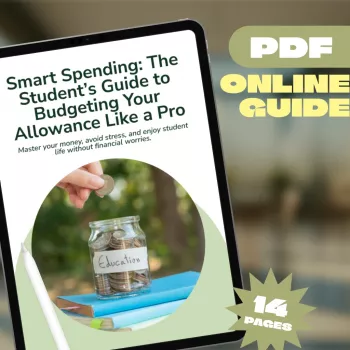
If you want an easy, no-app option that keeps categories visible, Smart Spending: The Student’s Guide to Budgeting Your Allowance Like a Pro (Printable Money Guide) is designed for quick weekly check-ins and clear category planning.
Most student budgets become easier when they’re organized into three buckets that cover every dollar.
| Allowance amount | Savings | Fixed costs / contributions | Everyday spending | Fun money cap |
|---|---|---|---|---|
| $20/week | $4 (20%) | $6 (30%) | $8 (40%) | $2 (10%) |
| $50/week | $10 (20%) | $15 (30%) | $20 (40%) | $5 (10%) |
| $200/month | $40 (20%) | $60 (30%) | $80 (40%) | $20 (10%) |
These percentages are a starting point. If you have no fixed costs, you might push savings higher. If you have heavy school-related expenses, you might temporarily reduce fun money instead.
A workable allowance budget doesn’t need a complex spreadsheet. It needs a quick order of operations.
Need a practical way to reduce impulse spending? Pair budgeting with “shopping friction”: wait 24 hours for non-essential purchases, and keep a short wish list. For clothing and seasonal needs (a common student expense), planning ahead with Plan Your Perfect Year-Round Wardrobe (Seasonal Closet Checklist) can help you buy less, buy smarter, and avoid last-minute “I have nothing to wear” spending.
Budgets fail when they’re treated like a once-a-month event. A 5–10 minute weekly check-in keeps things realistic and prevents surprise shortfalls.
If sticking to a new routine feels tough, a mindset tool can help you stay consistent without turning budgeting into a stress spiral. Think Happy: Affirmations Pack (5-in-1 Digital Download) can be used as a short daily reset—especially helpful when you’re trying to change habits like impulse spending or skipping check-ins.
If you want a ready-to-use layout built specifically for student allowance budgeting, Smart Spending: The Student’s Guide to Budgeting Your Allowance Like a Pro (Printable Money Guide) is an easy way to set categories, define fun-money rules, and keep your plan consistent week after week.
A practical range is 10–25%. Go lower if you have unavoidable fixed costs and a small allowance, and go higher when fixed costs are minimal. The most important part is saving consistently every cycle, even if the amount is small.
Use percentages instead of fixed dollar amounts, and fund fixed costs first. Then adjust your fun-money cap based on what’s left so your essentials and savings don’t get squeezed by random spending.
Cash envelopes make limits feel real and help prevent overspending, while a card is more convenient and can simplify tracking. A hybrid approach often works best: cash for fun money and small daily spending, and a card for fixed costs and savings transfers.
If you have any questions, here are some useful links:













Leave a comment