Snow Smart Driving: Essential Snow Driving Safety Tips for Confident Winter Roads
Winter roads demand different habits than dry pavement: smoother inputs, longer stopping distances, and better preparation before the first flake falls. Driving in snow and ice doesn’t have to feel like guesswork—when you understand how traction changes and you plan your moves early, the car has time to respond and you have time to correct. Below are practical, confidence-building steps for safer winter driving, plus a simple way to turn those steps into a routine you can repeat for commutes, road trips, and surprise storms.
Why winter driving feels unpredictable
Snowy roads can look consistent while behaving wildly differently from one block to the next. That unpredictability is usually traction-related—and traction is influenced by temperature, shade, road treatment, and how many tires have already packed the snow down.
- Traction changes fast: shaded areas, bridges, hills, and plowed vs. unplowed lanes can drive like entirely different surfaces.
- Most slides start with sudden inputs: hard braking, sharp steering, quick throttle changes, and tailgating create “no-room-to-fix-it” moments.
- Confidence comes from a plan: prepping your vehicle, choosing a safe speed early, and leaving enough space to react without panic.
For broader guidance and seasonal reminders, you can also review winter safety tips from NHTSA and AAA.
Set up the car before the weather hits
Winter control starts long before you turn the key. A well-prepped car won’t create traction where none exists, but it will help you see better, stop more predictably, and handle small problems before they become big ones.
- Check tires first: confirm tread depth and proper inflation (cold temperatures lower tire pressure). If you drive in frequent snow/ice, winter tires can be a major upgrade in grip.
- Confirm visibility basics: use winter washer fluid, replace worn wiper blades, and clear all windows/mirrors completely—not just a “peephole” on the windshield.
- Battery and fluids matter more in cold weather: weak batteries fail faster, and you’ll want the right coolant mix for freezing temperatures.
- Pack a simple winter kit: scraping tools, warmth, lighting, and traction basics reduce stress if traffic stalls or you slide into a shoulder.
Quick winter-ready checklist
| Item |
Target |
Why it matters |
| Tire tread |
Adequate tread (consider winter tires) |
Improves grip for turning and stopping on snow and slush |
| Tire pressure |
Set to door-jamb spec when cold |
Underinflation reduces stability and braking effectiveness |
| Washer fluid |
Winter-rated fluid |
Prevents freeze-ups and improves visibility in road spray |
| Wipers |
Clean, streak-free |
Reduces glare and improves reaction time in low visibility |
| Battery |
Strong starts in cold |
Cold cranking demands rise as temperatures drop |
| Emergency kit |
Warmth + light + traction basics |
Helps manage delays, slide-outs, or road closures |
Smart speed and spacing: the foundation of control
On snow and ice, the biggest safety upgrade is not “better reflexes”—it’s giving yourself time. Time comes from speed choices made early and space left around your vehicle.
- Slow down earlier than feels necessary: the goal is to avoid needing abrupt braking or steering at all.
- Increase following distance significantly: stopping distances can multiply on snow and especially on ice, even with ABS.
- Brake in a straight line: turning and heavy braking together often triggers a skid because the tires are trying to do too much at once.
- Look farther ahead: spotting red lights, stopped traffic, and downhill curves early prevents “last-second” moves.
How to steer, brake, and accelerate on snow
Winter control is mostly about being smooth. Imagine each tire has a limited “traction budget.” Spend that budget gradually, and save enough for surprises.
Hills, turns, bridges, and plow zones
For deeper context on how road conditions are monitored and managed, the FHWA Road Weather Management Program is a helpful reference point.
What to do if you get stuck or stranded
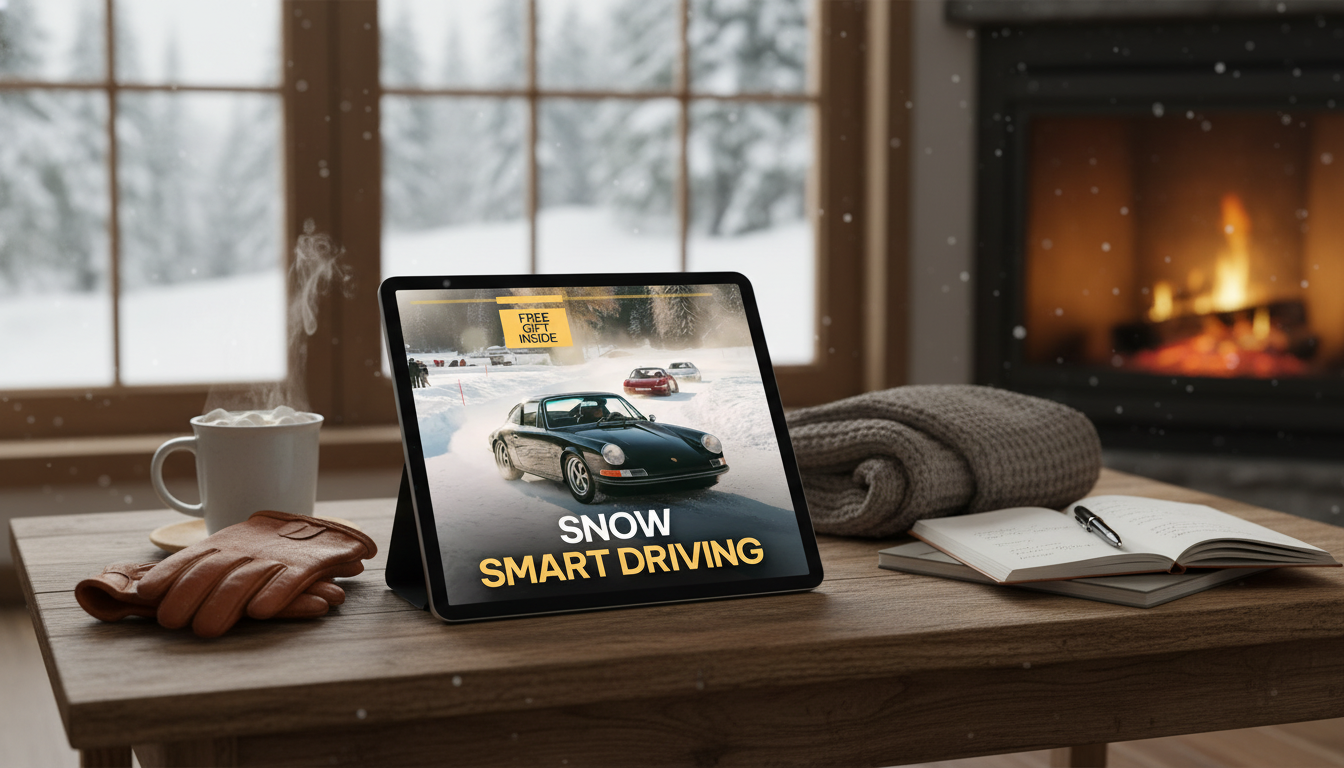
Turning tips into a repeatable routine with the Snow Smart Driving eBook
Knowing what to do is one thing; remembering it under stress is another. Snow Smart Driving: Essential Snow Driving Safety Tips eBook for Confident Winter Roads turns winter driving fundamentals into a step-by-step system you can review before storms, trips, or daily commutes. It’s designed to reinforce calmer braking/steering/acceleration and better decision timing—two of the biggest confidence boosters on slick roads. Price: $28.95 (in stock).
More digital guides to keep in your glovebox (phone)
FAQ
What’s the safest way to brake on snowy roads?
Brake earlier than usual and try to brake in a straight line before you need to turn. If your vehicle has ABS, use firm, steady pressure and let the system pulse rather than pumping the brakes.
Do winter tires really make a difference for everyday driving?
Yes—winter tires are designed to stay more flexible in cold temperatures and they typically improve grip and stopping performance on snow, slush, and ice. All-season tires can work in mild winter conditions, but they can be limiting when roads are consistently slick or temperatures stay low.
What should be in a winter car emergency kit?
At minimum: an ice scraper/brush, warm gloves and a blanket, a flashlight, a phone charger, and a small shovel plus a traction aid like sand or cat litter. A basic first-aid kit and water/snacks are also smart additions if you regularly travel longer distances.
Recommended for you











Leave a comment