Smart Ring vs Smartwatch: Which Tracks Your Sleep Best?
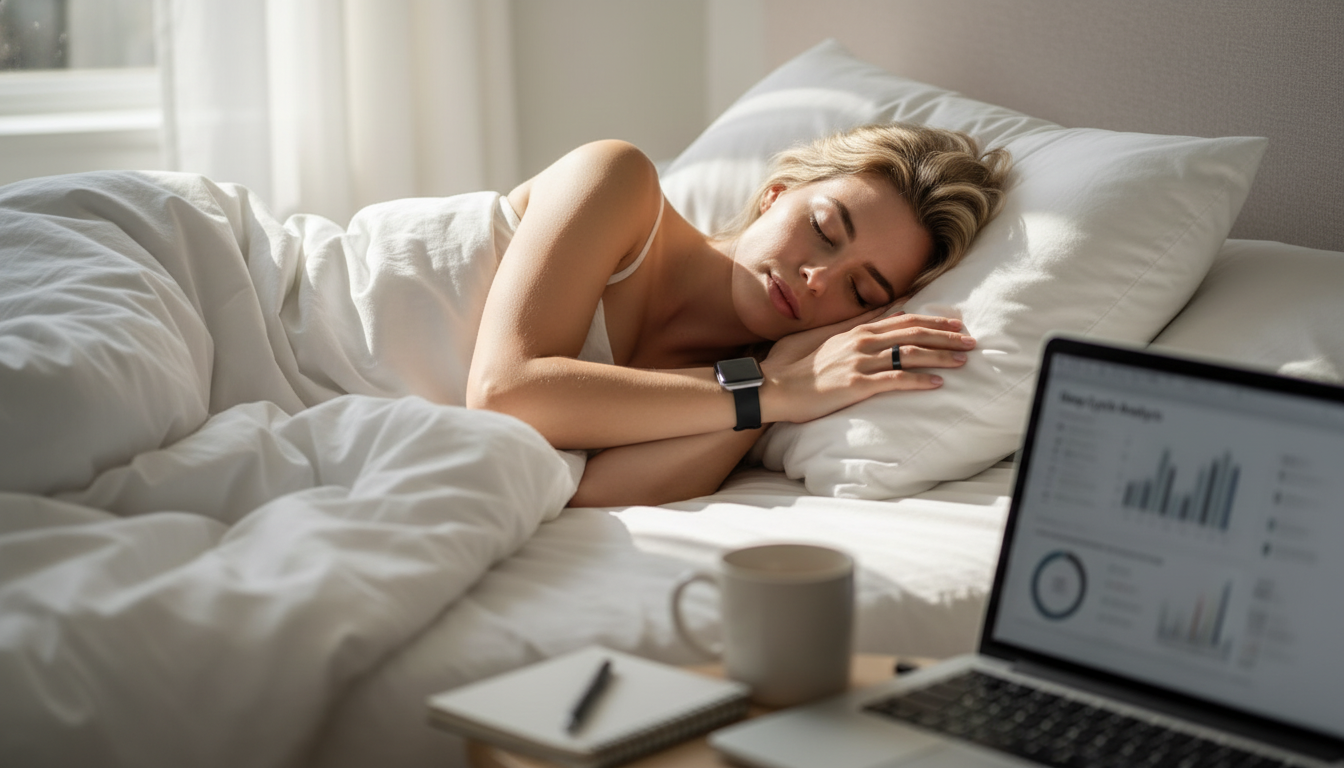
Sleep wearables promise clearer insights into how long and how well sleep happens, but smart rings and smartwatches approach the job differently. The best choice depends on comfort, sensor placement, battery habits, and how much detail is needed for recovery and daily performance.
What “sleep tracking” really measures
Most consumer wearables don’t “read” sleep directly. They estimate it using patterns in movement and heart-related signals, then turn those signals into a timeline you can act on.
Sleep duration
Duration is the foundation: total time asleep versus time in bed. Good start/stop detection matters because small errors (like counting late-night scrolling as sleep) can distort weekly averages.
Sleep stages
Stages like light, deep, and REM are estimates based on motion plus heart signals, not a clinical sleep study. Stage charts can still be useful for spotting trends, but they’re best treated as directional.
Sleep continuity
Continuity covers awakenings, restlessness, and how long it takes to fall asleep. Even when total sleep time looks “fine,” frequent micro-awakenings can explain groggy mornings.
Recovery signals
Many devices add resting heart rate, heart rate variability (HRV), and sometimes breathing-related metrics to estimate how well the body recovered overnight.
Context metrics
Consistency—bedtime regularity, naps, and week-over-week trend lines—often predicts how refreshed someone feels better than any single-night score.
How smart rings and smartwatches capture sleep data
Sensor placement: finger vs wrist
A ring measures from the finger, where blood flow signals can be strong and stable at night. A watch measures from the wrist, which can be more vulnerable to motion artifacts when the wrist bends or the band shifts during sleep.
Core sensors (and the add-ons)
Both categories typically use optical heart-rate (PPG) and an accelerometer. Some models add skin temperature, SpO2 (blood oxygen), or ECG features. These extras can improve context—especially for recovery patterns—but they still don’t replace medical-grade testing.
Common failure points
Fit drives data quality. Rings can fail if they’re too loose or if fingers get cold. Watches may struggle with a loose band, tattoos, hair, or side-sleep pressure that nudges the case off the skin.
Automatic vs manual sleep detection
Most modern wearables auto-detect sleep, but “edits” (fixing a missed bedtime or a late-night wake) may be needed occasionally. Over-editing can also skew long-term trends, so it’s best reserved for obvious errors.
Comfort and compliance: the hidden factor in better sleep tracking
The most accurate sensor in the world won’t help if it ends up on the nightstand.
Rings
Rings are usually less noticeable in bed, with no bright screen and fewer reasons to interact at night. That “invisible” feel can reduce distraction and boost nightly wear consistency.
Watches
Watches are convenient for quick check-ins, but they can feel bulky—especially for side sleepers. Some bands irritate skin or trap sweat, which can nudge people to take the watch off before bed.
Fit rules that protect comfort and data
Behavioral consistency
Accuracy expectations: what wearables can and can’t tell you
What they do well
Where rings often shine
Where watches often shine
When to be cautious
If sleep apnea is suspected or there’s persistent insomnia, unusual fatigue, or sudden changes, professional evaluation is more reliable than consumer wearables. For background, see the American Academy of Sleep Medicine’s overview of home sleep apnea testing: https://aasm.org/resources/factsheets/home-sleep-apnea-testing/. General sleep health guidance is also available from the NHLBI: https://www.nhlbi.nih.gov/health/sleep-deprivation.
Head-to-head comparison for sleep tracking
Smart Ring vs Smartwatch for Sleep Tracking
| Category |
Smart Ring |
Smartwatch |
| Bed comfort |
Usually very comfortable; minimal bulk |
Varies by size/band; can bother side sleepers |
| Signal stability at night |
Often strong pulse signal at finger; less wrist-bend interference |
Can be good, but more prone to motion/band-fit issues |
| Charging routine |
Often longer battery; fewer charge interruptions |
More frequent charging; missed nights are common |
| Sleep insights depth |
Strong sleep-first focus; trend-friendly dashboards |
Ranges from basic to advanced; depends heavily on brand/app |
| Daytime context (workouts, apps, calls) |
Limited smart features |
Strong smart features + workouts + notifications |
| Distraction risk at night |
Low (no big screen; fewer alerts) |
Higher unless notifications and screen are managed |
Which one is “best” for different sleepers
Light sleepers
Side sleepers
Athletes and structured training
Data minimalists
People who forget to charge
Getting better sleep data from either device
Fit first
Create a clean nighttime mode
Track habits alongside data
Validate with how you feel
Know when to seek medical guidance
Loud snoring, gasping, morning headaches, and daytime sleepiness warrant professional attention. A clinical sleep study overview is available via MedlinePlus: https://medlineplus.gov/lab-tests/sleep-studies/.
Recommended guides to help you choose
FAQ
Are smart rings more accurate than smartwatches for sleep?
Accuracy varies by brand and fit, but rings can benefit from a strong finger PPG signal and high comfort that boosts nightly wear. Watches can be highly capable too, especially when they add richer daytime context. For most people, trend consistency over several weeks matters more than perfect staging.
Can a wearable detect sleep apnea?
Wearables may flag patterns that look like breathing irregularity or oxygen dips, but they can’t diagnose sleep apnea. If symptoms like loud snoring, choking/gasping, or excessive daytime sleepiness are present, a clinical evaluation is the safer path.
What matters most for better sleep tracking: stages or consistency?
Consistency usually matters more: wearing the device nightly and keeping reliable sleep/wake timing produces cleaner trends. Stage data is an estimate, so it’s best used directionally while focusing on habits that improve overall sleep quality.
Recommended for you













Leave a comment