A fresh coat of paint is one of the fastest ways to change how a room feels—brighter, calmer, cleaner, or more dramatic—without replacing furniture. With a simple plan, the right sheen, and a prep routine that prevents peeling and patchy coverage, even a weekend project can look polished. The steps below walk through planning, choosing finishes and colors, prepping like a pro, painting efficiently, and adding renter-friendly upgrades that look intentional.
| Goal | Best paint move | Suggested sheen | Extra tip |
|---|---|---|---|
| Make a room feel larger | Light neutral walls + crisp trim | Eggshell (walls), semi-gloss (trim) | Paint trim a brighter white than walls for contrast |
| Add coziness | Warm greige, clay, or muted terracotta | Eggshell | Match undertones with flooring (warm vs cool) |
| Create a focal point | Single accent wall or painted arch | Matte/flat (walls) | Use painter’s tape + level for clean geometry |
| Hide wall imperfections | Mid-tone colors over bright white | Matte/flat | Avoid high sheen on bumpy walls |
| High durability for busy spaces | Washable paint line in mid-tone color | Satin | Let cure fully before scrubbing |
If indoor air sensitivity is a concern, choose low-VOC or zero-VOC options and ventilate well. The EPA’s overview of VOCs and indoor air quality is a helpful baseline for understanding what “low odor” does and doesn’t mean.
In older homes, take extra precautions around potential lead paint. The CDC’s guidance on lead in paint and household dust is worth reviewing before sanding or scraping.
Good airflow helps paint set up more predictably. For general indoor ventilation basics, OSHA’s overview of indoor air quality is a practical reference.
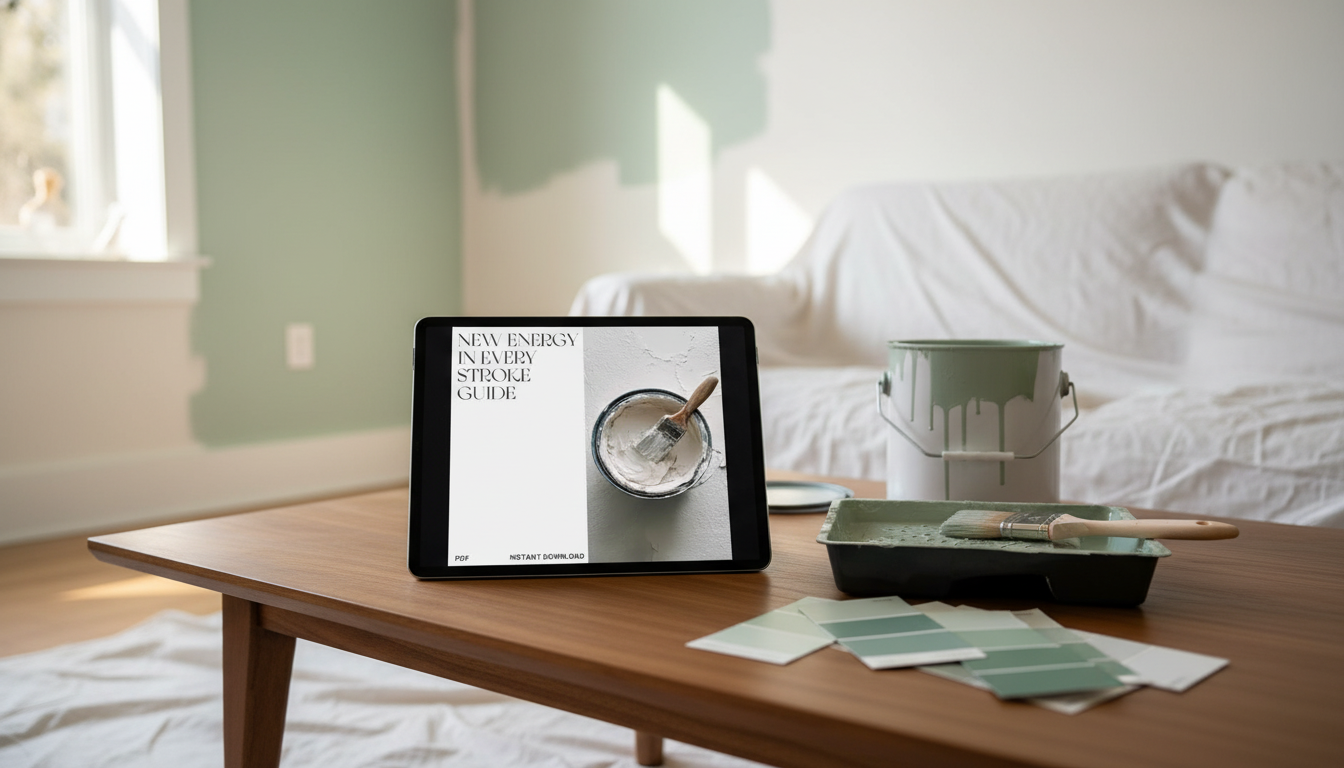
For a structured, room-by-room approach—planning prompts, prep checklists, and a clear painting sequence—use the New Energy in Every Stroke digital download guide. It’s designed for DIY enthusiasts, renters, and interior design lovers who want fewer surprises and cleaner results.
If the project also involves clearing surfaces, simplifying closets, or resetting chaotic corners before you paint, the Reclaiming Your Home from the Mess Bundle can help you create the kind of “blank canvas” that makes fresh paint feel twice as impactful.
Most paints cover roughly 350–400 square feet per gallon per coat, but textured walls, color changes, and extra coats can increase usage. Measure wall area (minus large openings), plan for two coats, and add primer if you’re covering stains or making a dramatic color shift.
Eggshell is a safe, widely accepted choice that balances a low-shine look with easier cleanup than flat paint. Satin works well for high-wear rentals (hallways, kitchens), and if you’re only touching up, matching the existing sheen is key to avoiding flashing.
Paint is often dry to the touch within a few hours, but it can take several days to cure (harden) fully. Light furniture can usually return after overnight drying, while heavy pieces and tight contact points are safer after 48–72 hours to prevent sticking or impressions.
If you have any questions, here are some useful links:














Leave a comment