
Rebuilding confidence after a toxic relationship can feel confusing: relief and grief often show up at the same time, and self-doubt can linger even after leaving. A simple, repeatable checklist helps turn “healing” into small, doable actions—so boundaries get stronger, self-trust returns, and daily life starts to feel like yours again.
Many people walk away from toxic love and wonder why they don’t instantly feel “free.” Common after-effects include self-doubt, hypervigilance, people-pleasing, guilt, shame, and the heavy sense of being emotionally “behind.” These aren’t character flaws—they’re predictable responses to long-term stress and instability.
Toxic dynamics often involve manipulation, criticism, control, isolation, and intermittent reinforcement (periods of affection followed by withdrawal). Over time, those patterns retrain your brain to second-guess your instincts and chase approval. Confidence usually doesn’t return through willpower alone; it rebuilds through safety, consistency, and supportive relationships that let your nervous system stand down.
If you’re trying to make sense of what happened, focus on your lived experience—what was said, what was done, and how it shaped your beliefs and behaviors—without trying to diagnose anyone. Naming the impact clearly is a form of self-respect.
Before you “level up” your confidence, aim for emotional safety. The first 72 hours after a trigger (or a fresh breakup) are about reducing harm and creating steadiness.
Confidence comes back fastest when you can prove to yourself—through repeated actions—that you’re safe with you. Use the structure below and keep it simple enough to repeat on low-energy days.
| Timeframe | Action | What it strengthens |
|---|---|---|
| Daily | One self-respecting decision (small but intentional) | Self-trust |
| Daily | 2-minute reality check (fact vs. story) | Emotional clarity |
| Weekly | Practice one boundary in real life | Self-worth |
| Weekly | Do one identity-rebuilding activity | Confidence and joy |
| Monthly | Progress review using evidence | Hope and momentum |
If you want a structured way to repeat supportive self-talk without having to invent new phrases every day, Think Happy: Affirmations Pack for daily motivation can be used as a quick morning reset or a nighttime wind-down.
Support groups can also reduce isolation and normalize your timeline. For practical mental health coping tools, the National Institute of Mental Health has reliable guidance.
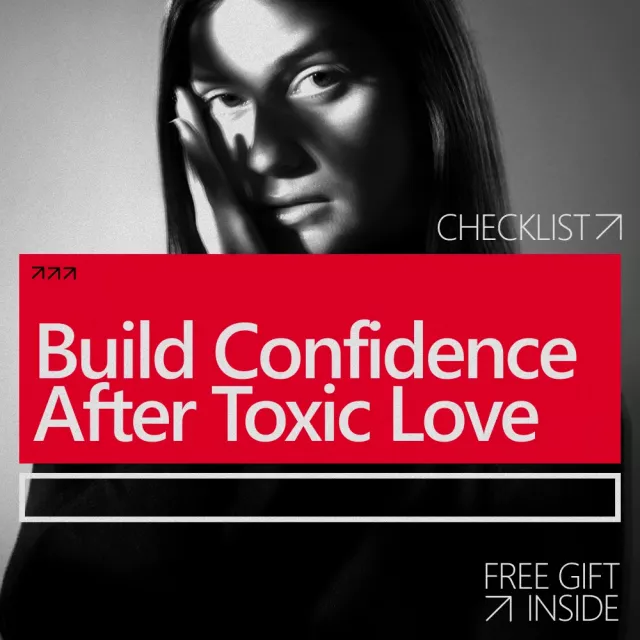
If you want a ready-to-use page you can print, mark up, and repeat as a weekly reset, Build Confidence After Toxic Love healing checklist (digital download) is designed to turn healing into clear, doable actions. A simple approach: choose three items to focus on this week, then add one more next week.
Timelines vary, but measurable signs—better sleep, clearer boundaries, less rumination, and more self-trust—often show up in weeks, not years. A focused 30-day plan with daily and weekly steps can build momentum, and professional support can speed recovery when symptoms are intense.
Missing them can come from attachment, intermittent reinforcement, habit loops, loneliness, and grief—not proof that the relationship was safe. When the urge hits, ground your body, name the feeling, and limit contact so your brain has space to recalibrate.
Try micro-actions like keeping one promise to yourself, doing a 2-minute reality-check journal, moving your body gently, eating something nourishing, saying no once, reconnecting with one safe friend, or finishing a small task—each one reinforces self-trust.
If you have any questions, here are some useful links:













Leave a comment