Flattering Styles for Petite Frames: Style, Fit, and Proportion Tips That Make Outfits Work
Petite style becomes easier when outfits are built around scale: where hemlines land, how long seams run, and how much visual “weight” a piece carries. The goal isn’t to follow rigid rules—it’s to choose proportions that lengthen the line, define the waist comfortably, and keep details in harmony with a smaller frame.
Petite proportions: the three levers that change everything
Most petite outfit wins come down to three simple proportion tools. Once these are dialed in, almost any aesthetic—minimal, classic, edgy, romantic—gets easier to wear.
- Vertical line: Long, uninterrupted lines (monochrome, center seams, long outer layers) visually extend height. Even small moves—like a top and bottom in similar color depth—can reduce “chop” and read longer.
- Waist placement: A slightly higher visual waist often lengthens the legs without changing comfort. Think higher rises, tucks, wrap shapes, or jackets that stop near the hipbone.
- Scale: Pocket size, print density, collar width, and hardware should look balanced rather than oversized. When the details are too large, the clothing can wear the person instead of the other way around.
Tops that flatter: necklines, sleeves, and length
Tops set the proportion “math” for the whole outfit because they determine where the torso ends and the legs begin.
- Necklines that open the upper chest (V-neck, scoop, soft square) can lengthen the neck and reduce visual bulk at the collarbone.
- Cropped-to-hipbone lengths (or a tidy tuck) usually look cleaner than tops that stop at the widest part of the hip.
- Sleeves: Bracelet length, slim 3/4, or neatly cuffed long sleeves keep the arm line light and intentional—especially helpful if standard sleeves bunch at the hand.
- Details to watch: Oversized chest pockets, very wide collars, and long tunic hems can overpower petite scale unless balanced with slim bottoms and a defined waist.
Quick top-length guide for petite frames
| Top length/feature |
Why it tends to flatter |
Easy pairing idea |
| Hits at high hip/hipbone |
Keeps torso from looking longer than legs |
High-rise jeans + low-profile sneakers |
| Full tuck or half tuck |
Defines a higher waist and creates leg length |
Straight-leg trousers + belt |
| Cropped jacket over longer top |
Adds structure without swallowing the frame |
Tank + high-rise skirt |
| V-neck or open collar |
Creates vertical space at the neckline |
Lightweight knit + tailored pants |
| Slim 3/4 sleeve |
Shows wrist (a smaller point) and lightens the arm line |
Wrap top + midi skirt |
Bottoms that lengthen: rise, leg shape, and hem
For petite frames, pants and jeans are less about a single “best cut” and more about where the rise and hem place your proportions.
- Rise: High-rise and mid-rise often create a longer leg line; very low-rise can shorten the legs visually, especially with untucked tops.
- Leg shape: Straight, slim-straight, and gentle bootcut can elongate. Very wide, floor-pooling legs may overwhelm unless tailored and paired with height-adding shoes.
- Hem placement matters: Ankle-length that shows a bit of ankle can feel lighter than a hem that cuts the leg at its widest point (often mid-calf).
- Shorts and skirts: A clean, slightly higher waist with a simple hem keeps the look sharp; excessive pleats or heavy cargo pockets can add bulk.
If a favorite pair almost works, hemming is usually the quickest upgrade—clean lines matter in fit, and garment proportion is a core part of good construction and comfort (see Fashion Design: Garment Fit).
Dresses and skirts: simple lines, strategic breaks
Dresses can be a petite cheat code because they naturally create a single vertical column—especially when color and pattern don’t fight the silhouette.
- Wrap, sheath, and fit-and-flare silhouettes often work well because they define the waist and keep lines clean.
- Midi lengths can be very flattering when the hem hits a narrow point (just below knee to mid-calf depending on leg shape) and the shoe keeps the line going.
- Slits, vertical seaming, and tonal outfits reduce visual breaks and help the silhouette read longer.
- Pattern scale: Smaller-scale prints or lower contrast usually look more proportional on petite frames. Contrast influences what the eye notices first, and high contrast can create stronger “breaks” (a helpful refresher on perception is Britannica’s overview of color).
Outerwear that doesn’t overwhelm
Shoes and accessories: small choices with big impact
A practical outfit formula: build a long line, then add shape
Ebook guide: a shortcut to outfits that feel balanced
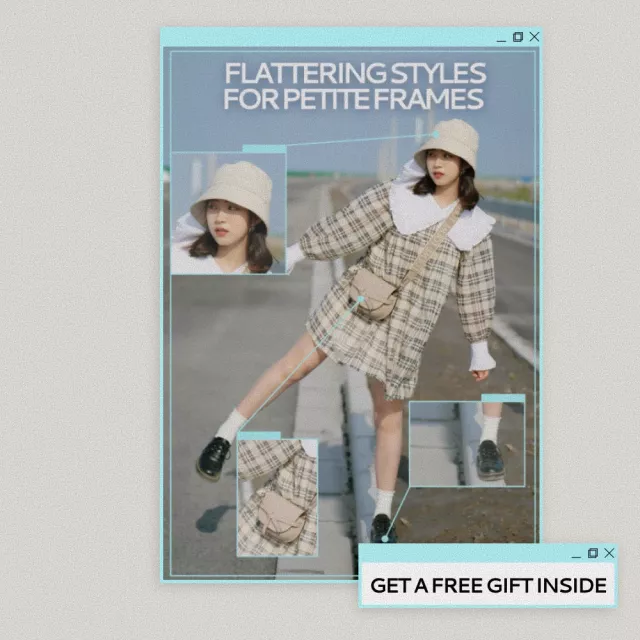
If you want a quicker way to put these proportion ideas into repeatable outfits, Flattering Styles for Petite Frames – Ebook Guide to What Outfits Are Flattering for Petite People | Style, Fit & Proportion Tips organizes petite-friendly outfit ideas by fit and proportion so pieces are easier to choose with less trial and error.
To make styling even easier across seasons, Plan Your Perfect Year-Round Wardrobe | Seasonal Wardrobe Checklist & Closet Planning Guide | Digital Download is a simple planning companion for building outfits you can repeat confidently—without overbuying or overcomplicating.
FAQ
What clothing styles are most flattering for petite frames?
Clean lines, a defined (often slightly higher) waist, and appropriately scaled details tend to be the most flattering. Great staples include wrap dresses, high-rise straight-leg pants, V-neck tops, and cropped jackets that stop at the hipbone.
Are midi dresses and skirts flattering on petite people?
Yes—when the hem hits a narrower part of the leg and the outfit maintains a continuous line (tonal colors, a defined waist, and streamlined shoes). A quick hem adjustment or a shoe with a sleeker toe can make a midi feel instantly more petite-friendly.
What should petite shoppers look for when tailoring clothes?
Prioritize the alterations that change proportion the most: hem length, sleeve length, and shoulder fit. Depending on the item, raising a waist seam, adjusting pant rise, or narrowing the leg can also create a cleaner, longer line.
Recommended for you








Leave a comment