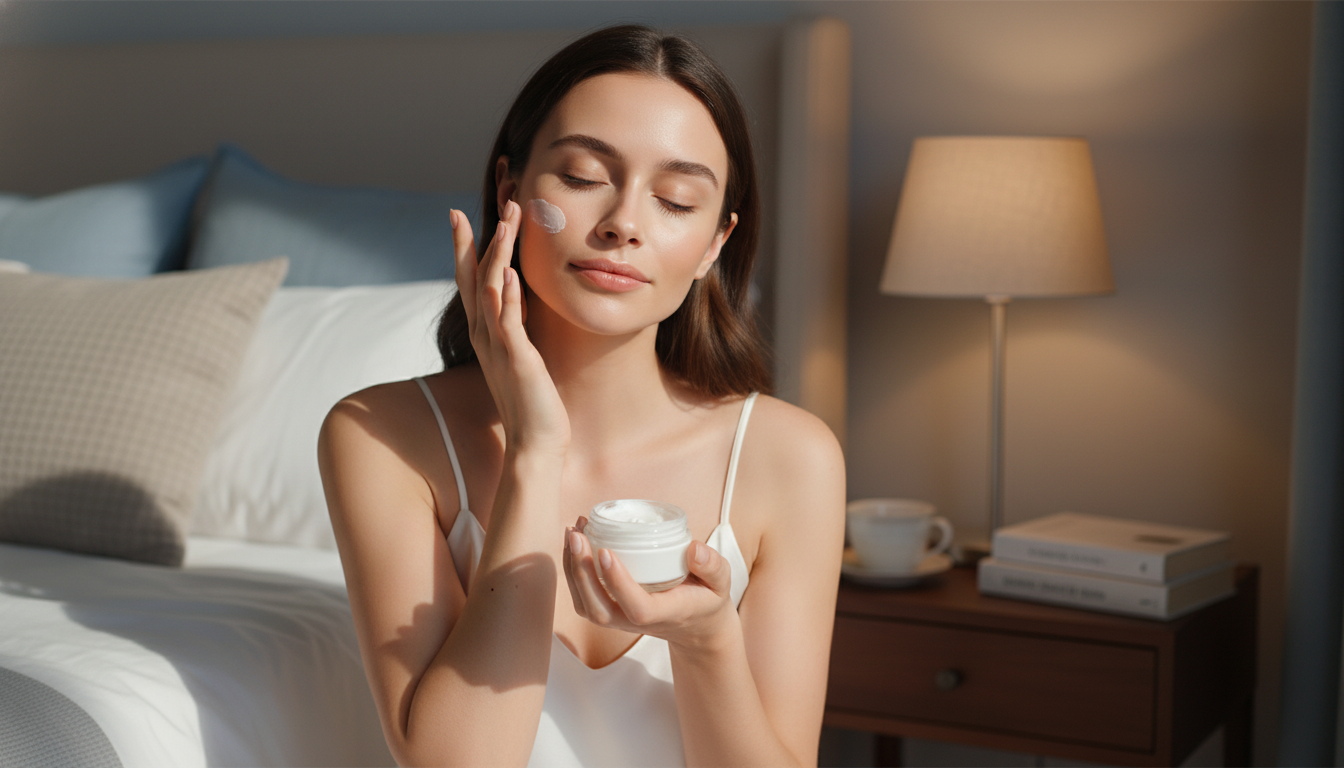
Night is when skin shifts into repair mode, but it’s also when hydration can slip away due to water loss and a disrupted barrier. A smarter evening routine focuses on layering water-binding ingredients, sealing them in, and supporting restorative sleep so skin looks smoother, calmer, and more radiant by morning.
If you wake up with tightness, flaking, or a dull “creased” look, it’s rarely because your skin suddenly changed overnight. It’s usually a combo of water loss, barrier stress, and the sleep environment.
For practical dry-skin tips and common triggers, the American Academy of Dermatology Association also has a helpful overview: Dry skin (tips and causes).
This approach keeps your routine simple while addressing the main reason skin wakes up parched: you need water and a way to keep it from evaporating.
Remove sunscreen and makeup without leaving skin squeaky-clean. Use lukewarm water, and pat (don’t rub) so skin stays slightly damp—damp skin helps the next layer spread more evenly.
Apply a humectant-focused layer to bind water to the skin. Look for glycerin, hyaluronic acid, or panthenol. If your home is dry, this step works best when followed quickly by moisturizer.
Add one treatment step based on tolerance and goals:
Finish with a moisturizer that includes barrier-supporting lipids and occlusives/emollients (ceramides, squalane, shea butter, petrolatum) to reduce overnight water loss.
Use a thin layer of balm or ointment on corners of the nose, lips, or flaky patches. This small step can prevent morning “hot spots” of irritation without making your whole face feel heavy.
Overnight hydration isn’t about chasing the richest cream—it’s about combining layers that do different jobs, then adjusting based on sensitivity and breakouts.
| Layer | Goal | Helpful Ingredients | Best For |
|---|---|---|---|
| Hydrate | Pull water into the skin | Glycerin, hyaluronic acid, panthenol | Dehydration, tightness |
| Treat | Address specific concerns | Niacinamide, retinoids, azelaic acid | Dullness, texture, uneven tone |
| Seal | Reduce water loss overnight | Ceramides, squalane, petrolatum | Dryness, barrier repair |
Hydrating serum + richer cream. If you still wake up dry, add an overnight mask once or twice weekly or spot-occlude flaky zones.
Lightweight hydration (gel serum) + non-comedogenic moisturizer. Reserve heavier occlusives for flaky areas only (around the mouth or cheeks) to avoid congestion.
Fragrance-free basics and fewer steps. Prioritize ceramides and panthenol; introduce actives slowly and avoid stacking multiple exfoliants at night.
Hydrate everywhere, then customize the seal: richer moisturizer on cheeks and a lighter gel-cream on the T-zone.
For a step-by-step, done-for-you approach, explore Overnight Skin Hydration – Ultimate Nighttime Skincare Guide for Deep Moisture, Glowing Skin & Restorative Beauty Sleep.
To make the bedtime routine feel more soothing (especially during stressful weeks), a mindset cue can help you stay consistent—see Think Happy: Affirmations Pack – Affirmations for Positive Thinking Bundle | 5-in-1 Digital Download for Mindset, Calm & Daily Motivation.
Cleanse gently, apply a hydrating layer on slightly damp skin, add one treatment step if needed, and finish with a moisturizer or occlusive to seal in hydration. If you’re very dry, spot-seal flaky areas as the final step.
Yes—choose lightweight hydrating layers and a non-comedogenic moisturizer. Use heavier occlusives only on flaky patches so you lock in comfort without increasing congestion.
Dullness can come from barrier irritation (often from over-exfoliation), not sealing humectants with a moisturizer, low humidity, or poor sleep. Simplifying your routine for a week and focusing on barrier support often helps.
External references: Cleveland Clinic: Skin Barrier (What It Is, How to Repair It) |
If you have any questions, here are some useful links:














Leave a comment