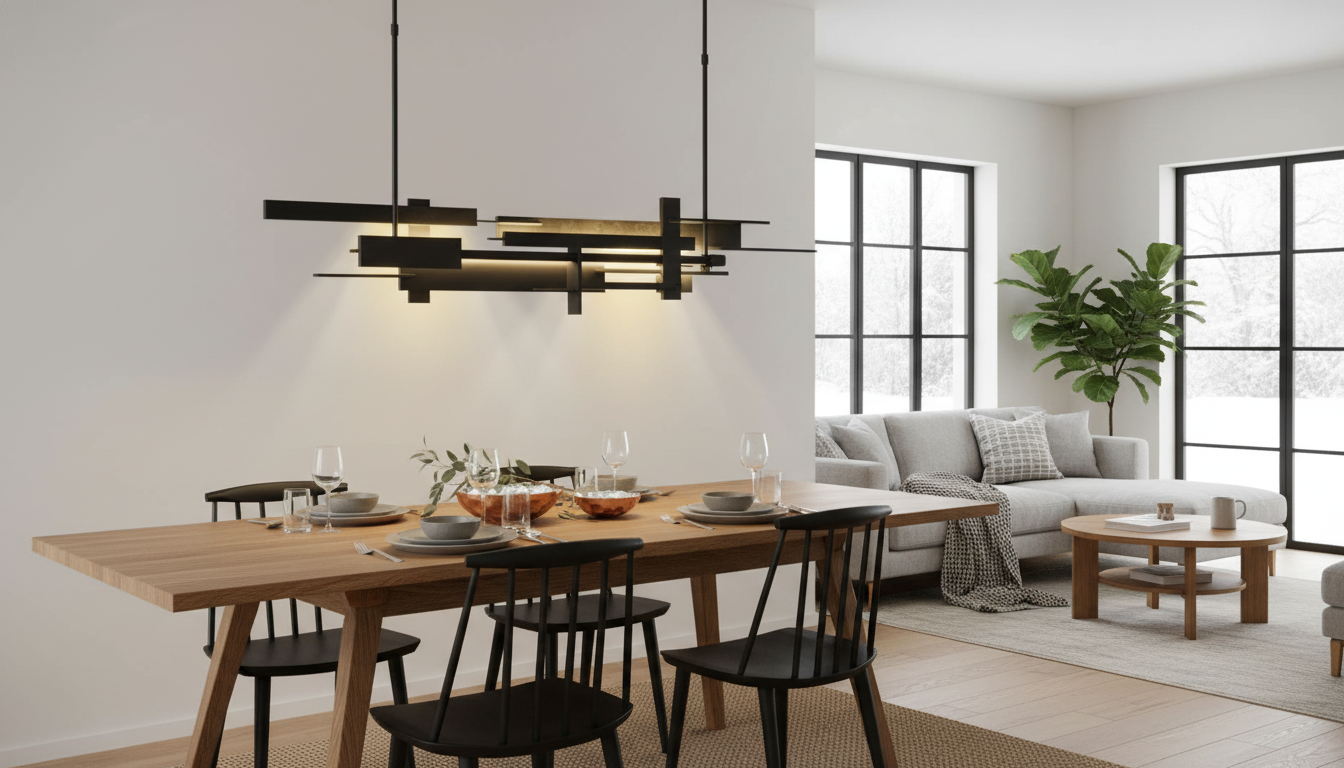
A branch-inspired chandelier adds sculptural character and soft, room-filling light to open-plan living and dining areas. The goal is to balance scale, hanging height, and bulb output so the fixture feels airy rather than overpowering—while still delivering comfortable illumination for conversation, meals, and everyday tasks. For more guidance, see Nordic Chandelier Multicolored Board Art Branch-style Pendant Lights.
In a combined living-and-dining layout, lighting has to do more than “look pretty.” It needs to unify zones, provide even ambient brightness, and feel intentional from multiple viewpoints. For further reading, see Light Luxury Nordic Creative Art Designer Pure White Grape ….
Open layouts make sizing feel tricky: too small and the chandelier disappears; too large and the “branches” can crowd sightlines and seating. Start with how the room is actually used, then refine placement so it supports both traffic flow and comfort.
| Placement | Typical chandelier width | Bottom-of-fixture height |
|---|---|---|
| Over a dining table (8 ft ceiling) | About 1/2 to 2/3 of table width | 30–36 in above the tabletop |
| Over a dining table (9–10 ft ceiling) | About 1/2 to 2/3 of table width | 32–40 in above the tabletop (adjust for sightlines) |
| Living room seating area | Scaled to seating group/room volume | At least 7 ft above the finished floor in walkways |
| Open concept (living + dining) | Choose one hero fixture or two coordinated fixtures | Keep drops consistent so both zones feel aligned |
A chandelier in a main gathering space should feel flattering and flexible—bright enough for chores and meals, but softer for evenings. The easiest way to get there is layered lighting plus dimming.
For more guidance on efficient bulb choices and performance, see ENERGY STAR’s light bulb resource and the Illuminating Engineering Society (IES) lighting basics.
Branch-style chandeliers already bring movement and detail, so the surrounding decor looks best when it supports—rather than competes with—the silhouette.
For an overview of fixture safety and testing, refer to UL Solutions’ luminaire safety information.
If the goal is a centerpiece that feels airy, organic, and refined, the Nordic Branch Style Chandelier for Living Room and Dining Spaces is designed to bring a nature-inspired silhouette to primary gathering areas while providing broad ambient light.
For a whole-room refresh that supports a calmer, more polished look around a new statement light, consider Reclaiming Your Home from the Mess Bundle: 10 Essential Guides & Checklists to Calm the Cluttering Chaos.
In most rooms with an 8-foot ceiling, the bottom of the chandelier typically looks and functions best about 30–36 inches above the tabletop. For taller ceilings, raise the fixture slightly to keep sightlines comfortable.
Many homes prefer 2700K in living areas for a cozy, relaxing glow and around 3000K in dining areas for a warm but slightly brighter feel. A dimmer makes it easy to fine-tune the mood for different times of day.
Yes—fixtures should be mounted to a ceiling box and support rated for the chandelier’s weight. Heavier chandeliers may require a heavy-duty box or added bracing to keep the installation secure.
If you have any questions, here are some useful links:











Leave a comment