A Guy’s Guide to Cool Braid Styles: Step-by-Step Looks, Upkeep, and Mistake-Proof Tips
Braids can sharpen a look, protect hair, and simplify day-to-day styling—when the foundation is right. The difference between “fresh” and “frizzy” usually comes down to prep, parting, and tension. Below are popular braid styles for men, what hair length and texture tends to work best, how to set up hair so sections stay clean, and a simple routine that helps braids look better for longer.
Before Braiding: The Setup That Makes Styles Look Cleaner
Clean parts and smooth rows start before the first braid. If you rush the prep, you’ll usually pay for it with bumps, flyaways, and soreness.
- Start with a clean scalp: Shampoo as needed, then condition to add slip so detangling and parting don’t turn into snagging.
- Detangle fully (especially at the roots): Tangles make uneven sections, and uneven sections often lead to uneven tension (aka bumps and tenderness).
- Stretch and moisturize lightly: Use a light leave-in or braid cream to reduce flyaways without making hair gummy or sticky.
- Use the right tools: Rat-tail comb for parts, sectioning clips, a spray bottle with water, small elastics (optional), and a satin durag/bonnet for sleep.
- Set expectations on length: Many braid styles need enough length to grip. If hair is short, go with fewer braids or larger sections so the style holds comfortably.
Quick Match: Braid Style vs. Hair Length, Difficulty, and Best Use
| Style |
Best hair length |
Difficulty |
Best for |
| Two-strand twists (twist style) |
Medium |
Easy |
Low-tension everyday wear, quick changes |
| Straight-back cornrows |
Medium to long |
Medium |
Gym-to-work neatness, long-lasting look |
| Box braids |
Medium to long |
Medium to hard |
Versatile styling, longer wear windows |
| Pop smoke braids (sectioned cornrows) |
Medium to long |
Hard |
Defined parts and bold shape |
| Braid-out / twist-out finish |
Medium |
Easy |
Texture and volume after take-down |
Core Techniques: Parting, Tension, and a Clean Finish
- Parting: Use the comb tail to draw lines, then re-check symmetry before you commit to the first row.
- Section control: Clip away hair you’re not working on so it doesn’t cross parts (a major cause of “mystery frizz” later).
- Tension rule: Tight enough to hold, never tight enough to sting. Pain is a red flag for traction stress, not a normal “fresh braids” requirement.
- Feed-in neatness (cornrows): Add hair evenly as you go. Uneven feed usually shows up as lumpy rows and inconsistent thickness.
- Ends: Seal with a light product; use a small elastic only if necessary, and avoid snapping tight elastics that can break hair.
- Finish set: Tie down with a durag/bonnet for 10–20 minutes after styling to lay flyaways and help the pattern set.
Cool Braid Styles Men Actually Wear (With Step-by-Step Flow)
Two-strand twists
One of the easiest entry styles because it’s lower tension and forgiving if your parts aren’t laser-straight yet.
- Part hair into squares or rows.
- Split each section into two equal strands.
- Twist the two strands around each other in the same direction every time for consistency.
- Coil the ends or secure lightly if needed.
Straight-back cornrows
Clean, athletic, and usually long-lasting when the parts and tension are right.
- Part rows from hairline to nape.
- Start with a small braid at the hairline.
- Keep hands close to the scalp while feeding hair back evenly.
- Braid to the ends and secure if needed.
Box braids
Pop smoke braids (sectioned cornrows)
Braid-out or twist-out
Maintenance That Keeps Braids Fresh Without Messing Up Parts
Common Problems and Quick Fixes
- Too tight: Soreness, bumps, or headaches mean loosen or remove. Repeated tight styles can contribute to traction alopecia; see guidance from the American Academy of Dermatology Association and the Cleveland Clinic.
- Frizz early on: Usually dry hair, messy sectioning, or sleeping without protection. Tie down nightly and keep moisture light.
- Uneven braids: Redo the part and match section sizes. Consistency beats speed every time.
- Itchy scalp: Cut back on heavy products, cleanse gently, and use lighter oils. Avoid scratching with nails—use the pad of your finger if you must.
- Breakage at the hairline: Keep edge tension low, avoid re-braiding the same line repeatedly, and skip tight line-ups right after braiding.
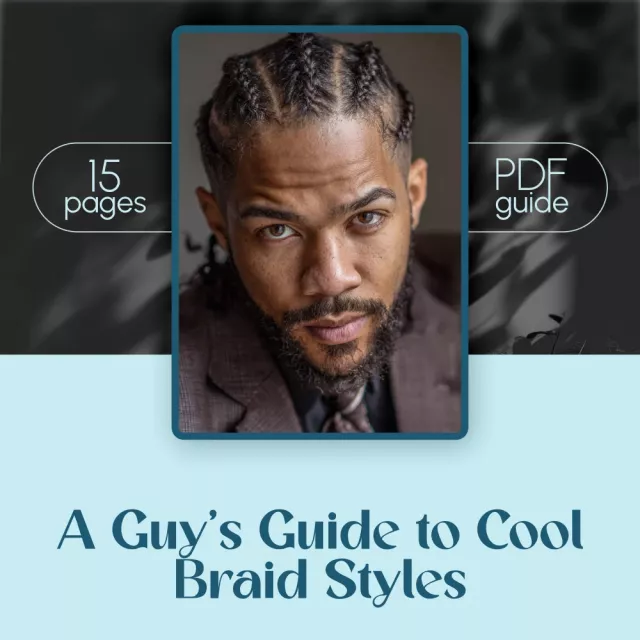
Digital Hair Guide: When a Step-by-Step Download Helps Most
FAQ
How long should men keep braids in?
Most men keep braids in around 2–6 weeks depending on the style, how fast hair grows, and scalp comfort. Remove sooner if you have pain, irritation, heavy buildup, or slipping; refreshing edges can extend a look, but it doesn’t replace a full redo when parts and tension are no longer clean.
Do braids damage hair?
Braids can be protective when tension is low-to-moderate and the scalp is kept clean and moisturized. Damage typically comes from braids that are too tight, neglecting cleansing/moisture, or leaving the style in too long until tangling and breakage start at the roots.
What hair length is best for cornrows and box braids?
Many people find cornrows and box braids work best once there’s enough length to grip comfortably (often several inches), but texture and shrinkage can change how “long” hair behaves. If your hair is shorter, two-strand twists, fewer rows, or larger cornrows usually hold better than many small, tight braids.
Recommended for you












Leave a comment