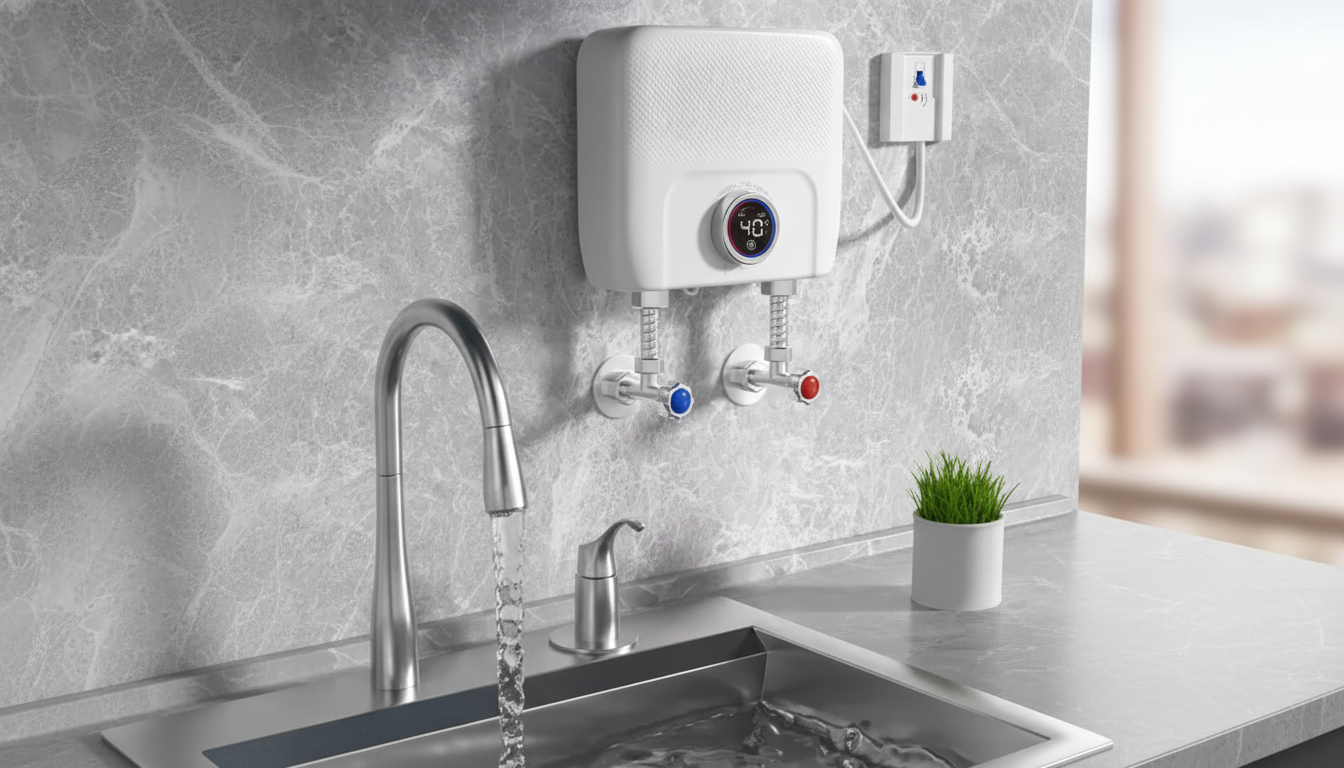
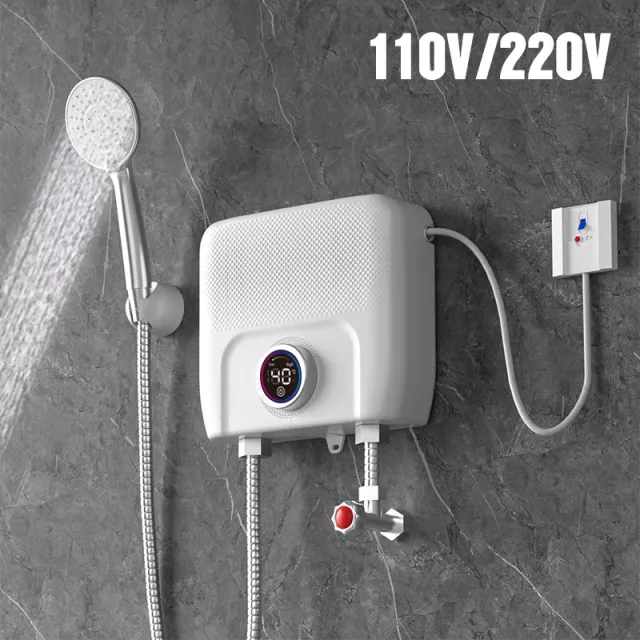
An instant wall-mounted electric water heater delivers hot water on demand while saving space in a bathroom, guest suite, or compact utility area. By skipping a bulky storage tank, it can help keep the room cleaner-looking and easier to organize. Add an LCD display and remote control, and everyday temperature adjustments become quicker and more precise—useful for households that want repeatable comfort without fiddling with knobs or guessing where the setting should be.
Unlike traditional tank-style water heaters that keep many gallons hot around the clock, an instant (tankless) electric unit heats water only while you’re using it. That simple design change leads to several practical differences:
For a deeper overview of how demand-type heaters operate and what affects performance, the U.S. Department of Energy provides a helpful primer: Energy Saver: Tankless or Demand-Type Water Heaters.
An LCD display and remote control can turn a basic hot-water appliance into something that feels more “set it and forget it.” In real daily use, these features can matter more than they sound on paper:
Wall-mounted instant heaters are popular in spaces where hot-water wait times and clutter are common annoyances. Good-fit scenarios include:
A key comfort tip is to keep the heater close to the fixture it serves. Shorter pipe runs typically mean faster hot water at the tap and less wasted water while waiting for temperature changes to arrive.
| Use case | Typical flow goal | Key factor to verify | Comfort tip |
|---|---|---|---|
| Bathroom sink | Low–moderate | Incoming water temperature in winter | Set a stable temperature to avoid frequent re-adjustments |
| Shower | Moderate | Electrical capacity and allowable flow | If output feels cool, reduce flow slightly or raise setpoint within safe limits |
| Guest bath / occasional use | Varies | Recovery time vs. on-demand needs | Remote control helps simplify operation for visitors |
| Two fixtures at once | Higher combined | Whether the unit is designed for concurrent demand | Stagger usage during peak times for consistent heat |
For general safety guidance around electrical systems and preventing household hazards, consult the National Fire Protection Association: NFPA.
For additional consumer guidance on water heating efficiency, see: ENERGY STAR: Water Heating.
If you’re building a bathroom-focused, space-saving setup, the Instant Wall-Mounted Electric Water Heater with LCD Display & Remote Control is designed around practical daily use: clear temperature visibility, wall-mounted convenience, and remote adjustments that help you keep comfort consistent without reaching up to the unit. It’s a solid option when your electrical supply and intended flow rate match what an on-demand electric heater is built to deliver.
Yes, if the unit’s power rating matches your incoming water temperature and your shower’s flow rate. In colder seasons, you may need to slightly reduce flow or raise the set temperature (within safe limits) to maintain steady comfort, and your home’s electrical capacity must support the heater’s requirements.
It can be safe when installed correctly: mounted away from direct spray, with proper clearances, and protected electrical circuitry that meets local code. Use sensible temperature settings and anti-scald practices to reduce burn risk for children and older adults.
The remote changes the heater’s temperature setpoint right away, but the water at the faucet may take a moment to reflect the change. The delay depends on how far the heater is from the fixture, the amount of water in the pipe run, and the current flow rate.
If you have any questions, here are some useful links:










Leave a comment