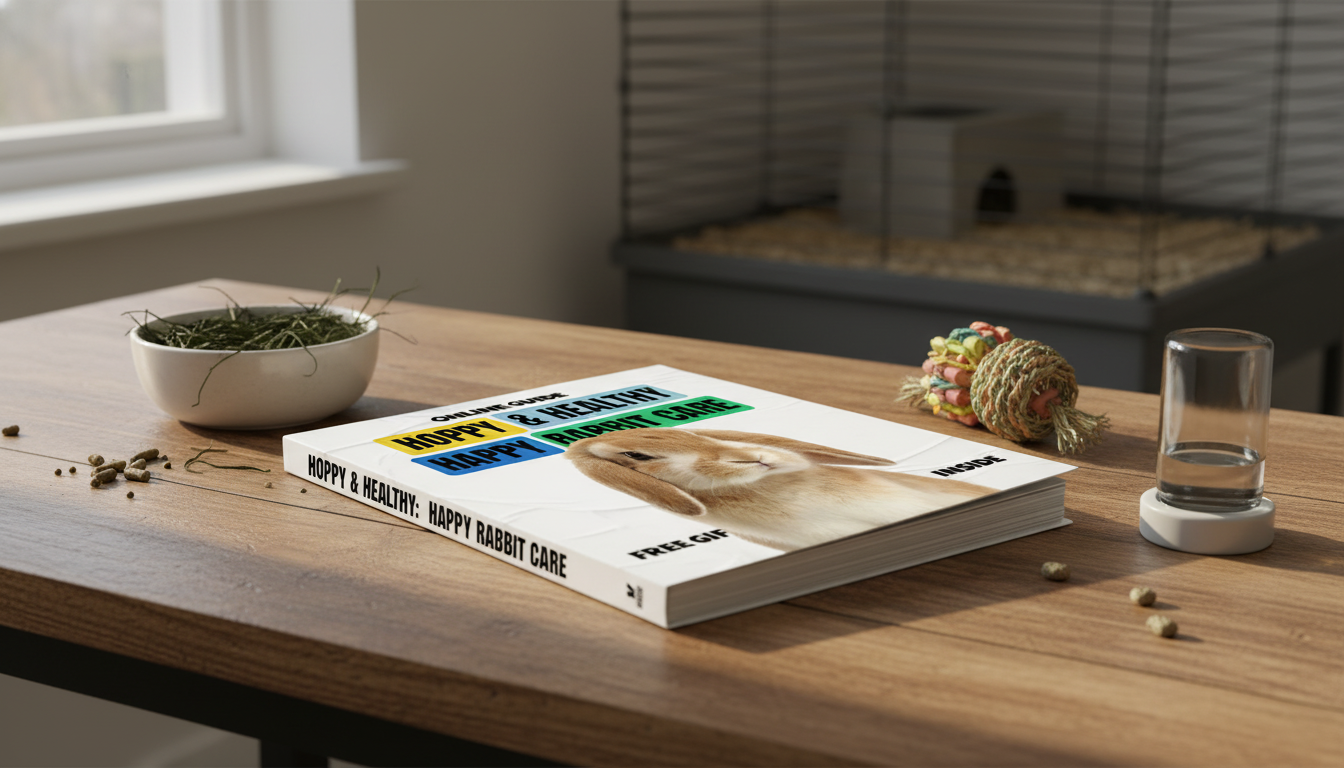
Rabbits do best when life feels predictable: steady meals, a safe home base, gentle interaction, and fast action when something seems “off.” The good news is that great rabbit care isn’t complicated—it’s consistent. Use the setup, feeding, enrichment, grooming, and health-planning steps below to build a routine that keeps your bunny calm, curious, and comfortable.
If you like having everything organized in one place, the digital reference Hoppy & Healthy: A Modern Guide to Happy Rabbit Care | Practical Rabbit Care Tips for New & Experienced Bunny Owners is a simple way to keep daily targets and red flags handy.
Think “room to move” first. A small cage limits natural behavior and can make litter habits harder. An exercise pen (x-pen) or a rabbit-proofed room gives space for a litter box, hay station, water, hideouts, and a stretch-out zone where your rabbit can fully relax.
| Frequency | What to do | Why it matters |
|---|---|---|
| Daily | Unlimited grass hay; refresh water; quick litter tidy; 2–4 hours of supervised exercise; short observation of appetite/poops | Supports gut motility, hydration, bonding, and catches early illness signs |
| Weekly | Full litter change; wipe food/water bowls; rotate toys; quick nail and coat check | Improves hygiene, prevents boredom, and reduces risk of overgrown nails/mats |
| Monthly | Deep clean pen/room; review diet amounts; weigh the rabbit; replace worn chews | Prevents ammonia buildup, helps manage weight, and keeps enrichment safe |
| Seasonal | Vet wellness visit as advised; parasite risk review; adjust cooling/warming strategies | Builds preventive care and reduces weather-related stress |
A rabbit’s digestive system depends on steady fiber intake, and their teeth rely on daily chewing to wear properly. The most reliable foundation is simple: unlimited grass hay, a measured amount of pellets, and leafy greens in appropriate portions.
For additional welfare guidance and feeding basics, reputable references include the American Veterinary Medical Association (AVMA) rabbit care overview and the House Rabbit Society care resources.
Most rabbits can become reliably litter-trained when the box is comfortable and the routine stays consistent. Start with the right materials and a simple cleanup strategy.
Daily movement and mental stimulation aren’t optional extras—they’re core rabbit care. Boredom can show up as chewing, digging at carpet, or grumpiness during handling.
Keeping routines calm can help both rabbits and humans. If you’re working on a steadier mindset while you build new habits, Think Happy: Affirmations Pack – Affirmations for Positive Thinking Bundle is a simple, structured way to stay consistent without turning daily care into a stress spiral.
For a structured, printable-friendly reference, Hoppy & Healthy: A Modern Guide to Happy Rabbit Care pulls these essentials into an easy routine you can follow day after day.
Grass hay should be available at all times, not measured into a single “serving.” Consistent hay intake supports steady digestion and natural tooth wear; offering fresh hay, trying different grass-hay types, and placing hay next to the litter box can encourage better hay habits.
Urgent signs include refusing food, producing no droppings, severe lethargy, difficulty breathing, collapse, severe diarrhea, head tilt, or obvious pain. Rabbits can deteriorate quickly, so contact a rabbit-experienced veterinarian immediately if any of these appear.
An exercise pen or rabbit-proofed room is typically better because it provides space to move, stretch, and play. With safe flooring, a litter box, a hay station, and at least one hideout, larger spaces usually support cleaner litter habits and better overall welfare.
If you have any questions, here are some useful links:













Leave a comment