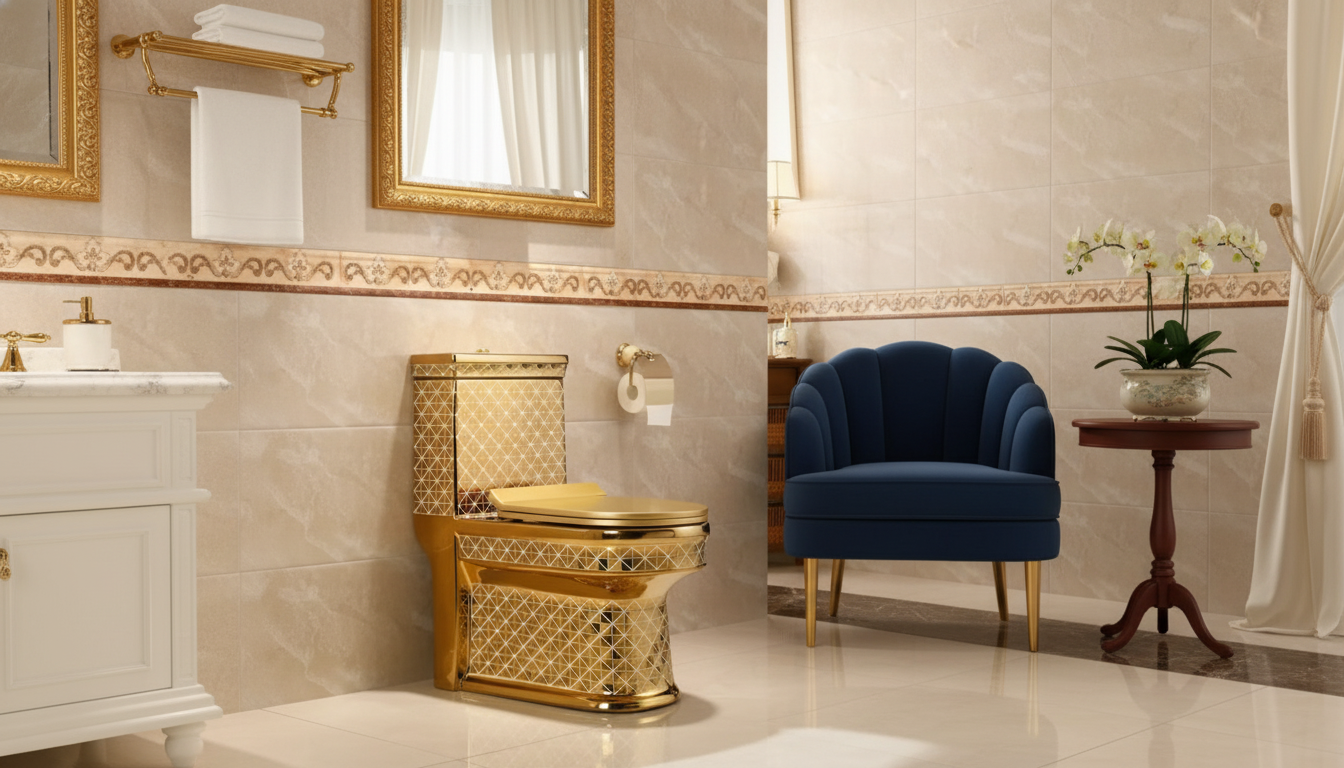
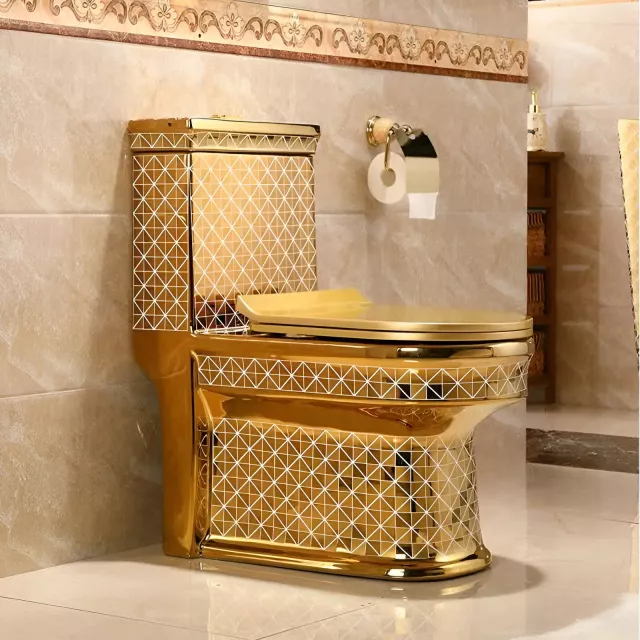
A statement toilet changes the entire mood of a bathroom: it can feel curated, gallery-like, and intentionally designed rather than purely utilitarian. This luxurious gold artistic one-piece ceramic toilet pairs sculptural impact with a dual-flush system intended to support everyday efficiency. Below is a practical, design-forward breakdown of what matters most—finish, construction, flushing performance, comfort, installation, and long-term care—so the upgrade looks exceptional and functions reliably.
Luxury in a bathroom is rarely about one detail—it’s the combined effect of form, finish, and the way the room feels when everything is visually “resolved.” A gold artistic toilet creates that finished look instantly, especially when the rest of the space is thoughtfully edited.
For a cohesive result, repeat gold intentionally: a faucet, mirror frame, towel bar, or shower trim. Then keep larger surfaces calmer (warm white, soft stone, or subtle veining) so the metallic finish reads as art—not clutter.
A one-piece toilet combines tank and bowl into a single, sculpted ceramic form. The difference is immediately noticeable when cleaning and when viewing the toilet from an angle—there’s simply less visual interruption.
Because the exterior finish is part of the “showpiece” effect, the practical upside of a one-piece body matters even more: fewer seams means fewer places for residue to build and fewer awkward edges that can dull the look over time.
Dual-flush is popular for a simple reason: it lets you match the flush to the need. Over weeks and months—especially in busy households—this can reduce water use without asking anyone to change their routine beyond choosing a button or lever option.
For additional context on efficiency standards and what to look for in water-saving toilets, the EPA’s WaterSense program is a helpful reference: https://www.epa.gov/watersense/toilets.
| Feature | One-Piece Dual-Flush (This Style) | Two-Piece Standard Flush | Wall-Hung (In-Wall Tank) |
|---|---|---|---|
| Visual impact | Sculptural, seamless, high-end finish options | Traditional profile, more visible seams | Minimalist, floating look |
| Ease of exterior cleaning | Fewer seams and tight joints | More joints around tank and bowl | Easy under-bowl cleaning; in-wall tank adds service planning |
| Water-use flexibility | Two flush choices | Single flush | Often dual-flush; depends on carrier system |
| Installation complexity | Standard floor install; heavier lifting | Standard floor install; lighter pieces | Higher complexity; requires in-wall carrier and access planning |
| Best for | Design-forward renovations and luxury upgrades | Budget-friendly replacements | Major remodels focused on minimalism |
Even the most striking design can disappoint if it doesn’t fit the room or the plumbing layout. A few measurements and layout checks up front help avoid last-minute surprises.
If you’re measuring rough-in for the first time, a simple rough-in overview is available here: https://www.americanstandard-us.com/learning-center/bathroom/toilet-rough-in-dimensions.
If you’re hiring a pro, one additional check can provide peace of mind: look for plumbing products and components that align with recognized certification programs (learn more at IAPMO: https://www.iapmo.org/).
It can, especially when the reduced flush is used consistently for liquid waste. Real-world savings depend on household habits and the toilet’s certified flush volumes and performance.
The process is similar, but one-piece toilets are heavier and usually benefit from a second set of hands. Confirm the rough-in, ensure the flange and seal are in good condition, and take extra care to level the toilet to prevent rocking.
Use a non-abrasive cleaner with a soft cloth or sponge and skip scouring powders or rough pads. After using disinfectants, rinse or wipe to reduce residue and gently address hard-water spotting with regular, finish-safe wipe-downs.
If you have any questions, here are some useful links:











Leave a comment