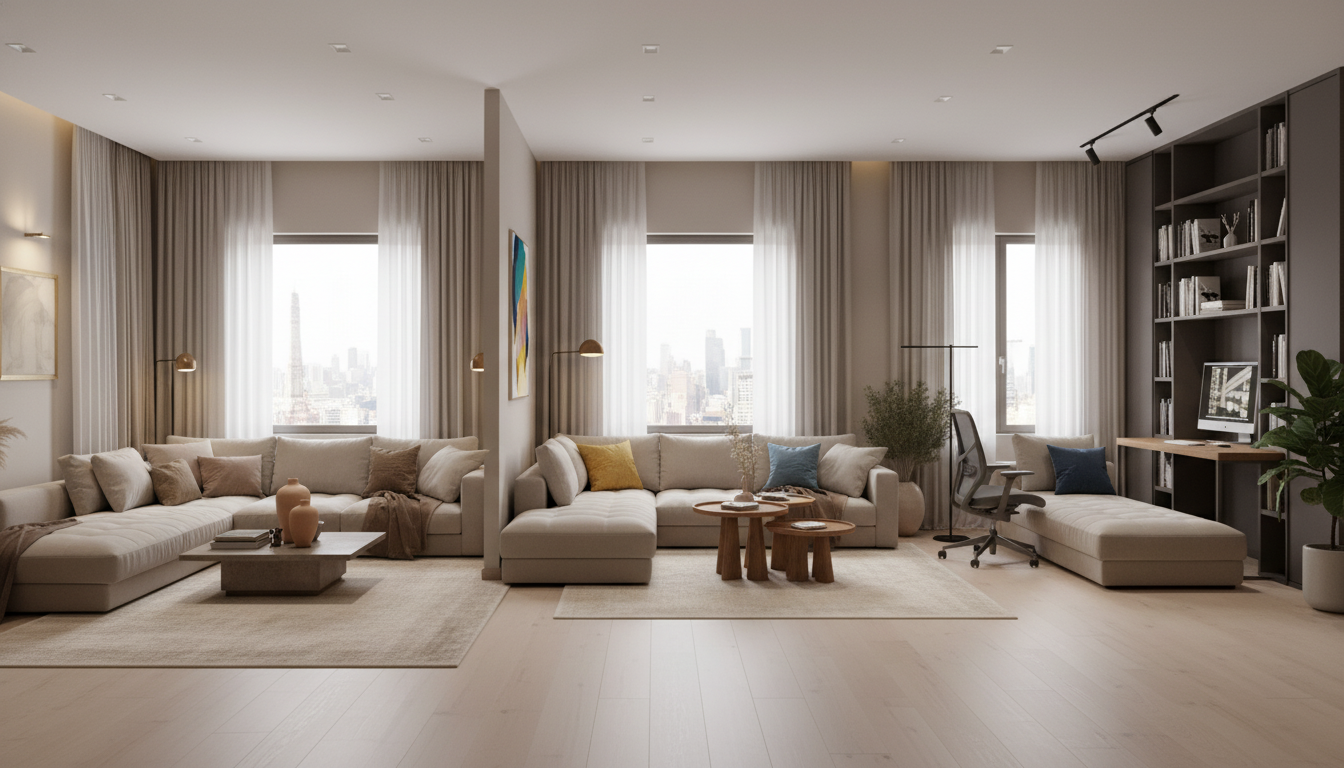
Small layout shifts can noticeably change how a room feels—more focused, more restful, or more social—without buying anything new. When furniture supports clear movement, a single “main idea” for the room, and comfortable distances, the space tends to feel easier to live in. Below is a mood-first approach to furniture arrangement built around flow, focal points, lighting, and simple zoning—plus fast templates that work in common room shapes.
Furniture arrangement works like a quiet background signal to the brain. It can reduce friction (calm), add stimulation (energy), or create purposeful variety (creativity) depending on what you emphasize.
These effects align with basic ideas in environmental psychology, which studies how surroundings influence behavior and well-being.
A room can’t do everything at once. Choosing a primary mood prevents mixed signals (like a “relaxation” room with a rushed, obstacle-course walkway).
| Mood goal | What to prioritize | Furniture moves that help | What to avoid |
|---|---|---|---|
| Calm | Open pathways, soft edges, predictable zones | Float seating with a clear walkway; align major pieces; keep a consistent rug boundary | Blocking entrances, too many small items in separate clusters |
| Energy | Active circulation, flexible seating, bright focal point | Angle chairs toward the center; create a “lap” path; keep a lightweight side table for movement | Overly tight symmetry that freezes the room |
| Creativity | Stimulating cues, variety of postures, a visible idea area | Add a stand-up perch; face a wall or board; create a “materials zone” near the work surface | Hiding tools in distant storage that breaks momentum |
| Intimacy | Closer distances, warm lighting zones, enclosure | Pull seating in; place sofa/chairs inside a rug; use a console or plant to subtly “wrap” the space | Oversized gaps between seats or a TV dominating the only focal point |
| Openness | Clear sightlines, minimal barriers, consistent scale | Lower furniture near pathways; keep tall pieces to perimeter; unify seating orientation | Tall pieces in the center line-of-sight or zig-zag pathways |
Choose one primary focal point (window, fireplace, art, or TV). Aim the main seating toward it, then place secondary seating to create a simple “U” or “L” shape. If the room feels tense, widen the main walkway and reduce visual scatter on the perimeter.
A stable bed placement tends to feel more restful—especially when the bed doesn’t sit in direct alignment with the door (when possible). Keep one side of the bed easier to access than the other if mornings feel rushed; it reduces daily friction. Better sleep supports mood and resilience, which is why environment matters alongside routine (see Harvard Health Publishing on sleep).
Clear the main walkway first, then simplify the room to one obvious focal point. Pull seating into a single grounded zone (often centered and anchored by a rug boundary) so the space reads as organized and easy to navigate.
No. Floating a sofa or chair a few inches (or using it as a soft divider) can improve flow and make the room feel more intentional; the key is keeping an easy path and avoiding awkward “dead gaps” that collect clutter.
Add a visible idea area (like a board or clear wall space), vary posture options (chair plus a perch), and keep tools within reach to reduce friction. Choose one intentional stimulus focal point while minimizing distraction in your primary sightline.
If you have any questions, here are some useful links:











Leave a comment