Refresh, Match, or Reinvent: Dyeing Clothes at Home
Dyeing clothes at home is one of the fastest ways to revive faded favorites, unify pieces that don’t quite match, or try bold color without buying a whole new wardrobe. The “secret” isn’t fancy equipment—it’s choosing a dye that matches your fabric fiber, prepping garments so dye can reach every thread, and controlling the basics: time, temperature, and movement. Once those variables are consistent, results become far more predictable (and repeatable).
What home dyeing can (and can’t) do
Home dyeing is best when you start with a garment that’s ready to take color evenly. Some items transform beautifully, while others will always look mottled or muted no matter how carefully you work.
- Best candidates: solid-color cotton tees, linen shirts, rayon dresses, and silk scarves with minimal stains or coatings.
- Harder projects: polyester-heavy blends, water-repellent fabrics, and heavily worn items with uneven absorbency (like thin elbows or seat areas).
- Overdyeing basics: dye adds to the existing color. A light base gives the most predictable outcomes, while dark bases tend to push everything deeper and moodier.
- Expect variations: stitching thread, labels, zipper tape, and synthetic trim may resist dye and stay lighter—sometimes that contrast looks intentional, sometimes it looks “off,” so plan for it.
Choose the right dye for the fiber
Fiber matters more than brand. A “great” dye can still disappoint if it’s mismatched to the material. Check the care tag (or product page if you still have it) and note the dominant fiber.
Fabric, dye match, and what to expect
| Fabric type |
Typical dye match |
Processing notes |
Result expectation |
| Cotton / Linen |
Fiber-reactive (or all-purpose) |
Often benefits from prewash; consistent agitation helps |
Bright, even color is achievable |
| Rayon / Viscose |
Fiber-reactive (or all-purpose) |
Handle gently; can absorb quickly and spot if bunched |
Very vivid, can skew darker |
| Wool / Silk |
Acid dye (or some all-purpose) |
Lower temps than boil; avoid harsh agitation on wool |
Rich, luminous tones |
| Polyester |
Disperse dye |
Requires high heat; stovetop methods often used |
Good color possible, but more effort |
| Cotton-Poly Blend |
Depends on blend ratio |
Cotton portion dyes first; poly may stay lighter |
Heathered / two-tone effect likely |
Tools, supplies, and a safer setup
- Dedicated equipment: a pot or bucket, a stirring tool, measuring spoons/cups, and a thermometer. If you use stovetop methods, keep dye equipment separate from food use.
- Protective basics: gloves, an apron, and a covered surface. Ventilation helps when working with dye powders. For general safety guidance, OSHA’s overview of personal protective equipment is a helpful baseline: https://www.osha.gov/personal-protective-equipment.
- Water quality: hard water can dull certain dyes; filtered or softened water may improve clarity.
- Plan a rinse zone: expect multiple rinses until water runs mostly clear to reduce backstaining (where loose dye re-deposits in blotches).
Garment prep for even color
Core techniques: immersion, tie-dye, dip-dye, and ombré
Immersion dyeing (solid color)
Tie-dye (pattern + resist)
Dip-dye (controlled gradient)
Ombré (layered fades)
Color planning that prevents surprises
Setting, rinsing, and caring for dyed clothing
- Follow the system: different dyes require different fix/aftercare steps (salt, soda ash, vinegar, or heat). Manufacturer instructions are worth reading closely, such as Rit’s guides: https://www.ritdye.com/instructions/.
- Rinse progression: a cool-to-warm rinse sequence can reduce sudden dye release and help prevent backstaining.
- First washes: wash separately at first on a gentle cycle with mild detergent; avoid optical brighteners when possible.
- Drying: shade drying reduces sun-fade, especially for saturated brights and deep darks.
Troubleshooting common issues
- Patchy or streaky color: often caused by insufficient prewash, fabric bunched in the bath, or uneven wet-out. Increase agitation and make sure the item has room to move.
- Color too light: increase dye concentration, time, or temperature (if appropriate), or switch to a dye better suited to the fiber. For cellulose fibers, fiber-reactive dye resources can clarify process variables: https://www.dharmatrading.com/techniques/fiber-reactive-dyeing.html.
- Color too dark: lightening is difficult. Consider a lighter overdye plan, controlled sun-fade, or a second bath to rebalance undertones.
- Bleeding in the wash: usually means excess dye wasn’t rinsed out or fixing steps were incomplete; repeat the recommended rinse/wash sequence.
A step-by-step digital guide for beginners and creatives
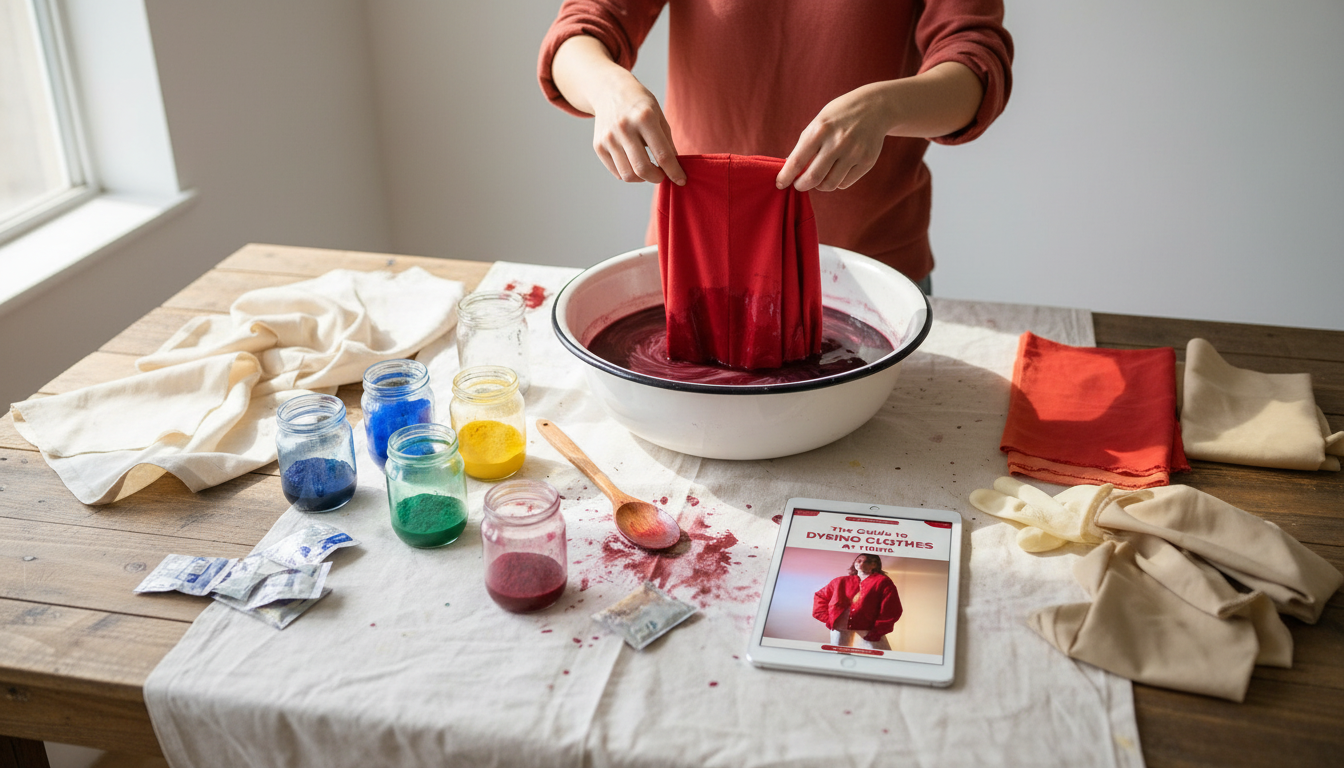
If you want a repeatable workflow (and fewer “why did this happen?” moments), a structured reference can help you move from guessing to consistent results. The Guide to Dyeing Clothes at Home (digital download) is designed for clarity—matching fabric types to methods, organizing prep and timing, and making it easier to recreate a color you love.
For a different kind of creative refresh—especially if you’re assembling gift ideas or a cohesive home look—Frame It Your Way – DIY photo frame decorating ideas guide pairs well with upcycling projects where color and presentation work together.
FAQ
Can clothes be dyed successfully at home without special equipment?
Yes—many projects work well with a basic bucket method, gloves, and a dedicated stirring tool. A thermometer and stovetop-safe pot become more important when you need tighter temperature control, especially for synthetics like polyester that require higher heat.
Why did my dyed shirt turn out blotchy or uneven?
Blotching is commonly caused by skipped prewashing, fabric that stayed bunched up, or inconsistent wet-out. Keep the garment moving, avoid overcrowding the dye bath, and maintain steady water temperature so dye reaches the fiber evenly.
Will dye work on polyester or polyester blends?
Polyester typically needs disperse dye plus high heat to achieve noticeable color. Blends often dye unevenly because cotton/rayon portions take color more readily than polyester, creating a heathered or two-tone effect.
Recommended for you












Leave a comment