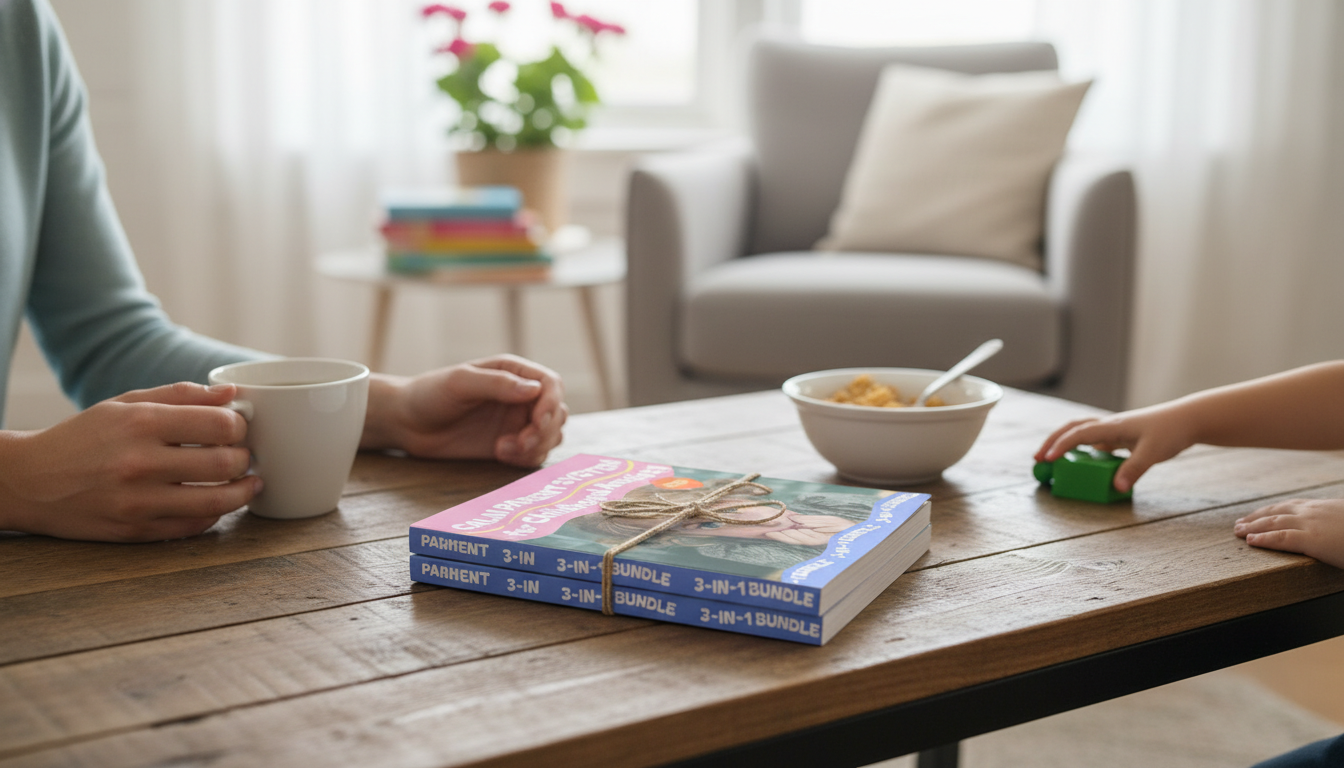
Childhood anxiety can show up as big worries, clinginess, sleep trouble, stomachaches, school refusal, or frequent meltdowns. Support often starts with the adults: staying steady, responding in ways that reduce fear over time, and building predictable routines that help kids feel safe. The Calm Parent System for Childhood Anxiety – 3 in 1 Bundle of Guides, eBooks & Checklists is a digital bundle designed to make that support practical—step-by-step guidance, printable checklists, and simple tools that fit real family schedules.
Anxiety doesn’t always look like fear. Many kids show it through behavior, body symptoms, and constant “what if” thinking—especially when they feel rushed or uncertain.
For a helpful overview of how anxiety can present in children, see the American Academy of Pediatrics guidance on anxiety in children.
This 3-in-1 bundle is built to reduce decision fatigue for caregivers: you get clear explanations, scripts you can use in the moment, and checklists that help you follow through consistently.
| Bundle component | Best for | How to use it this week |
|---|---|---|
| Guide(s) | Understanding triggers and choosing a response plan | Identify 1–2 top triggers and pick a matching strategy |
| eBook(s) | Deeper skill-building (coping, boundaries, calm communication) | Read one section, practice one script, repeat daily |
| Checklists | Turning plans into routines during busy moments | Print or save; use for mornings, bedtime, and exposure steps |
When anxiety hits, it’s tempting to jump straight into reassurance or fixing the situation. A steadier approach teaches your child: “I can handle this feeling, and my adult can handle the moment.”
For families who benefit from supportive, confidence-building language, pairing routines with simple positive statements can help. The Think Happy: Affirmations Pack – Affirmations for Positive Thinking Bundle can be used during calm moments (not during a meltdown) to practice steady self-talk and a calmer inner voice.
Anxiety tends to thrive on uncertainty. Predictable routines reduce “surprise stress,” which frees up your child’s brain to practice coping rather than scanning for danger.
The National Institute of Mental Health notes that anxiety disorders are common and treatable, and that learning skills to manage anxiety is a key part of improving day-to-day functioning.
For a broader view of children’s mental health and supportive environments, the CDC’s children’s mental health resources can be a helpful starting point.
If you’d like a single place to start, the Calm Parent System for Childhood Anxiety – 3 in 1 Bundle of Guides, eBooks & Checklists is designed to walk you from “What is happening?” to “What do we do next?” with repeatable routines you can actually keep.
No. It’s a supportive home resource that can complement professional care, and many families still benefit from therapy when anxiety is moderate to severe or significantly disrupts daily life. CBT is commonly recommended, and a pediatrician or licensed clinician can help you decide what level of support is appropriate.
Reassurance can lower anxiety quickly, but repeated reassurance can also keep the worry cycle going over time. Try shifting to validation plus a coping prompt (and a steady boundary), then practice the coping tool during calm moments so it’s easier to use when fear spikes.
Many families notice small improvements first—shorter meltdowns, faster recovery, or less negotiation—then steadier progress over weeks with consistent routines and gradual exposure steps. Tracking triggers and what helped makes it easier to fine-tune your plan.
If you have any questions, here are some useful links:













Leave a comment