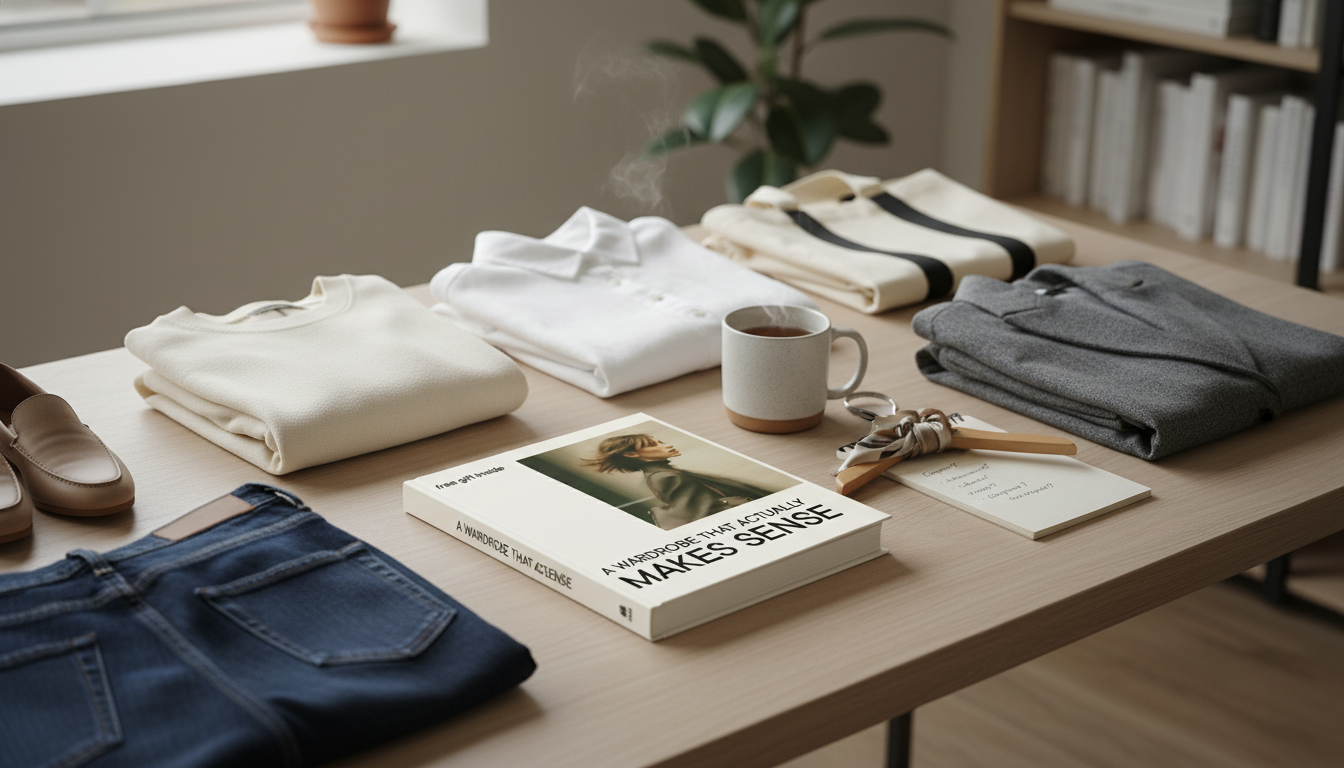
A sustainable wardrobe isn’t about owning less for the sake of it—it’s about owning the right pieces, in the right quantities, that work together across real life. When your closet is built like a system, getting dressed becomes fast, repeats feel intentional, and shopping stops being a constant “fix.” The payoff is practical (more outfits, less stress) and environmental (less churn, fewer discarded items, longer wear).
Most overbuying doesn’t come from loving clothes—it comes from friction. A closet can be full and still feel like it has “nothing,” especially when items don’t mix, don’t fit comfortably, or only work for one kind of day.
Organizations like the Ellen MacArthur Foundation and UNEP consistently point to durability, reuse, and circular habits as major levers for reducing fashion’s impact. The easiest place to start is the part you control: what you bring in, and how long it stays useful.
Before any decluttering, define what your life actually requires. Otherwise, it’s easy to keep “fantasy self” clothes and replace perfectly fine basics with more “options” that still don’t solve outfit friction.
If you want a lightweight planning tool for this step, Plan Your Perfect Year-Round Wardrobe | Seasonal Wardrobe Checklist & Closet Planning Guide | Digital Download can help translate seasons, activities, and outfit counts into a simple wardrobe map you can reuse all year.
Audits work best when they’re visual and fast. The goal isn’t perfection; it’s clarity.
For the “let go” pile, prioritize reuse first (resell, swap, donate responsibly). For anything truly worn out, check local textile recycling options and general reuse guidance from the U.S. EPA.
Instead of chasing the “perfect capsule number,” build a foundation that makes outfits easy. A strong base makes the rest of your wardrobe feel bigger without adding volume.
| Situation | Best next move | Buy criteria | Avoid |
|---|---|---|---|
| Outfits fail because nothing matches | Pick 1–2 connector pieces | Works with 3+ items; fits your palette; comfortable footwear/outerwear | Trendy statement items that only match one look |
| You have many clothes but low wear rate | Upgrade fit and comfort | Tailoring budget; breathable fabrics; non-pinching waistbands; right size now | Buying “aspirational” sizes or itchy/delicate fabrics |
| You’re missing one key category (e.g., warm layer) | Fill the true gap | Climate-appropriate; layering-friendly; durable; easy-care | Buying multiples before testing one |
| Impulse-buy temptation hits | 24–72 hour pause + outfit test | Can you style 3 outfits with current closet? If yes, consider; if no, skip | Sale-driven buying, duplicates, “project pieces” needing extra purchases |
| You want novelty without new purchases | Restyle and rotate | Try new combinations; accessories; shoe swaps; seasonal storage | Buying a whole new look instead of adapting one |
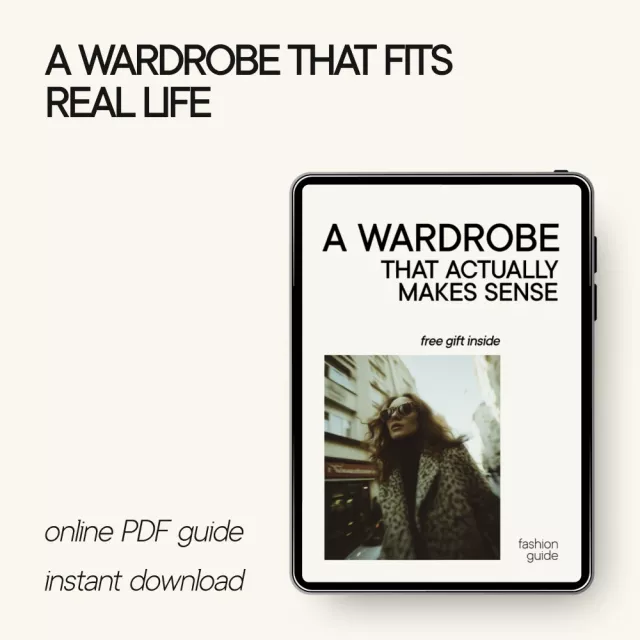
For a step-by-step method that turns these principles into a repeatable routine, A Wardrobe That Actually Makes Sense – A Practical Guide on How to Build a Sustainable Wardrobe Without Overbuying is designed to reduce decision fatigue with prompts, outfit math, and practical guardrails that keep purchases intentional.
There isn’t one perfect number; many people land somewhere around 30–80 core pieces depending on lifestyle and laundry cycle. A better target is a high wear rate: start with a small foundation, live with it for a season, then add only what clearly unlocks more outfits.
Build an audit-based needs list, then use a 24–72 hour pause plus a 3-outfit test before buying. Focus first on connector pieces and track duplicates so “gaps” don’t turn into repeated purchases of the same item.
Replace (or repair) the items that unlock the most outfits: comfortable everyday shoes, a versatile outer layer, reliable bottoms, and easy base tops. When possible, tailor or repair what you already own before buying new.
If you have any questions, here are some useful links:











Leave a comment