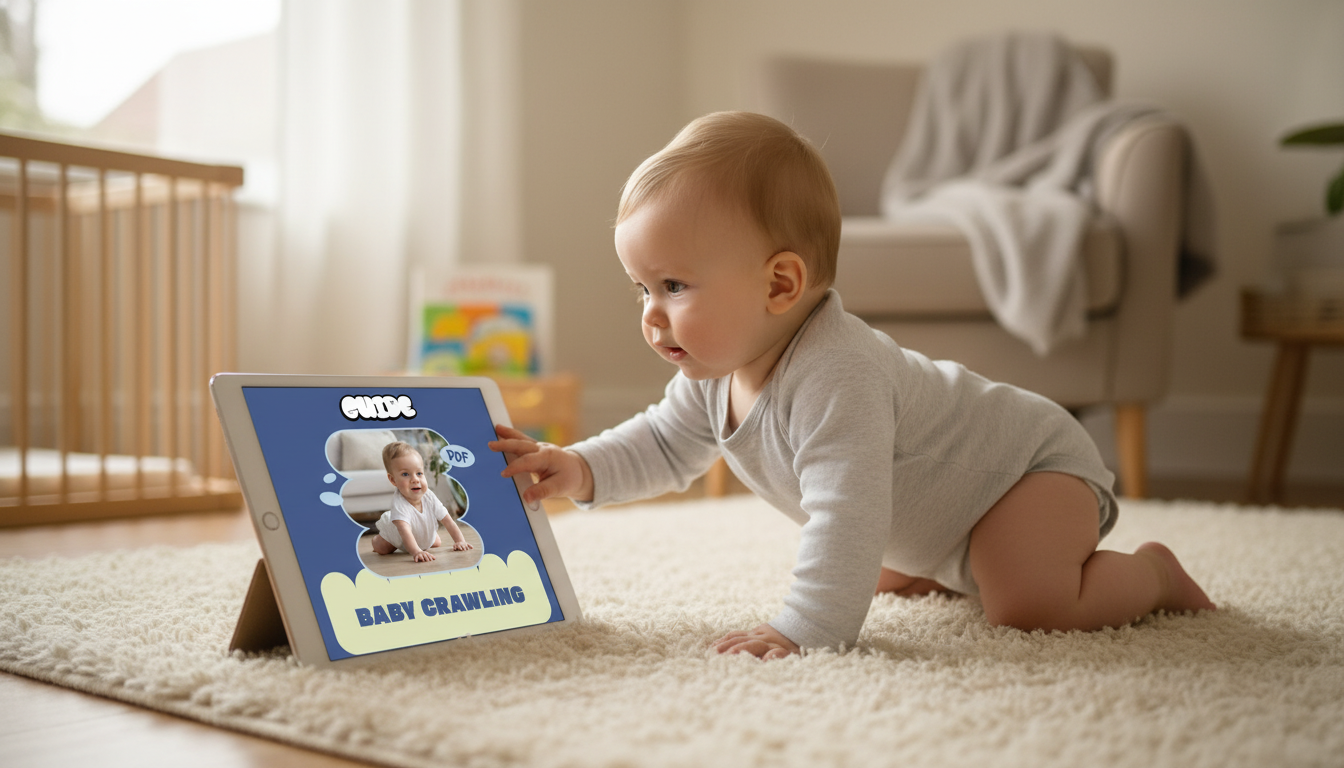
Crawling is one of the first big mobility milestones, but it doesn’t follow a single, neat timeline. Some babies crawl early, some later, and some skip classic crawling altogether. What matters most is steady progress in strength, coordination, and curiosity—plus a safe environment that lets movement practice happen every day.
“Crawling” is a broad umbrella for purposeful, coordinated movement that helps a baby get from one place to another. The exact style can look very different from child to child, and that variety is often completely typical.
Rather than focusing on a single technique, look for the building blocks: weight shifting, using both sides of the body, and moving with intention toward a person or object. Many babies also switch styles as their balance improves—especially during growth spurts or right before pulling up and cruising.
Many babies begin some form of crawling between about 6–10 months, but normal variation is wide. Development is rarely linear; it’s common to see a burst of progress, a “pause,” and then a new skill that suddenly clicks.
Prerequisite skills often develop in overlapping order:
Timing is influenced by temperament, daily opportunities for floor play, time spent in “containers” (swings, bouncers, loungers), muscle tone, and prematurity (where an adjusted age can be more meaningful than calendar age). A short “practice phase” is also common: rocking, pivoting, and even backward movement can show up before forward crawling takes off.
Readiness is less about the calendar and more about the pattern of progress. These signs often show up as crawling gets closer:
| Approx. age range (varies) | What you may notice | Helpful parent actions |
|---|---|---|
| 4–6 months | Improved head control, pushes up on forearms, begins rolling | Daily tummy time in short, frequent sessions; place toys at eye level to encourage lifting and reaching |
| 6–8 months | Sits with less support, pivots on tummy, rocks on hands and knees, may move backward first | Create safe floor space; encourage reaching across the body; place toys slightly to the side to promote weight shifting |
| 8–10 months | Commando crawl or hands-and-knees crawl emerges; transitions between sitting and prone more often | Use “just out of reach” motivation; offer a low cushion/rolled towel obstacle for climbing practice; keep sessions playful and brief |
| 10–12+ months | Crawling becomes faster; may start pulling to stand and cruising | Baby-proof thoroughly; support safe pulling-up spots; balance crawl time with supervised standing and cruising practice |
The goal is to create chances for practice—without forcing positions or turning movement into a test. Gentle, repeatable play routines tend to work best.
For families who like a quick-reference format (especially when multiple caregivers are involved), a structured digital resource can make day-to-day support feel clearer and more consistent. The Guide to Baby Crawling | Developmental Milestones, When Do Babies Crawl, Parent-Friendly Digital Guide is designed for easy check-ins on readiness signs, normal variations, and practical play ideas you can rotate through the week.
Trusted milestone guidance and safety reminders can also be found through the CDC’s 9-month milestones and the American Academy of Pediatrics’ HealthyChildren.org.
If stress is running high during the milestone months, some families also like pairing practical routines with mindset tools. The Think Happy: Affirmations Pack – Affirmations for Positive Thinking Bundle | 5-in-1 Digital Download for Mindset, Calm & Daily Motivation can be a supportive add-on for caregivers who want quick, calm resets during intense days.
Yes. Backward movement often shows up first because arm strength develops before the legs coordinate a strong push. Encourage gentle weight shifting and place a motivating toy slightly forward and to one side.
This can be normal if other milestones (steady sitting, pulling up, cruising, coordinated movement) are progressing well. Mention it at routine visits, especially if there are asymmetries or delays in other areas.
Frequent, short sessions throughout the day are often more realistic and effective than one long session. Regular opportunities to push up, reach, and pivot help build strength over time.
If you have any questions, here are some useful links:











Leave a comment