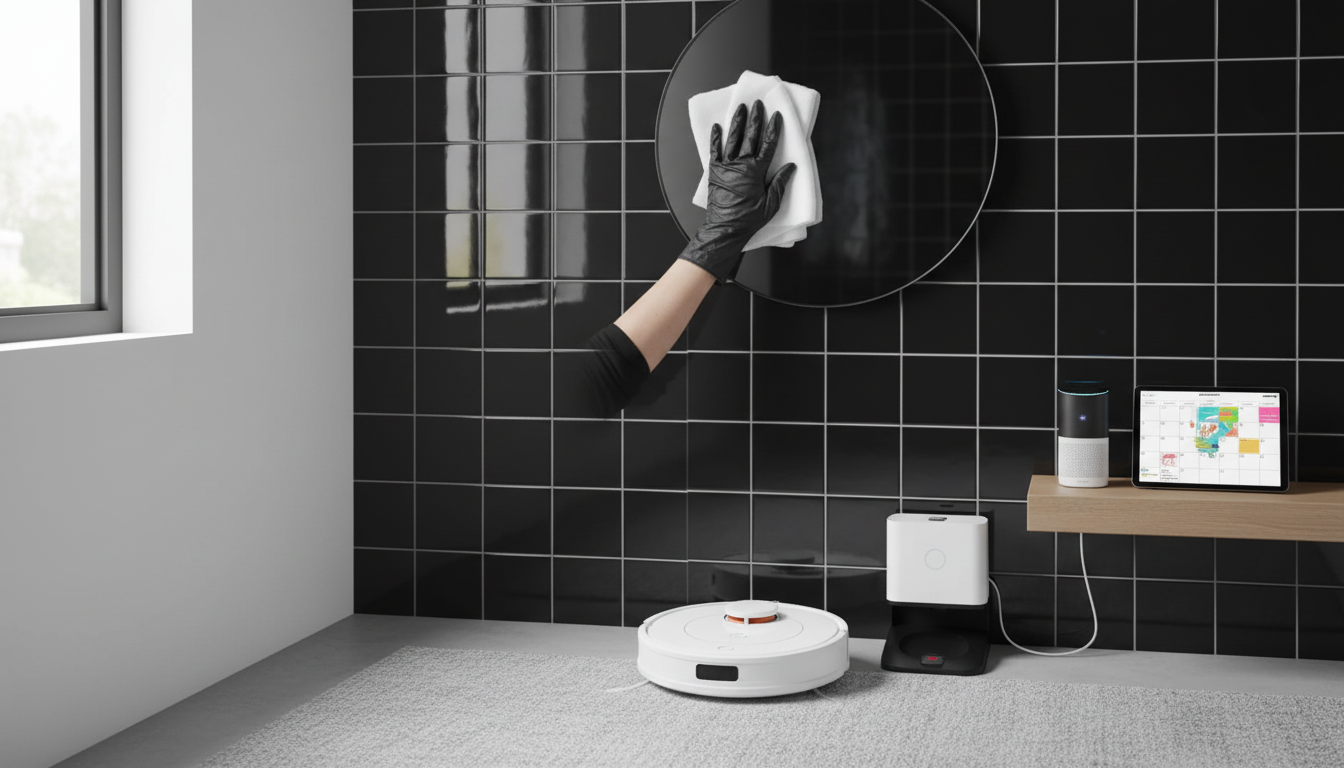
A cleaning schedule works best when it matches real life: energy levels, busy weeks, household size, pets, and priorities. AI can turn a vague wish to “stay on top of things” into a simple, repeatable plan—breaking tasks into realistic steps, assigning them to the right days, and adjusting automatically when life changes. The goal isn’t perfection; it’s consistency that feels doable.
AI is great at turning a messy, mental “to-do cloud” into a clear plan. It can:
What it can’t do is replace the fundamentals: good supplies, safe product use, and knowing what materials you have. Think of AI as your scheduling assistant—focused on sequencing, reminders, and follow-through—not a substitute for reading labels or manufacturer guidance.
AI scheduling works best when it has a few simple details. Start by listing your rooms/zones (kitchen, main bath, bedrooms, entry, living areas, laundry area, office, patio if relevant). Then add household factors that change frequency—kids, pets, allergies, heavy cooking, a “shoes off” rule, or clutter hotspots that keep derailing your cleaning.
Next, define two standards for each zone: your “minimum viable clean” (the version that keeps things sanitary and functional) and your “ideal clean” (the version you do when you have time/energy). Finally, set time limits per day and pick which days you prefer heavier tasks versus lighter resets. If chores are shared, decide who does what and note any physical limitations so the schedule stays fair and realistic.
| Input | Examples to provide | Why it matters |
|---|---|---|
| Home layout | 2 bed/2 bath, open kitchen-living, stairs | Determines task list and workload |
| Lifestyle triggers | Pet hair, heavy cooking, guests weekly | Adjusts frequency and priorities |
| Time budget | 15 min Mon–Thu, 60 min Sat | Prevents overloading busy days |
| Standards | Daily counters, weekly floors, monthly fridge | Matches expectations to cadence |
| Delegation | Split bathrooms, rotate vacuuming | Creates shared accountability |
A schedule that “sticks” usually has three layers. AI helps most when you keep each layer simple:
| Goal | Prompt to use | Output to request |
|---|---|---|
| Weekly plan | Create a 7-day cleaning schedule for a 2-bed/1-bath home with a dog. Weekdays: 15 minutes. Saturday: 60 minutes. Prioritize kitchen and floors. | Day-by-day checklist with time estimates |
| Room checklist | Make a kitchen checklist with 10-minute quick clean and 45-minute deep clean versions. | Two checklists, grouped by surfaces/appliances |
| Catch-up plan | I missed Tuesday and Wednesday. Rebuild the rest of my week without exceeding 20 minutes per day. | Redistributed tasks + what can be skipped safely |
| Delegation | Split tasks between two adults and one teen. Keep chores fair and rotate weekly. | Assignment table + rotation rules |
AI can help you plan, but safety and surface compatibility need real verification. Confirm product compatibility for natural stone, stainless steel, hardwood, and nonstick coatings. Never mix chemicals, and always follow label instructions and warnings. For public health-aligned cleaning and disinfecting basics, reference the CDC’s cleaning and disinfecting guidance.
If you’re dealing with mold, pests, or persistent odors that keep returning, follow established guidance and consider professional help. The EPA’s mold resources are a reliable place to start. Keep AI focused on scheduling, sequencing, and reminders—and validate any chemical or health-related details against trusted sources.
If you want a faster setup, a ready-made system can help you go from “I should really clean” to a predictable routine with less mental load. Using AI to Master Your Cleaning Schedule (digital guide) is built to help create weekly and monthly rotations that don’t require overplanning—especially useful when restarting after a busy season, moving, or reshuffling household responsibilities.
For broader day-to-day support with tools and workflows, Practical AI Toolkit for Non-Technical Minds pairs well with a calendar or task manager so routines, checklists, and reminders stay simple and accessible.
Share your home layout, your daily time limits, your priority rooms, and any constraints (pets, kids, allergies). Ask for a 7-day plan with time estimates plus a “minimum version” for low-energy days.
Keep a small daily reset, add a weekly rotation, and cap the minutes per day. Use must-do versus nice-to-do tasks and include catch-up rules so missing a day doesn’t create a backlog spiral.
It can offer general suggestions, but surfaces and chemicals require verification. Follow manufacturer instructions and label warnings, avoid mixing chemicals, and use AI mainly for planning and sequencing.
If you have any questions, here are some useful links:














Leave a comment