70″ Farmhouse Tall Arched Storage Cabinet with Glass Doors (Black, Freestanding)
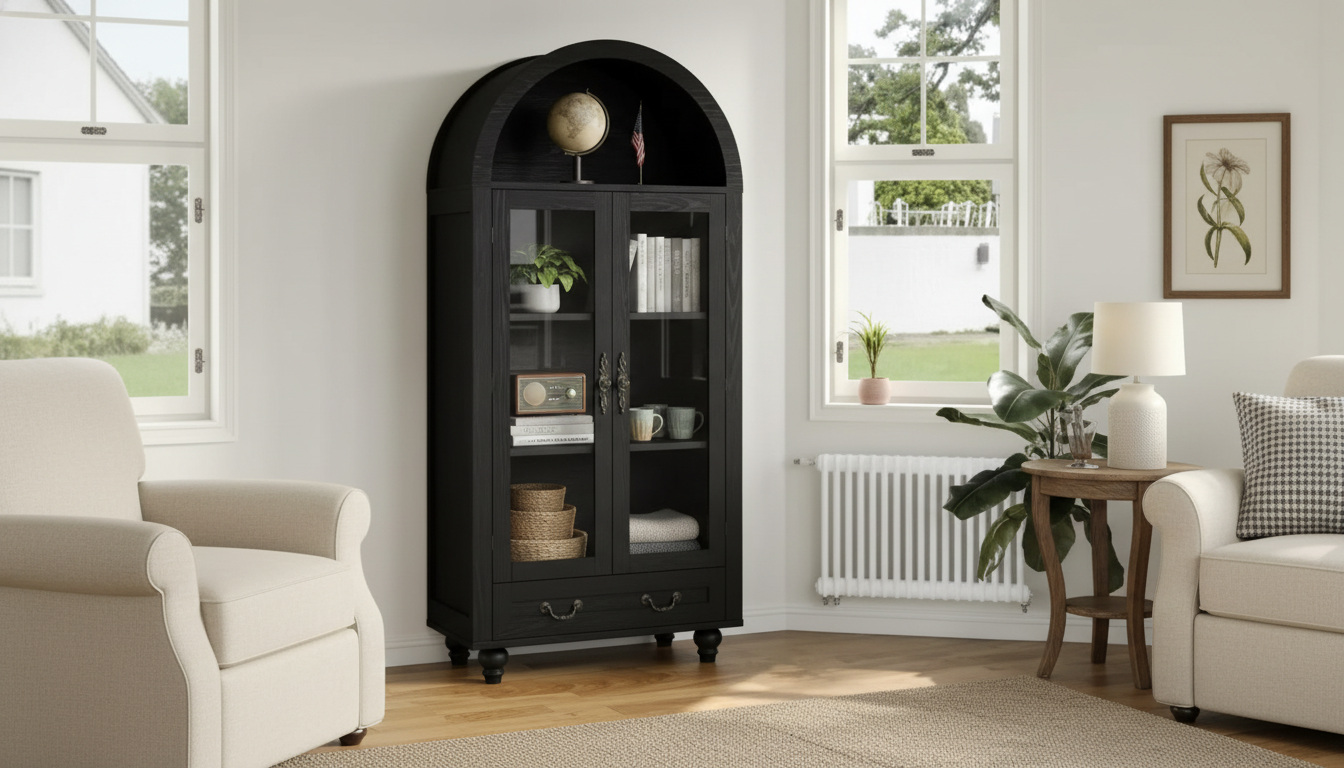
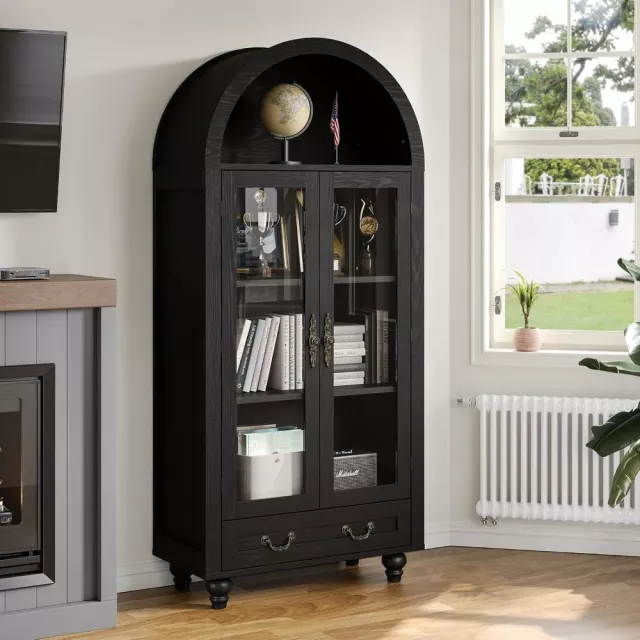
A tall arched cabinet with glass doors adds vertical storage without making a room feel heavy. This 70″ black freestanding farmhouse-style piece works well for display and everyday organization—helping keep essentials accessible while giving décor a clean, curated look. If you’re trying to replace open shelving (without losing that styled feel), a glass-door cabinet is one of the easiest upgrades for a calmer space.
What makes an arched glass-door cabinet stand out
Some storage blends into the background; an arched glass-door cabinet does both—function and quiet focal point—especially when the silhouette is taller than it is wide.
- An arched top softens straight lines: The curve breaks up sharp corners from doorways, frames, and standard rectangular furniture, creating a natural visual anchor without relying on bold prints.
- Glass doors = “display plus storage”: Favorite pieces stay visible, but they’re also protected from everyday dust and the occasional splash that comes with real life.
- Vertical storage for smaller footprints: A tall profile lets you store more while using the same floor space as a shorter console or wide credenza—especially helpful in apartments and narrow rooms.
- Black finish adds contrast: In lighter rooms, black grounds the palette and pairs well with mixed metals (brass, matte black, chrome), warm woods, and neutral textiles.
Where it fits best at home
Because it’s freestanding and tall, this style of cabinet can shift from room to room as your needs change—without requiring a full remodel or built-in installation.
- Dining room: Use it as a modern hutch alternative for serving pieces, glassware, or folded linens. Behind glass, your everyday items can still look intentional.
- Living room: Mix books, framed photos, and a few baskets to hold small items like remotes and cords while keeping the overall look tidy.
- Home office: Store supplies where they’re easy to reach, while displaying reference books or décor that makes your workspace feel finished.
- Entryway or hallway: Create a drop zone for daily essentials while minimizing visual clutter—especially helpful when the first thing you see is a long corridor.
- Bedroom: Use it for accessories, folded items, or collections without adding the bulk of a wide dresser.
At-a-glance details
Use this overview to confirm the basics before measuring your space and mapping traffic flow around doors.
Featured picks available now
If you’re ready to upgrade storage (or pair furniture with a simple organization reset), these in-stock options can help you move from “stuff everywhere” to “everything has a home.”
Styling ideas that look intentional (not cluttered)
A glass-door cabinet can look like a curated display—or a visual catch-all. The difference is usually simple structure and restraint.
- Group items by function: Keep glassware together, books together, and décor together to avoid the “miscellaneous shelf” effect.
- Balance open space and objects: Leave breathing room behind the glass so the cabinet reads calm, not crowded.
- Use matching containers for small items: Trays, lidded jars, or small baskets reduce visual noise and hide the tiny bits that never look “styled.”
- Mix heights and textures: Stack a couple of books, add a small vase, and include one sculptural piece to create depth and prevent a flat, lined-up look.
- Keep a consistent palette: Repeating two to three colors makes collections feel cohesive behind glass—especially against a black cabinet frame.
Measuring and placement checklist
Care, cleaning, and everyday use
- Glass: Use a non-abrasive glass cleaner and a microfiber cloth to prevent streaks and fine scratches. For general glass care guidance, see the American Cleaning Institute.
- Finish: Wipe with a soft, slightly damp cloth; avoid harsh chemicals that can dull the surface over time.
- Loading: Keep heavier items on lower shelves to maintain stability and reduce stress on doors and hinges.
- Monthly reset: Remove a few items, wipe shelves, and re-group contents by category so the cabinet doesn’t slowly drift into clutter.
Safety notes for tall freestanding cabinets
- Anchor when possible: Tip-over prevention is strongly recommended, particularly in homes with children or pets. Review guidance from the U.S. Consumer Product Safety Commission (CPSC).
- Keep weight low and balanced: Avoid placing heavy objects high up; distribute weight evenly across shelves.
- No climbing or pulling on doors: Open doors can create pulling forces—use handles gently and discourage leaning or climbing.
- Re-check stability: After moving or rearranging, confirm the cabinet is still level and secure before reloading.
FAQ
Does a freestanding glass-door cabinet need to be anchored to the wall?
Anchoring is recommended for tall furniture to help prevent tip-overs, especially with children or pets in the home. Check whether anchoring hardware is included and follow the provided installation guidance for your wall type.
What should be stored behind glass doors to keep it looking neat?
Group items by category (such as books, glassware, or décor) and use matching containers to reduce visual noise. Keep heavier pieces on lower shelves and leave some open space so the display doesn’t look crowded.
How do you reduce glare and fingerprints on glass cabinet doors?
Use a microfiber cloth and a non-abrasive cleaner, and wipe handles/edges more often since they collect oils first. If glare is an issue, adjust nearby lighting or reposition reflective items so strong reflections aren’t aimed directly at eye level.
Recommended for you











Leave a comment