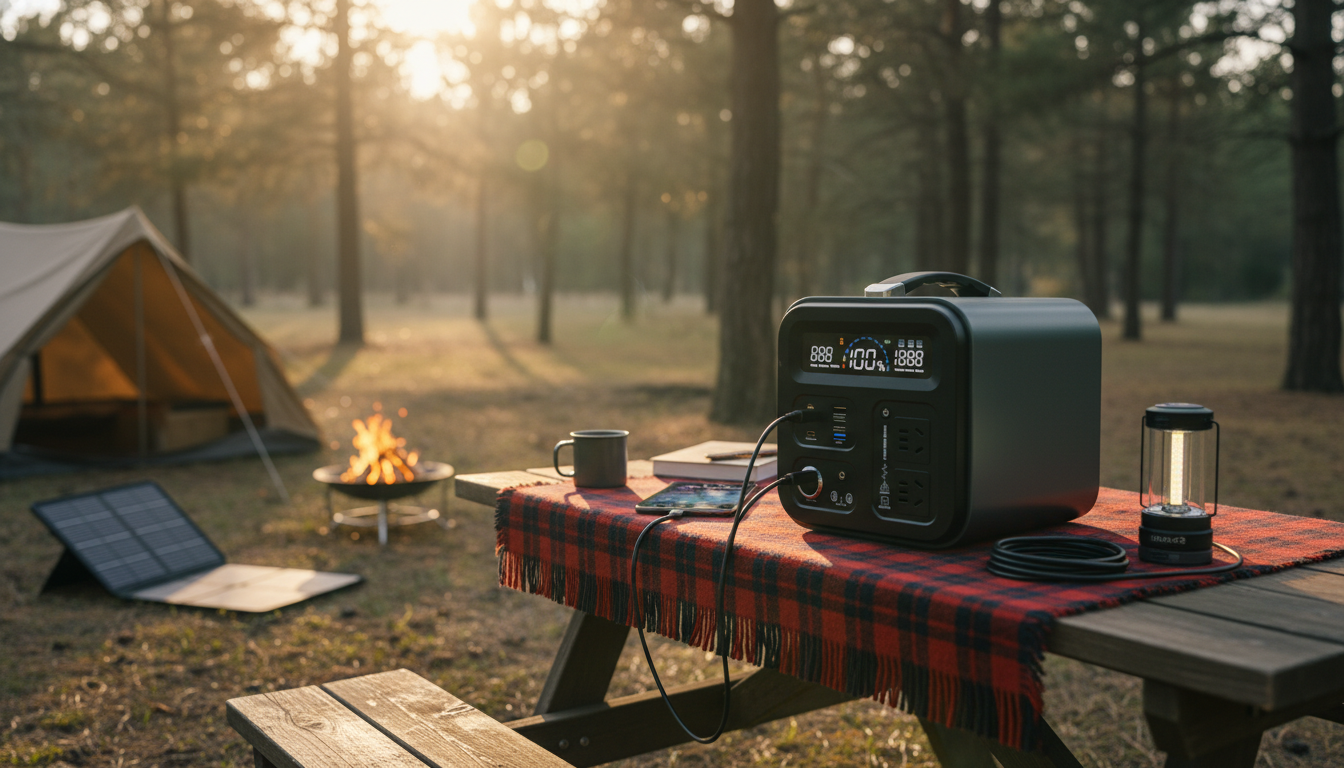
A compact power station can keep essential devices running during outages, camping trips, and mobile workdays—without the noise and fumes of a gas generator. This 550Wh unit pairs a 600W pure sine wave AC inverter with multiple USB and DC ports, making it practical for charging phones, running small appliances, and powering sensitive electronics when wall power isn’t available.
A 550Wh battery paired with a 600W pure sine wave inverter is a “sweet spot” for light-duty power needs. It’s sized for the devices most people reach for first—communication, lighting, computing, and small comfort items—while staying portable enough to move from a closet to a car to a campsite.
If you’re building a simple outage kit, a unit like the Portable 550Wh Solar Power Station with 600W Pure Sine Wave AC, USB & DC Outputs is designed for the “keep it running” essentials rather than whole-home backup.
Getting the most run-time is often less about the battery size and more about choosing the right output for the job. Whenever possible, power devices from the lowest-conversion path (typically DC or USB), and reserve AC for items that truly require a wall plug.
| Device | Typical Watts | Estimated Time on 550Wh (real-world range) | Best Output Type |
|---|---|---|---|
| Smartphone charging | 5–15W | 30–80+ charges (varies by phone and losses) | USB |
| Laptop (office work) | 45–100W | 4–9 hours | AC or USB (if supported) |
| Wi‑Fi router + modem | 10–25W | 18–45 hours | DC (if compatible) or AC |
| LED light string | 10–30W | 12–40 hours | DC or USB (if supported) |
| Small fan | 20–60W | 7–20 hours | AC or DC (if compatible) |
| CPAP (no heated humidifier) | 30–60W | 7–16 hours | DC (preferred) or AC |
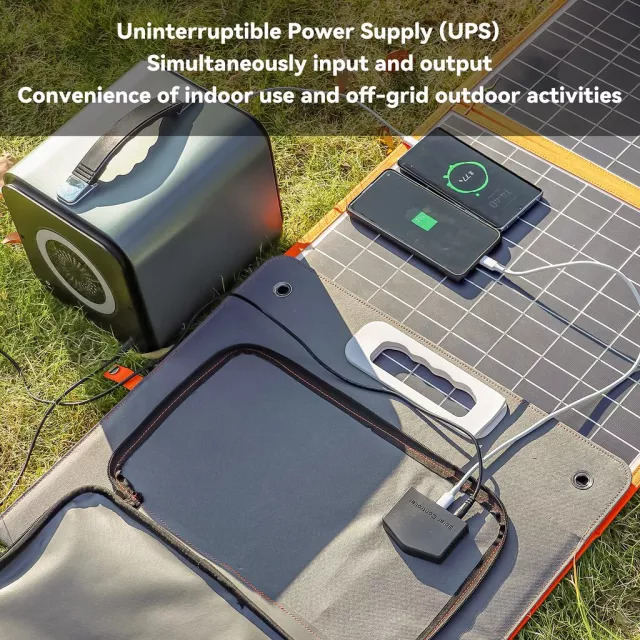
Versatility is one of the biggest advantages of a portable power station: you can refill it at home, in a vehicle, or from the sun with a compatible solar panel.
A quick way to estimate solar refill time is: Recharge time (hours) ≈ battery Wh ÷ real solar input W. “Real input” is often lower than the panel rating due to heat, angle, and conversion losses. Tools like the NREL PVWatts Calculator can help you understand how sunlight conditions affect expected production.
For a broader look at safe backup strategies during outages, the U.S. Department of Energy’s overview of backup power options is a helpful reference point when deciding what you truly need to keep running.
For a streamlined mobile setup, pairing your power plan with digital-first tools can reduce what you need to power. If you’re simplifying workflows on the road, Practical AI Toolkit for Non-Technical Minds | using ai tools if you’re not tech-savvy can help you get more done with less device time and fewer open apps.
For general lithium-ion handling and safety considerations, UL’s resource on lithium-ion battery safety is a solid overview.
Many refrigerators draw modest running watts but require a much higher startup surge when the compressor kicks on. A 600W continuous inverter can run some efficient mini fridges, but it’s not guaranteed—check both running watts and surge/startup watts, and consider a higher-watt model for full-size refrigerators.
Pure sine wave power is cleaner and more like home electricity, which improves compatibility for sensitive electronics and can reduce buzzing, extra heat, or finicky charging behavior. It doesn’t increase capacity, so you still need to stay within the 600W continuous limit and any surge limits.
A simple estimate is recharge time ≈ 550Wh ÷ real solar input (W) after losses. Real-world input depends heavily on sunlight conditions, panel angle, temperature, and shading—so a “100W panel” may deliver less than 100W much of the day.
If you have any questions, here are some useful links:










Leave a comment