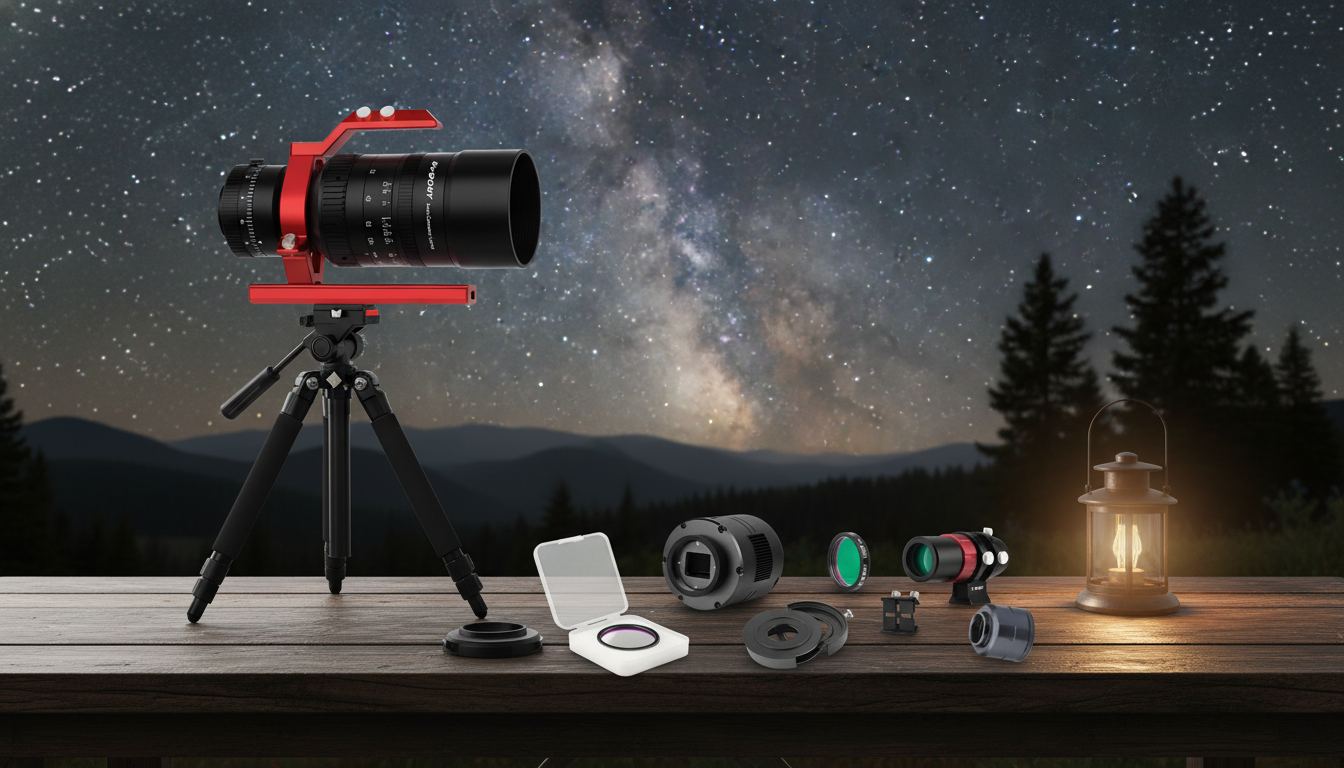
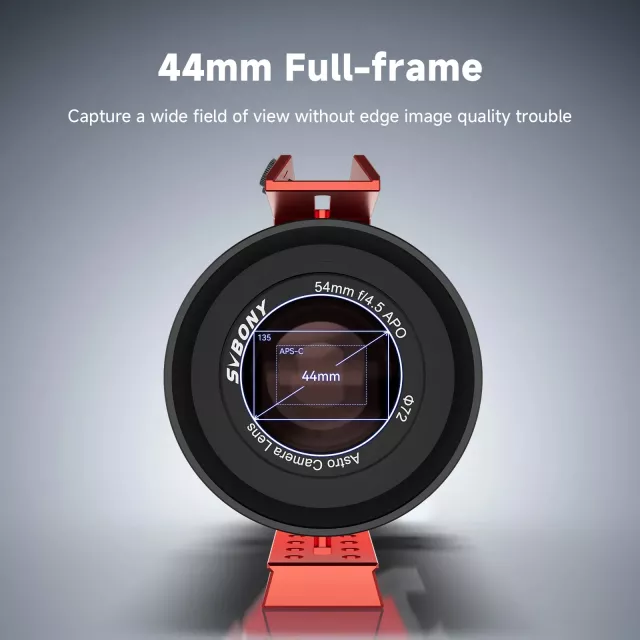
A compact APO refractor can deliver crisp star fields and detailed wide targets when the optical train is well-matched and focus is repeatable. This 54mm class setup is built for controlled focusing and clean color correction, making it a strong option for travel-friendly deep-sky imaging, mosaics, and guided wide-field work.
A 54mm apochromatic refractor is all about practical, real-world efficiency: wide framing, low setup friction, and optics that keep bright stars clean. While it won’t be the tool for tiny galaxies at high magnification, it shines when the goal is to capture large swaths of sky with tight star profiles.
Focus is one of the fastest ways to “lose” detail in astrophotography. Even a modest focus shift can turn pinpoint stars into soft blobs, especially with modern high-resolution sensors. A focus-friendly design and a repeatable focusing routine do more for image quality than many accessory upgrades.
| Symptom | Likely cause | Practical fix |
|---|---|---|
| Stars look slightly bloated across the frame | Focus drift from temperature change | Refocus; consider an electronic focuser routine if available |
| Elongated stars in one direction | Tracking or guiding issue | Check polar alignment, balance, guide settings, and exposure length |
| Comet-like stars toward corners | Backfocus/field correction mismatch | Confirm spacing, adapters, and flattener/reducer requirements |
| One side of frame sharper than the other | Tilt in camera train | Inspect threading, use a tilt adjuster if needed, re-seat components |
With a premium 54mm APO, the imaging “feel” is typically clean and controlled: neutral star color, good contrast in dense star fields, and strong results on large nebulae—especially when paired with careful calibration and gradient management.
For technique deep-dives and practical troubleshooting, authoritative references like Sky & Telescope’s astrophotography guides and community discussions on Cloudy Nights can help refine capture and processing choices.
Wide-field refractors reward a “rigid and repeatable” build philosophy. A secure connection chain and correct spacing reduce the most common problems: tilt, corner distortion, and inconsistent focus behavior across the night.
| Category | Recommended items | Why it helps |
|---|---|---|
| Power & dew control | Dew heater strap, controller, stable power source | Prevents fogging and keeps focus stable |
| Optical spacing | Threaded spacers, calipers or measured rings | Maintains correct backfocus and reduces corner issues |
| Guiding | Guide scope + guide camera | Improves tracking, enabling longer exposures and tighter stars |
| Calibration | Flat panel or flat method, dark library | Improves gradients and removes vignetting/dust shadows |
| Comfort & workflow | Bahtinov mask, headlamp with red mode | Speeds focus checks and reduces mistakes in the dark |
For additional learning resources and mission imagery that can help with target planning and inspiration, NASA’s main portal at NASA.gov is a solid starting point.
| Item | Details |
|---|---|
| Product | Premium 54mm APO Astrophotography Telescope with Perfect Focus Lens |
| Availability | In stock |
| Price | $4,763.49 USD |
| Store | emanuelo.com |
Yes—especially for wide-field targets like large nebulae, Milky Way star clouds, and open clusters. For many imaging goals, framing and focal length drive the result more than aperture, while larger apertures and longer focal lengths become more important for small, detail-heavy targets.
Refocus at the start of the session, after meaningful temperature changes, and after any adjustment to the camera train. A Bahtinov mask or autofocus routine helps keep focus repeatable, and good dew control plus a locked, fully threaded setup reduces slippage and drift.
Often, yes—refractors naturally have some field curvature, and larger sensors make corner issues more visible. If a flattener or reducer is used, meeting the manufacturer’s backfocus distance with stable, threaded spacers is key to keeping corner stars tight.
If you have any questions, here are some useful links:












Leave a comment