HomeBlogBlogWooden Cat Tree Tower with Hidden Litter Box & Posts

Wooden Cat Tree Tower with Hidden Litter Box & Posts

Wooden Cat Tree Tower with Hidden Litter Box & Posts

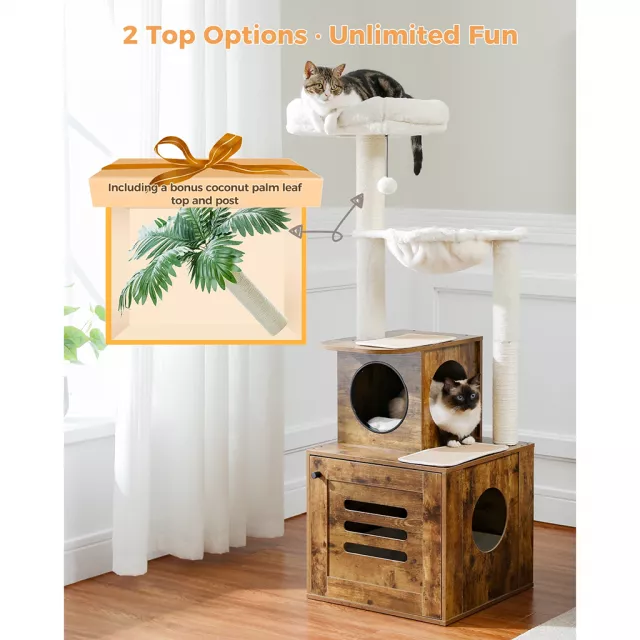
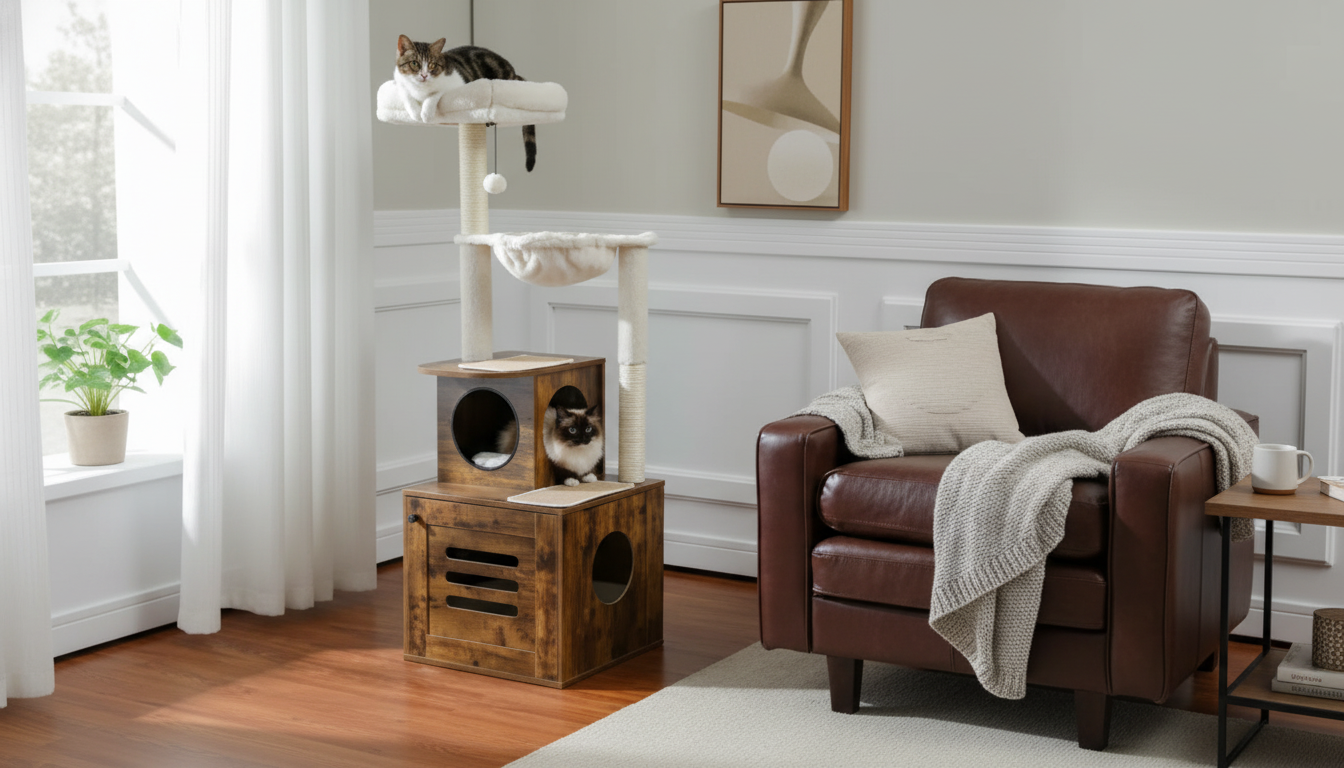
Deluxe Wooden Cat Tree Tower with Built-In Litter Box & Scratching Posts

A single tower that combines climbing, lounging, scratching, and a hidden litter area can reduce clutter while giving cats a dedicated “home base.” This wooden cat tree tower is designed for households that want a sturdier, furniture-style look with practical features for everyday use.

What Makes a Cat Tower With a Built-In Litter Area Different

A cat tower with an integrated litter compartment does more than stack platforms upward. It combines vertical territory with a private bathroom zone, which can help keep litter needs out of open living areas while still giving your cat a consistent, easy-to-find routine spot.

  • Combines climbing space and a private litter space, helping separate bathroom needs from open rooms.
  • Reduces overall footprint compared with buying a separate cat tree plus a standalone litter cabinet.
  • Creates a routine-friendly “one zone” setup for scratching, perching, and bathroom breaks.
  • Often blends into a living room or office better than bulky, carpet-heavy cat furniture.
  • Supports multi-cat homes by providing multiple stations (perches, scratching, and a hideaway).

Design Highlights to Look For in a Deluxe Wooden Tower

When a tower is doing double duty—cat furniture plus litter concealment—small details make a big difference in day-to-day satisfaction. A deluxe wooden unit should feel like stable home furniture, not a wobbly add-on.

  • Wooden frame and panels for a more finished look and long-term stability.
  • Multiple levels for climbing and perching to match natural “high ground” preferences.
  • Scratching posts placed where cats naturally stretch (near entrances and next to platforms).
  • A litter compartment that offers privacy while still allowing simple human access for scooping.
  • Ventilation considerations (airflow gaps, door design, and placement that doesn’t block circulation).
  • Wipe-clean surfaces, especially around the litter zone where dust and paw prints collect.
  • Hardware quality, including secure fasteners, reinforced joints, and a stable base.

Feature Checklist: Comfort, Cleanliness, and Durability

Feature Why it matters What to verify before buying
Enclosed litter compartment Adds privacy and helps reduce visual clutter Door/entry size, interior clearance, and access for cleaning
Multiple platforms Encourages climbing, play, and rest Platform spacing and usable surface area for your cat’s size
Scratching posts Protects furniture and supports nail health Post height, number of posts, and scratch material durability
Stable base Prevents wobbling and tipping Overall footprint, weight, and anti-tip options if needed
Easy-clean surfaces Simplifies daily upkeep Finish type, removable mats/panels (if included), and wipeability

Everyday Benefits for Cats (and for the Home)

For many households, the biggest win is not just the hidden litter area—it’s how a consolidated tower can support calm, predictable habits. Cats thrive on reliable “stations” in the home, and a combined setup can make it easier to maintain that rhythm.

  • Stress reduction through predictable routines: scratch, rest, and use the bathroom in one consistent zone.
  • Better use of vertical space in apartments and smaller rooms where floor area is limited.
  • Helps contain litter scatter compared with open trays placed in high-traffic walkways.
  • Can improve appropriate scratching when posts are positioned near common cat pathways.
  • Supports enrichment: climbing and vantage points can reduce boredom and nighttime zoomies.
  • Creates a “safe zone” for shy cats when the lower compartment or cubby offers a retreat.

For guidance on litter box routines and what cats typically prefer, these resources are helpful: American Association of Feline Practitioners (AAFP) — Litter Box Management, ASPCA — Litter Box Problems, and International Cat Care — Litter tray tips.

Where This Type of Tower Fits Best

Placement affects whether a built-in litter compartment feels inviting or “too exposed.” Aim for a spot that’s easy for your cat to access but not right in the middle of household traffic.

  • Living rooms: Place a few feet away from busy walkways so the litter area stays calmer.
  • Home offices: Cats can perch near you without a separate litter box sitting out in the open.
  • Bedrooms: Can work well if odor control is consistent and cleaning is non-negotiable.
  • Multi-cat homes: Consider approach and exit routes so cats don’t feel cornered.
  • Avoid tight corners: Many cats prefer at least one clear “escape route,” especially around the litter entry.

Setup and Training Tips for Fast Adoption

Most cats adjust quickly when the transition feels familiar. The goal is to keep scent, texture, and access predictable while your cat learns that the new tower is their new go-to spot.

Cleaning and Odor Control Basics for Enclosed Litter Areas

Product Options Available

FAQ

Will cats actually use a built-in litter compartment?

Most cats adapt well when the tower is introduced gradually, the same litter is used, and the entry is easy to find. Keep it clean during the transition so the new compartment quickly becomes part of your cat’s routine.

Does an enclosed litter space make odor worse?

It can if scooping is inconsistent, since odors may concentrate in enclosed spaces. Daily scooping, keeping airflow around the unit, and regular wipe-downs typically keep smells manageable.

Is a wooden cat tower harder to maintain than carpeted ones?

Wood surfaces are often easier to wipe clean, especially around the litter area. The key is protecting the finish by cleaning up moisture quickly and sticking to a simple cleaning schedule.

Was this article helpful?

Yes No
Leave a comment
Top

Yay! 10% Off Just for You!

Join our community and enjoy 10% off your first order. Subscribe for exclusive deals!

Shopping cart

×