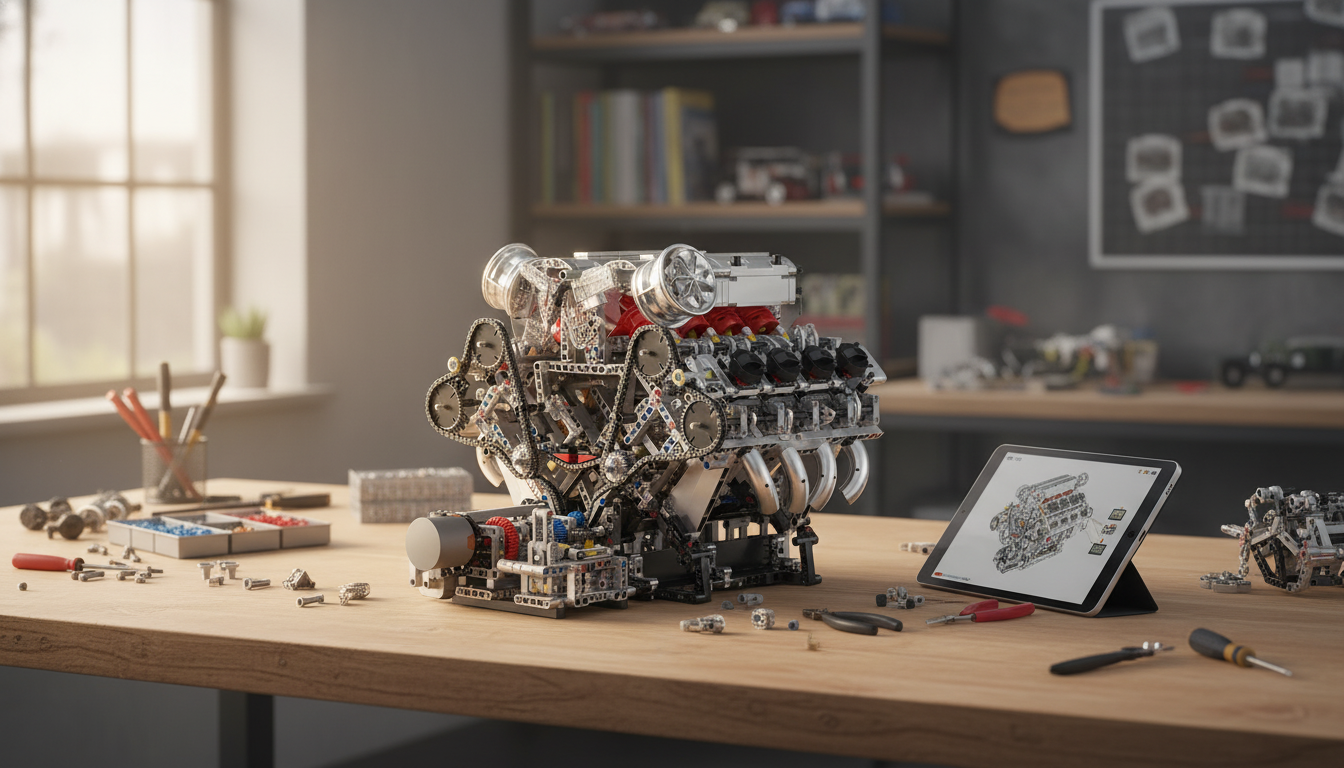
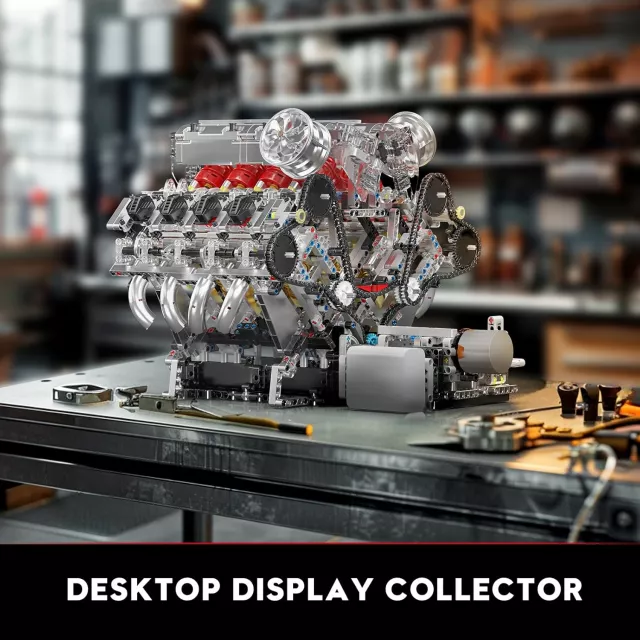
A working engine model brings pistons, crankshafts, timing, and power transfer into view—turning abstract mechanics into something hands-on. This supercar-style STEM building set adds a motorized drive so the finished build can animate the full cycle for display, learning, and repeatable demonstrations.
If you’re looking for a functional desktop showpiece that also teaches real mechanical relationships, the Build Your Own V8 Engine Model Kit – Supercar STEM Building Set with Motor is designed to make motion the main feature—not an afterthought.
For a quick refresher on how the full engine cycle is commonly explained in theory, the four-stroke overview from Khan Academy pairs especially well with a moving model you can watch from multiple angles.
Building goes smoother when everything is staged: place similar fasteners together, keep long axles separated from short ones, and leave a small “quarantine” area for pieces you’re not sure about until the next step confirms fitment.
This is the kind of kit that rewards patience. The goal isn’t just “assembled”—it’s “assembled and spins freely,” which is what makes the motorized motion satisfying to watch.
A practical checkpoint: once the crank and rods are in, rotate the crank slowly through multiple full turns by hand. You want consistent resistance—no “hard spots.” If you feel a snag, it’s usually a slightly mis-seated axle, a gear not fully meshed, or a joint tightened a bit too aggressively for a moving linkage.
For a clear, non-technical overview of how the major parts work together in an internal-combustion engine (as the real-world inspiration for these demonstrations), see Encyclopaedia Britannica’s internal-combustion engine reference.
For a clean “museum-style” look, a simple framed card beside the model can make it feel like a curated exhibit. If you want a guided creative approach for making a polished label or mini display sign, Frame It Your Way – DIY Photo Frame Decorating Ideas Guide can help with layout and presentation ideas that fit a desk, shelf, or classroom table.
| Option | Best for | Trade-offs |
|---|---|---|
| Motorized V8 engine model kit | Seeing moving parts and relationships in real time | Requires assembly time and careful alignment |
| Static engine display model | Showpiece aesthetics and basic part identification | Limited understanding of motion and timing |
| Textbook/diagram resources | Clear definitions, cycles, and theory | Harder to visualize 3D movement and interactions |
A hybrid method works well: use the motorized model to see “what moves when,” then use a diagram to name each phase and confirm sequence. For an approachable, step-by-step explanation of engine basics with everyday language, HowStuffWorks’ guide to how car engines work is a helpful companion reference.
Yes—the motor drives the crank/gear train so the pistons reciprocate and the rotating assembly turns in a realistic sequence. It’s a functional demonstration model for motion and timing, not a combustion engine that produces power from fuel.
Most builders should expect anywhere from a few hours to a full weekend, depending on experience and how carefully each sub-assembly is tested. Taking time to verify smooth rotation at each milestone usually saves time later.
Start by confirming axles are fully seated, gears mesh cleanly, and no parts are overtightened where they need to pivot. Then re-check rotating assembly alignment and look for friction points along piston travel that may need slight repositioning.
If you have any questions, here are some useful links:












Leave a comment