The Everyday Cook’s Kitchen Toolkit: Smart Flow, Simple Prep, and Essential Gadgets
A kitchen runs best when tools, layout, and habits work together. The goal isn’t more stuff—it’s fewer friction points: fewer steps, fewer forgotten ingredients, and fewer “where did I put that?” moments. With a simple five-zone flow, a compact set of high-utility tools, and a short list of gadgets that actually prevent mistakes, weeknight cooking feels more automatic and a lot less cluttered.
The 5-Zone Kitchen Flow That Makes Weeknights Easier
Most kitchen stress comes from back-and-forth movement: bouncing between pantry, sink, stove, drawers, and trash. A five-zone setup reduces steps and keeps the items you reach for constantly at “elbow height” in the zone where they’re used.
- Set up five zones: storage, prep, cooking, plating, and cleanup to reduce extra trips.
- Keep the most-used items at “elbow height” (easy reach) in their home zone.
- Create one landing spot near the stove for spoons, tongs, a thermometer, and a small tray.
- Place a small trash/compost container at the prep zone to prevent counter pileups.
- Choose one “always clear” counter segment for prep so you’re not reshuffling appliances every meal.
Kitchen Flow Zones: What to Store Where
| Zone |
Primary tasks |
Keep within arm’s reach |
Store nearby (secondary) |
| Storage |
Grab ingredients and staples |
Salt, pepper, oil, everyday spices |
Bulk grains, backups, rarely used appliances |
| Prep |
Wash, chop, measure, mix |
Chef’s knife, cutting board, towels, mixing bowl |
Colander, measuring set, food scale |
| Cooking |
Sauté, simmer, roast, sear |
Tongs, spatula, instant-read thermometer |
Lids, sheet pan, splatter screen |
| Plating |
Finish, portion, garnish |
Serving spoon, ladle, microplane |
Warm plates, storage containers |
| Cleanup |
Rinse, load, wipe, reset |
Dish soap, scrubber, drying rack |
Trash bags, dishwasher pods, sanitizer |
The Core Toolkit: Small Tools That Do the Most Work
A reliable everyday kitchen toolkit is compact: it covers cutting, stirring, measuring, and temperature control without turning drawers into a scavenger hunt. These are the pieces that earn their keep across breakfasts, quick lunches, and weeknight dinners.
- One sharp chef’s knife (8–10″) plus a paring knife covers most cutting tasks, from onions to chicken to herbs.
- Two cutting boards: one for produce and one for raw proteins to simplify sanitation and reduce cross-contamination.
- Instant-read thermometer for consistent doneness in meats, fish, and even baked goods (no more guesswork).
- Silicone spatula for scraping bowls and pans efficiently—less waste, faster cleanup.
- 12″ tongs for flipping, tossing, and serving—often more versatile than a fork.
- Microplane for citrus zest, garlic, ginger, hard cheese, and quick finishing touches that make simple food taste “done.”
- Kitchen shears for herbs, packaging, trimming, and spatchcocking—especially helpful when you want speed without extra boards.
- Digital scale for repeatable results in baking and meal prep, and for portioning without extra measuring cups.
For a consolidated, step-by-step reference that ties tools to layout and habits, see The Everyday Cook’s Kitchen Toolkit: Smart Kitchen Flow, Wizardry & Essential Gadgets Guide.
Smart Gadget Picks: When Tech Improves Results (and When It Doesn’t)
Not every “smart” device makes cooking easier. The best gadgets reduce failure points—temperature, timing, and prep consistency—without adding setup hassles or complicated cleanup.
Quick Test for Any New Gadget
| Question |
Good sign |
Red flag |
| Does it prevent a common cooking mistake? |
Improves doneness, timing, or prep accuracy |
Only adds novelty |
| Is cleanup simple? |
Dishwasher safe or rinses clean in seconds |
Multiple parts and tight crevices |
| Will it be used weekly? |
Fits daily meals and habits |
Only used for special occasions |
| Does it earn its storage space? |
Replaces another tool or saves time every meal |
Creates clutter and cabinet overflow |
One “tech” habit that pays off fast is temperature checking for food safety and consistency. The USDA’s safe minimum internal temperature chart is a practical reference for everyday cooking: USDA Food Safety and Inspection Service: Safe Minimum Internal Temperatures. For broader consumer food safety guidance, see the FDA Food Code.
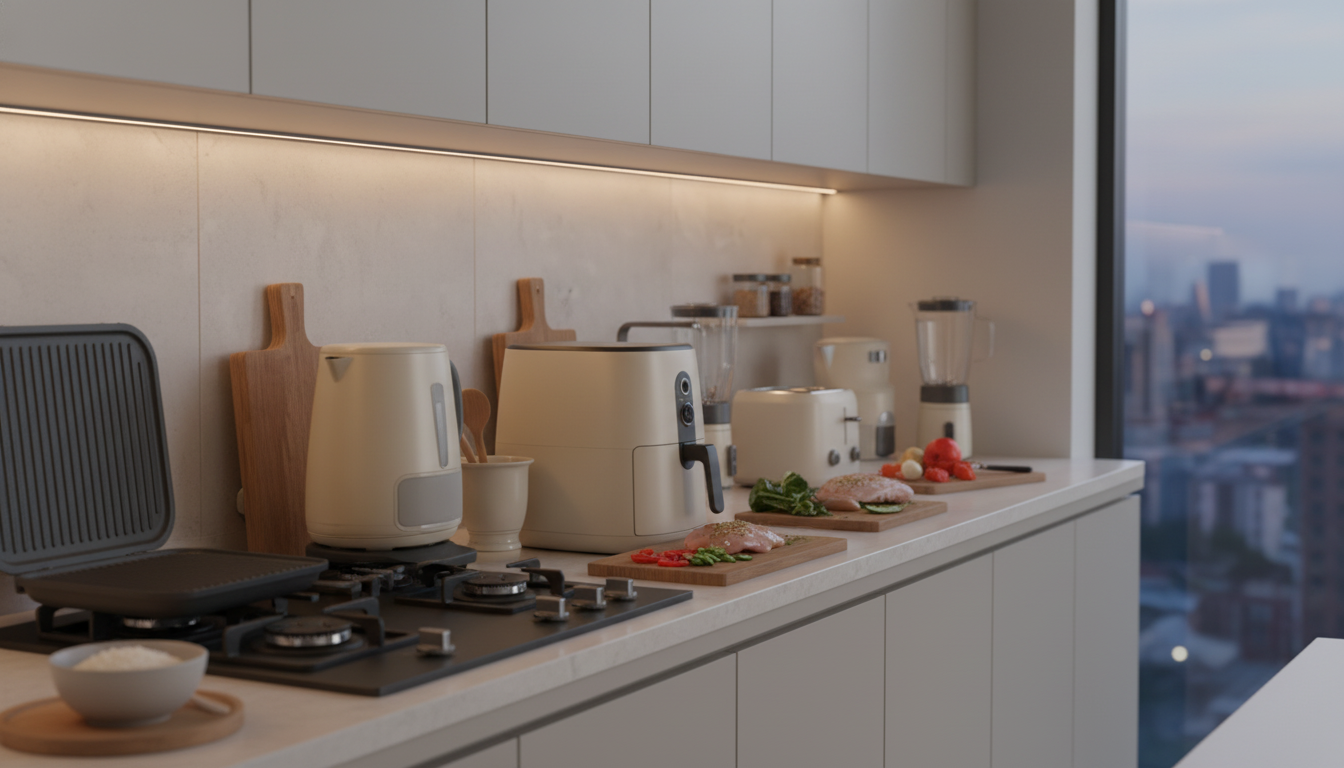
One-Trip Cooking: Set Up Your Counter Like a Pro
If planning and routines are the hard part (not the cooking), a digital workflow can help consolidate checklists, shopping notes, and repeatable meal templates. Practical AI Toolkit for Non-Technical Minds is one option for building simple systems without getting overly technical.
Maintenance That Keeps the Toolkit Working
Putting It Together: The Everyday Cook’s Kitchen Toolkit Guide
A structured approach to kitchen flow helps everyday meals feel lighter and more automatic. Pair the five zones with one-trip staging, then rely on a few high-impact tools—especially a sharp knife, reliable boards, and a thermometer—to reduce mistakes and cut down on cleanup. For a complete, consolidated reference, see The Everyday Cook’s Kitchen Toolkit: Smart Kitchen Flow, Wizardry & Essential Gadgets Guide.
FAQ
What are the most essential kitchen tools for everyday cooking?
Stick to a small set that covers cutting, measuring, heat control, and stirring/turning: a chef’s knife and paring knife, two cutting boards, a thermometer, a scale, a silicone spatula, tongs, and a few durable bowls.
How can a kitchen be organized to cook faster without buying more gadgets?
Use a five-zone setup (storage, prep, cooking, plating, cleanup), keep frequently used items within arm’s reach in their zone, protect one always-clear prep space, and stage ingredients/tools on a tray so you aren’t making repeated trips mid-cook.
Is an instant-read thermometer worth it for home cooks?
Yes—an instant-read thermometer improves consistency and food safety while reducing overcooking and waste. It’s one of the highest return-on-effort tools because it’s fast to use, easy to clean, and takes up very little storage space.
Recommended for you










Leave a comment