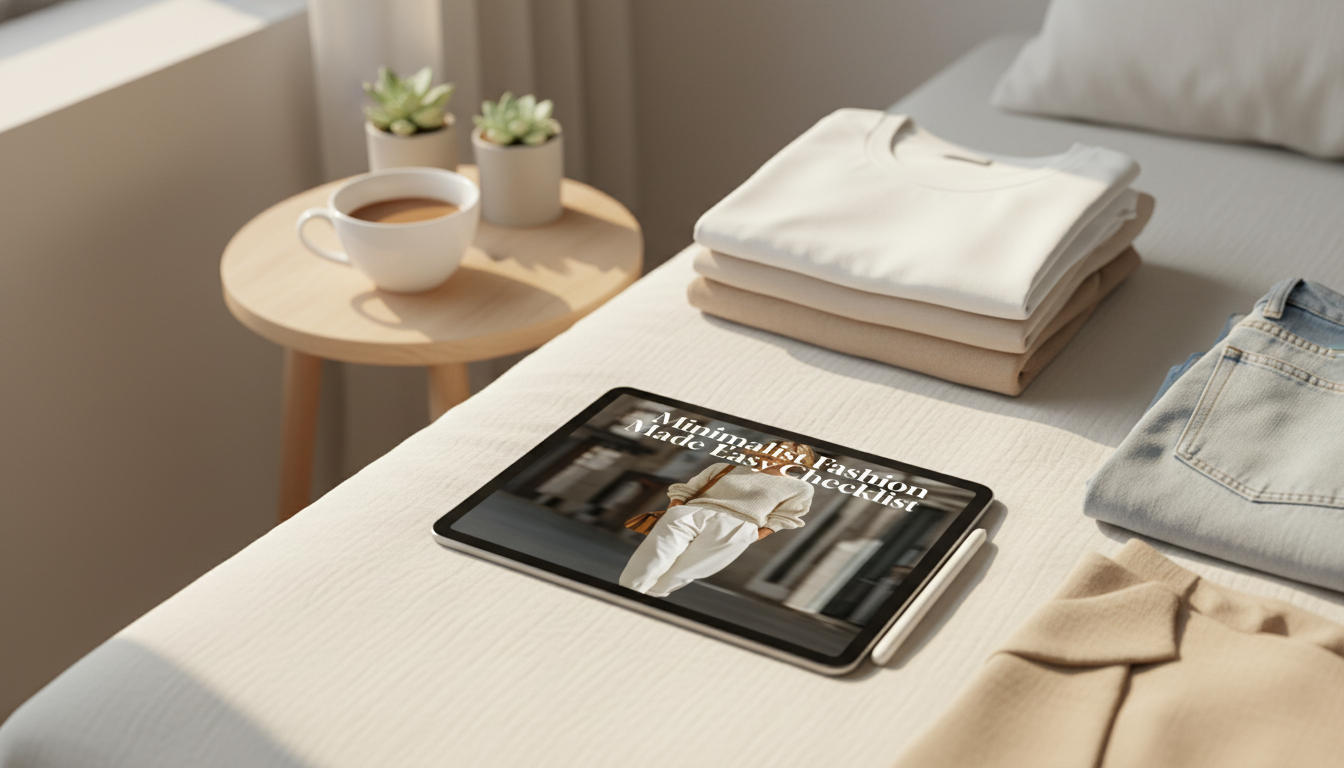
A minimalist wardrobe isn’t about wearing the same thing every day—it’s about reducing decision fatigue, keeping only what works, and creating repeatable outfits that feel like “you.” Use the checklist-style approach below to declutter with confidence, define a simple style direction, and assemble a capsule wardrobe that makes getting dressed noticeably easier.
Minimalist style is practical before it’s aesthetic. It’s the feeling of opening your closet and knowing most options will work—because the pieces cooperate.
Decluttering is easier when you know what you’re keeping for. A capsule wardrobe works best when it’s shaped around your real week, not an imaginary lifestyle.
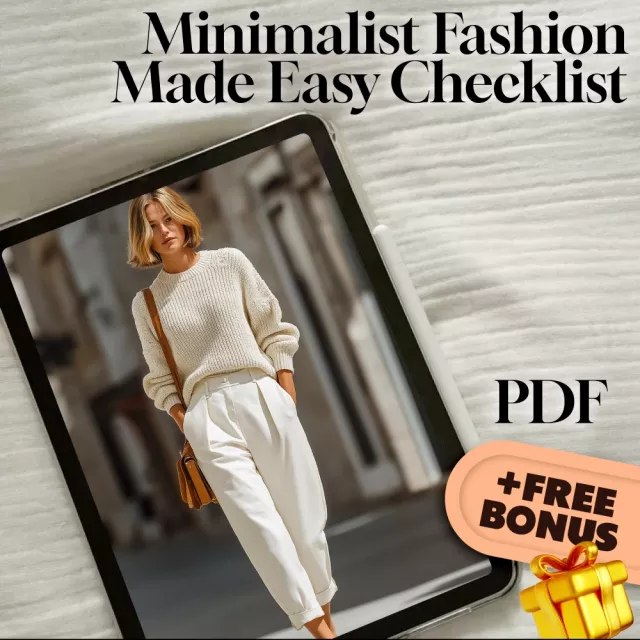
If you want a reusable, print-ready version of these prompts, the Minimalist Fashion Made Easy Checklist (digital download) turns the decisions into a fast, repeatable routine.
Decluttering doesn’t have to be an all-day event. Small, focused sessions prevent burnout and help you make clear decisions.
| Question | If Yes | If No |
|---|---|---|
| Would you buy it again today at full price? | Keep or tailor if needed | Donate/sell/recycle |
| Does it fit comfortably right now? | Keep | Tailor/repair or let go |
| Can it make 3 outfits with what you own? | Keep | Let go unless it fills a true gap |
| Is it in your core palette? | Keep (especially basics) | Keep only if it’s a loved accent piece |
| Does it match your daily lifestyle needs? | Keep | Let go or reserve for rare occasions (limited space) |
For donation and textile disposal, it helps to follow clear guidelines: check Goodwill’s donation guidelines for what can be donated, and review the EPA’s textiles data to better understand reuse and recycling pathways. For garment care basics that extend the life of what you keep, the American Cleaning Institute is a reliable reference.
Start with a “core” that supports your most common days. You can always add a small, intentional layer of personality after you’ve proven what you actually wear.
If you like keeping your wardrobe notes, outfit photos, and “gap list” organized in one place, a lightweight digital system helps. The Practical AI Toolkit for Non-Technical Minds can be used to set up simple prompts for outfit tracking, packing lists, and shopping guardrails without getting technical.
Outfit formulas are the minimalist’s shortcut: once you know your best proportions, you can repeat them with different fabrics, colors, and shoe choices.
Grab the Minimalist Fashion Made Easy Checklist (digital download) when you want a ready-to-go template for your next reset.
A common range is 25–50 pieces, but the right number is the one that covers your weekly needs without forcing “laundry panic.” Start smaller than you think, track what you wear for 2–4 weeks, then add only what fills a real gap.
Start with the easiest wins: worn-out basics, uncomfortable shoes, and duplicates you never reach for. Set a 30–45 minute timer, finish one category at a time, and use an “Undecided” box with a deadline so you don’t stall.
Yes—keep a neutral base, then add controlled accent colors that already work with your favorites. Limit trends to 1–2 items at a time and choose ones you’ll realistically repeat, so “new” doesn’t turn into clutter.
If you have any questions, here are some useful links:









Leave a comment