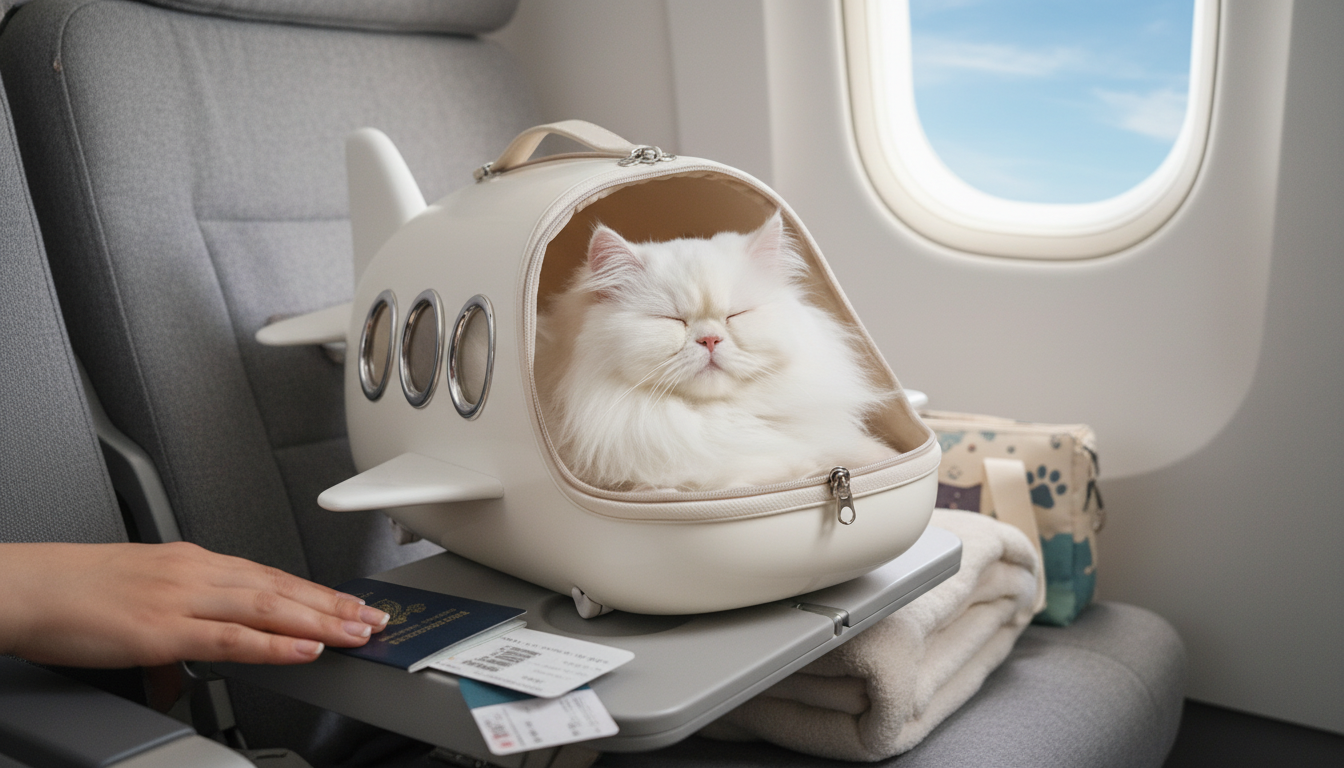
Flying with a cat goes best when the trip is treated like a small project: confirm airline rules early, prepare the carrier and paperwork, and plan for comfort from curb to cabin to destination. The steps below focus on safety, minimizing stress, and reducing surprises at the airport.
The easiest flight for a cat is the one with the fewest moving parts. Before buying tickets, check the airline’s in-cabin pet rules, carrier size limits, fees, and how many pets they allow per flight—many cap in-cabin pets, and those spots can sell out fast.
| Option | Typical fit | Main benefits | Main risks/downsides |
|---|---|---|---|
| In-cabin (under seat) | Most small cats with compliant carrier | Cat stays with owner; steadier temperatures; easier monitoring | Space is limited; must keep carrier closed; some cats dislike crowds/noise |
| Checked pet/cargo hold | Large carriers or cats not eligible for cabin | More room for carrier; may be only option on some routes | More handling; temperature/noise variations; higher stress; not recommended for brachycephalic or medically fragile pets |
A quick vet visit can prevent most last-minute setbacks. Airlines and destinations may require documentation, and your vet can help you judge whether your cat is a good candidate for air travel.
For official guidance on pet travel documentation, consult the USDA APHIS Pet Travel site. General veterinary travel tips are also available from the American Veterinary Medical Association (AVMA).
The carrier is your cat’s “seat,” “safe room,” and “security blanket” all at once. A well-chosen carrier and a few weeks of conditioning can change the entire experience.
Most travel-day stomach upsets come from schedule changes, overfeeding, or unfamiliar treats. Keep things predictable.
Security screening is the moment many cat owners worry about most—and with good reason. The key is slowing down and controlling the environment.
If you want a deeper, step-by-step plan to keep the entire trip organized, see Tips for Flying with Cats Safely: Your Essential Guide for Stress-Free Travel with Cats.
For travelers who like keeping documents, reminders, and checklists neatly organized across devices, Practical AI Toolkit for Non-Technical Minds | using ai tools if you’re not tech-savvy can help streamline planning tasks like packing lists and travel timelines.
Sedation should only be used under direct veterinary guidance, and many airlines discourage routine sedation because it can increase health risks at altitude. For many cats, carrier training, pheromone products, and calm handling are safer first-line options.
Pack travel documents, absorbent pads, wipes, small trash bags, paper towels, a collapsible bowl, measured portions of your cat’s regular food, and any prescribed medications. If your cat is harness-trained, bring a well-fitted harness/leash and keep everything accessible in your carry-on.
Arrive early, keep the carrier low and stable, and immediately re-check zippers after screening. If your cat is prone to bolting, request a private screening room and use a secure harness/leash only if your cat is already comfortable wearing it.
If you have any questions, here are some useful links:













Leave a comment