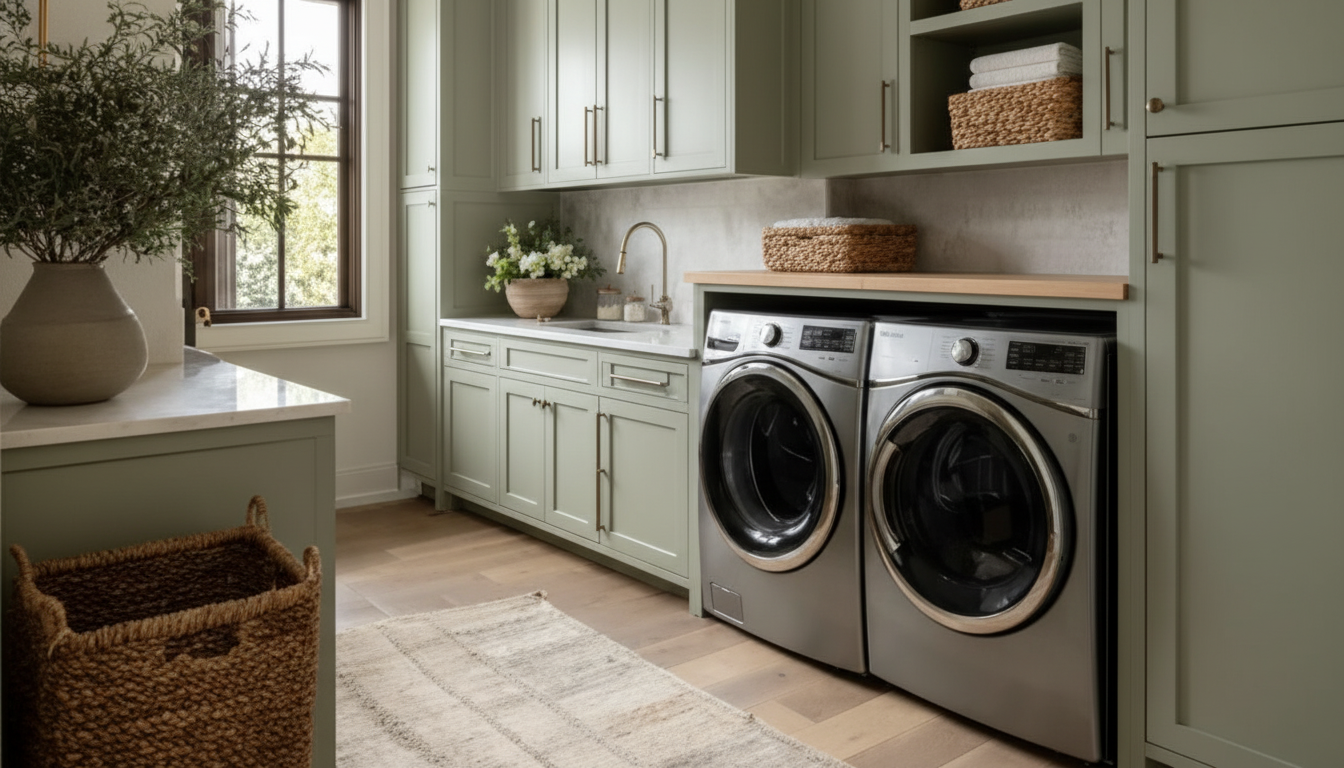
A laundry area runs best when the steps flow in order: collect, sort, wash, dry, fold, and put away. When that loop gets interrupted—by a blocked door swing, a missing surface for baskets, or supplies stored across the room—laundry starts to feel harder than it needs to be. A functional laundry setup isn’t about adding more “stuff”; it’s about reducing friction so the room supports the habit.
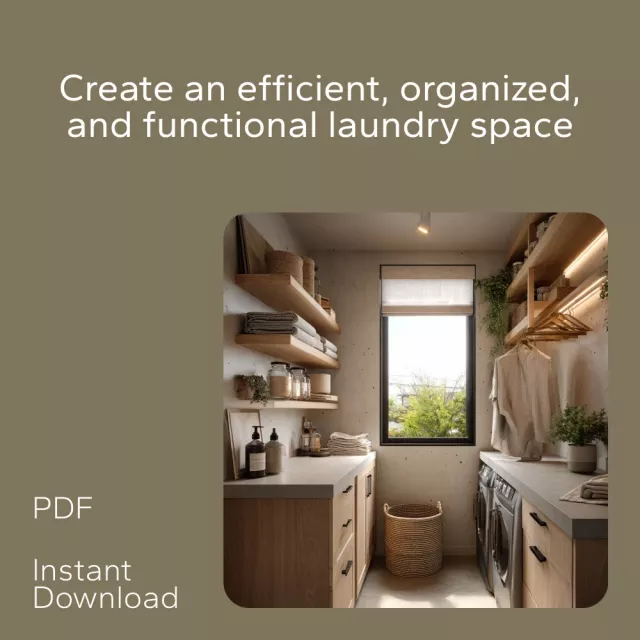
If you’re planning a refresh, moving into a new home, or trying to make a tight laundry closet behave, Designing a Laundry Space That Actually Works: 3-in-1 Digital Download Bundle is built to help map real-life constraints—awkward doors, limited outlets, and everyday clutter—to a repeatable routine.
Before choosing shelves, baskets, or paint, map the full loop as it happens in your home: hamper drop zone → sorting → pre-treating → washer → dryer/line dry → folding → storage → back to bedrooms/closets. This is the difference between a room that looks organized and one that stays organized.
One helpful rule: if an item regularly pauses mid-process (clean shirts waiting to fold, delicates waiting to air-dry), give that pause a dedicated place so it doesn’t become a permanent mess.
Great laundry rooms feel “effortless” because the physical layout matches your movements. Start by confirming door swings (room door, appliance doors, cabinet doors) and any adjacent hallway traffic before you lock in storage or hamper placement.
| Element | Suggested Target | Why It Helps |
|---|---|---|
| Walkway in front of appliances | Comfortable passage without squeezing past doors | Reduces collisions, makes loading/unloading faster |
| Folding surface | Stable, easy-to-wipe surface sized to your typical loads | Prevents clean-laundry pile-ups and wrinkling |
| Hanging area | A rod, hooks, or retractable line near the machines | Supports air-dry and drip-dry items without wandering |
| Sorting setup | 2–4 bins or hampers labeled by household needs | Cuts time spent re-sorting and reduces missed pockets |
| Supply storage | Most-used products between waist and eye level | Less bending/reaching; keeps routine consistent |
Clutter builds when storage doesn’t match behavior. The solution usually isn’t more shelves—it’s clearer zones.
If you enjoy a cohesive look (especially when storage is visible), pairing organization upgrades with a small decor project can make the space feel more intentional. For a creative side project that complements a refreshed utility zone, see Frame It Your Way – diy photo frame decorating ideas Guide.
For efficiency considerations, ENERGY STAR’s overview of clothes dryers is a helpful reference when you’re comparing options or trying to reduce energy use.
Designing a Laundry Space That Actually Works: 3-in-1 Digital Download Bundle is designed to turn a frustrating setup into a low-friction routine. It focuses on planning the space around the steps—sorting, pre-treating, folding, and storage—so the room supports consistency instead of sabotaging it.
If you’re also refining cleaning habits and handling items like towels and bedding, the CDC’s guidance on cleaning laundry offers practical reminders for day-to-day hygiene routines.
A layout feels easier when the steps flow in order, there’s a reliable landing surface, baskets have dedicated parking, and the most-used supplies live within comfortable reach.
Add a fold-down surface or pull-out shelf, switch to vertical storage, use slim labeled bins, and create a two-basket system (dirty/clean) that doesn’t block appliance doors.
Skipping a folding surface, placing storage where doors collide, storing daily supplies too high or too low, having no hanging area, and leaving no spot for baskets or backstock are the most frequent issues.
If you have any questions, here are some useful links:










Leave a comment