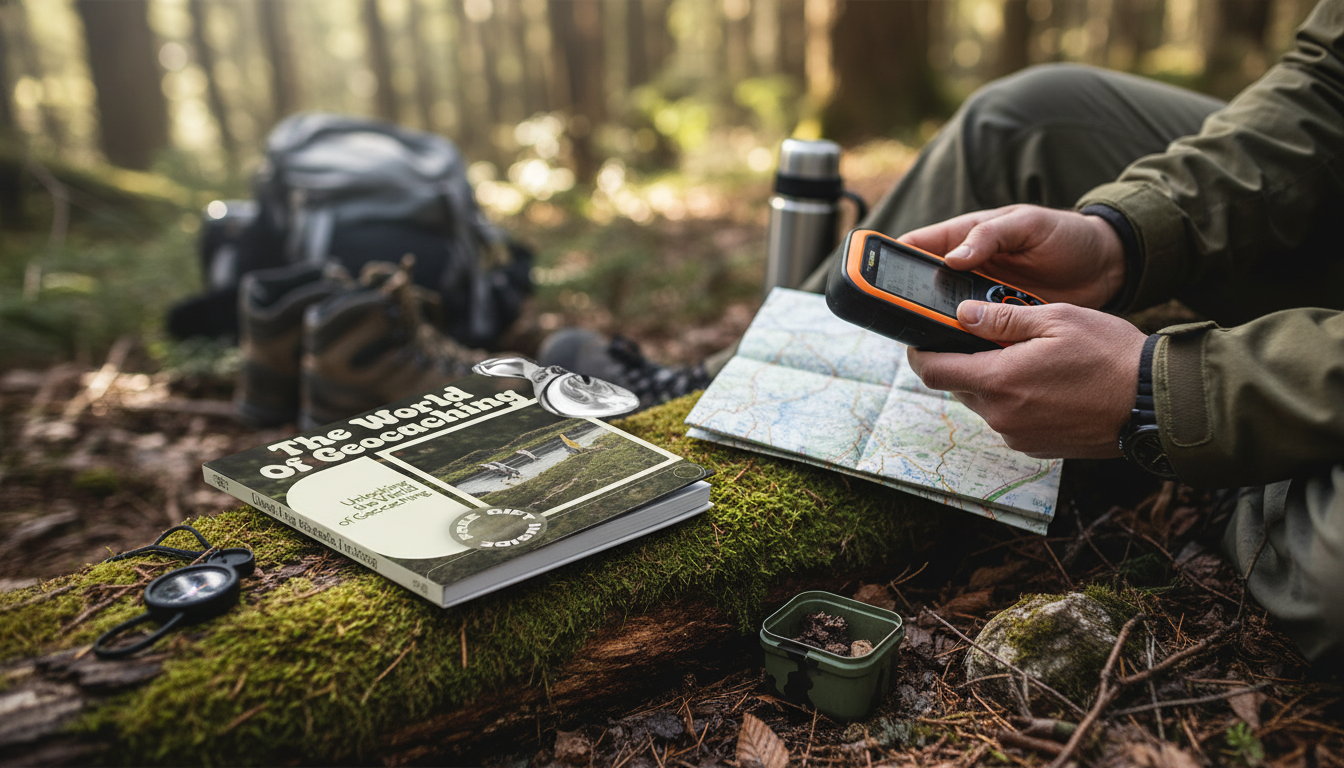
Geocaching turns everyday parks, city streets, and trailheads into a real-world treasure hunt using GPS coordinates and a bit of curiosity. It’s simple to start, but the best experiences come from knowing the basics: how caches are hidden, what the listings mean, what to bring, and how to search without disturbing the area. This guide breaks down the game in a clear, beginner-friendly way and points to a dedicated eBook for learning faster and heading out with confidence—whether the first find is around the corner or part of a global adventure. For more guidance, see A beginner’s guide to geocaching | UMN Extension.
Geocaching is a location-based game where players use coordinates to find hidden containers (called “caches”) and sign a physical logbook (or occasionally a digital log). Caches exist worldwide, ranging from tiny urban hides tucked onto metal railings to scenic trail containers at overlooks, plus creative puzzle-based experiences that feel like mini escape rooms.
The core flow stays the same: choose a cache, navigate to the coordinates, search carefully, sign the log, rehide it exactly as found, then log the find online. The “smart” part isn’t expensive gear—it’s learning how to read hints, interpret GPS behavior, recognize common hiding styles, and search with a plan instead of randomly poking at everything nearby.
Start by creating an account on a geocaching platform (the most widely used is Geocaching.com). For a first attempt, pick a beginner-friendly cache with a higher success rate: low difficulty, easy terrain, and a location you can access safely in daylight.
A smartphone GPS is enough to begin. Turn on high-accuracy location settings, and give your phone a minute to settle its signal before you begin the final approach. On the cache listing page, learn the basics: cache size, difficulty/terrain ratings, attributes (like kid-friendly or night cache), the hint, recent logs, and any special instructions in the description.
Near the target, expect GPS “bounce,” where the arrow swings and the distance fluctuates. Within the last 20–30 feet, slow down and switch from chasing the arrow to using observation and logic. Look for what seems “just slightly out of place,” and remember that a good hide is usually designed to be found without tearing up the environment.
Different cache types create different kinds of adventures:
| Item | Why it helps | Nice-to-have level |
|---|---|---|
| Phone with GPS + downloaded cache info | Navigation and cache details when signal drops | Essential |
| Power bank | Prevents a dead battery mid-hunt | Essential |
| Pen/pencil | Sign physical logs (many caches don’t include one) | Essential |
| Tweezers | Helps remove tightly rolled micro logs | Helpful |
| Gloves | Safe searching around rocks, bark, and metal edges | Helpful |
| Flashlight/headlamp | Better visibility for shaded hides and dusk finds | Helpful |
| Small swap items | For trade-only caches (swap equal or better) | Optional |
Trade fairly in caches that allow swaps: if you take something, leave something of equal or greater value, and never leave food, scented items, or unsafe objects. If you pick up a trackable or travel bug, move it only if you can place it again soon and log the movement accurately. Finally, follow posted signs, access rules, and park hours. The Leave No Trace Seven Principles are a strong baseline for making sure your hunt doesn’t damage the places you’re exploring.
Having a structured guide can shorten the learning curve—especially for interpreting listing details, understanding cache types, and building a practical search routine that works in both city parks and trail systems. For a clear, newcomer-friendly path, consider Unlocking the World of Geocaching (Beginner-Friendly eBook Guide), a digital resource focused on smart treasure hunting and confident global adventures.
Since geocaching relies on navigation and battery life, it also helps to understand wearable features that genuinely improve outdoor days—like GPS performance, battery expectations, and durability. Smartwatch Smarts: Features Worth Every Penny (Digital eBook Download) breaks down which smartwatch features are worth paying for when you want practical support on the go.
If you’re curious about the “why” behind the location arrow and accuracy swings, the USGS overview of how GPS works provides a helpful, plain-language background.
Yes, when you choose easy terrain, stick to public locations, and check cache attributes and recent logs before heading out. Bring basics like water and a charged phone, and practice situational awareness—especially around roads, water, or steep areas.
Bring a phone with GPS, a power bank, and a pen or pencil to sign the log. Tweezers, gloves, and a small flashlight are helpful upgrades, plus weather and trail basics if you’ll be outdoors.
Log a DNF, reread the hint and recent logs, and widen your search radius without damaging the area. If it still doesn’t turn up, return another time—DNFs can also alert the owner that maintenance may be needed.
If you have any questions, here are some useful links:













Leave a comment