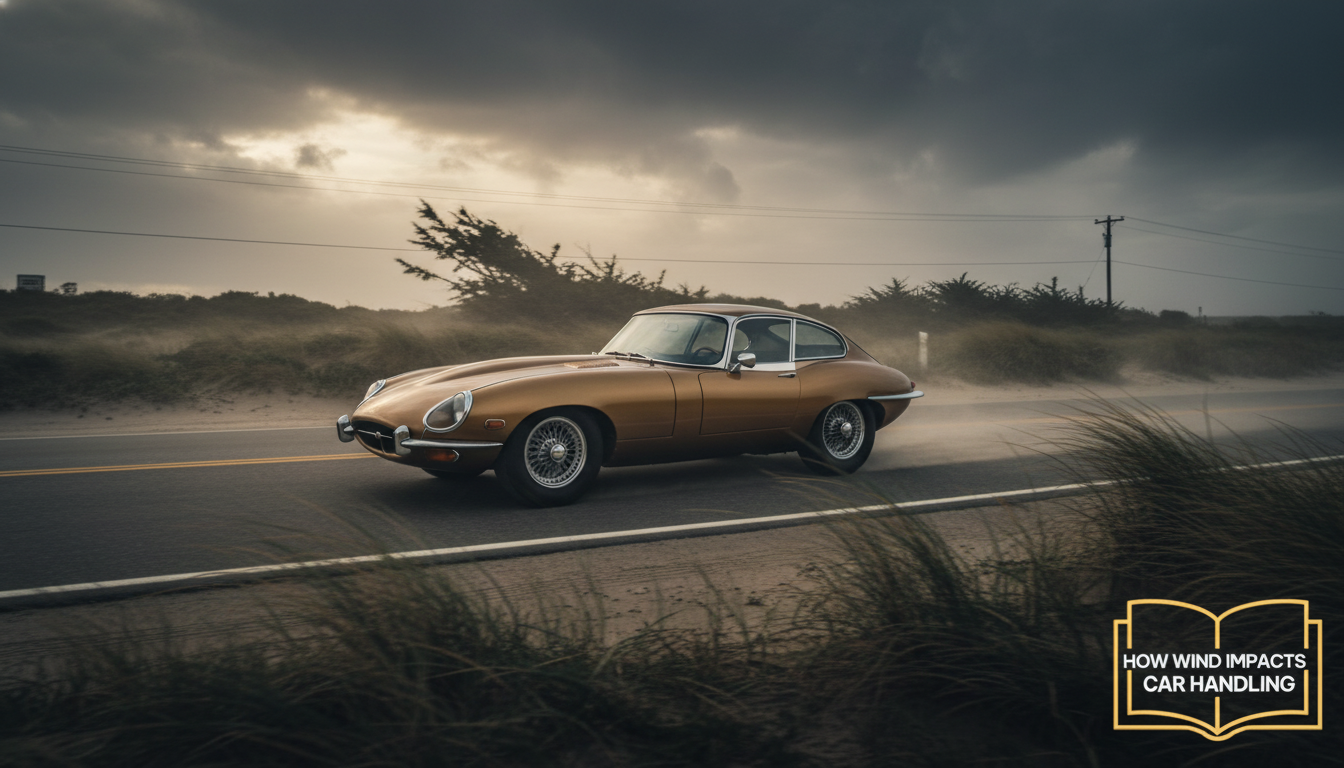
Wind changes how a vehicle tracks, brakes, and responds to steering—especially at highway speeds, in open areas, and when passing trucks or driving over bridges. Crosswinds and sudden gusts can make a car feel like it “floats” sideways, and the constant need for small corrections can quietly increase driver workload. The good news: a few technique and planning changes can dramatically improve stability and comfort when conditions turn blustery.
Crosswinds apply lateral force to the vehicle’s body, while gusts create rapid changes that feel like a sudden shove. At higher speeds, the effect intensifies because aerodynamic forces rise quickly as speed increases. That’s why a day that feels merely “breezy” in a parking lot can feel demanding at 65–75 mph.
Vehicle shape matters too. SUVs, vans, and boxier crossovers present large flat side areas that act like sails compared with low-profile sedans. Wind direction also plays a major role: true crosswinds (wind coming from the side) tend to be most destabilizing, while quartering headwinds or tailwinds can still cause drift and require steady steering corrections.
Some locations repeatedly produce stronger or more erratic wind behavior. Knowing where exposure changes helps you prepare before the steering wheel starts tugging.
Not every vehicle responds the same way. High-center-of-gravity vehicles (SUVs, vans, lifted trucks) often feel more affected by side gusts and may feel “tippy” even when traction is adequate. Lightweight vehicles can be displaced more easily, but heavier vehicles can still be pushed around if they present a large side profile.
Add-ons amplify exposure. Roof racks, cargo boxes, and trailers add side area and can increase yaw (rotation) in gusts. Motorcycles and high-profile campers/RVs need special caution; even moderate gusts can be difficult to correct smoothly, particularly when the gusts are irregular.
| Factor | What the driver feels | Why it matters | Practical adjustment |
|---|---|---|---|
| Higher speed | Constant steering corrections | Aerodynamic force rises quickly with speed | Reduce speed early; leave extra space |
| Tall/boxy vehicle | Sideways push and body sway | More side area catches wind | Two hands on wheel; avoid abrupt inputs |
| Passing a semi-truck | Pull then push effect | Truck creates pressure wave and turbulence | Anticipate, keep steady throttle, increase following distance |
| Bridge or open stretch | Sudden gusts, lane drift | No wind breaks; stronger crosswinds | Slow before entry; stay centered in lane |
| Trailer or roof cargo | Sway or fishtailing tendency | Added side area and leverage | Lower speed, widen margins, consider postponing trip |
Windy driving rewards calm, consistent inputs. Use a firm, relaxed grip with both hands and avoid “white-knuckle” overcorrections that can start a weave. When the vehicle drifts, make small, smooth steering inputs and guide it gradually back to the lane center rather than snapping back.
Position matters too. Aim for the center of the lane while keeping extra buffer from adjacent lanes and shoulders—wind often moves debris around, and shoulders can hide hazards. If gusts are intermittent, expect them at exposed gaps and at bridge entries. Finally, skip cruise control in gusty conditions; manual throttle control helps you stabilize the vehicle through small speed changes and quick responses.
For real-time alerts and localized forecasts, check the National Weather Service. For broader roadway safety resources, the Federal Highway Administration and NHTSA provide helpful driving-safety guidance.
If you want a fast, practical reference you can revisit before a trip, the How Wind Impacts Car Handling – Practical Driving Safety Guide (digital download) breaks down what wind does to vehicle stability and what to do in real driving situations, with a concise checklist designed for quick review.
For drivers who rely on wearable alerts and want to compare features that can support travel planning (like weather notifications, navigation prompts, and battery life), Smartwatch Smarts: Features Worth Every Penny (digital eBook download) can help you choose tools that fit your routine—especially when conditions can change mid-drive.
Keep your eyes up and hold the wheel with both hands, then make small, smooth corrections back toward the lane center. Ease off the throttle and reduce speed gradually; avoid abrupt steering or hard braking during the gust.
They’re often more affected because they have more side area for wind to push and a higher center of gravity that can feel less settled. Slowing down, increasing following distance, and avoiding exposed routes during advisories reduces risk.
In gusty crosswinds, cruise control is usually not ideal because it can’t anticipate the stability needs of changing wind loads. Manual control helps you make small throttle adjustments and respond faster to turbulence.
If you have any questions, here are some useful links:













Leave a comment