HomeBlogBlog3-Step Deep Sleep Relaxation Toolkit for Better Nights

3-Step Deep Sleep Relaxation Toolkit for Better Nights

3-Step Deep Sleep Relaxation Toolkit for Better Nights

Deep Sleep Relaxation Toolkit: A 3-Part Wind-Down System for Restful Nights

Falling asleep is often less about trying harder and more about giving the nervous system clear signals that it is safe to power down. A simple, repeatable routine can reduce bedtime friction, quiet racing thoughts, and make it easier to drift off—and stay asleep. This 3-in-1 digital bundle is designed as a practical toolkit to use nightly or whenever sleep feels fragile, combining calming guidance and structured relaxation practices into one cohesive wind-down flow.

If you’re also tightening up your baseline sleep habits, the CDC’s overview of sleep hygiene and the NIH guide to healthy sleep habits are solid references to pair with a consistent relaxation routine.

Who this toolkit fits best

  • Light sleepers who wake easily and need a consistent “downshift” routine
  • Busy minds at bedtime: overthinking, mental to-do lists, and restless body sensations
  • Stress-heavy seasons (work deadlines, family changes, travel) when sleep quality drops
  • People who prefer guided, step-by-step practices rather than piecing together random tips
  • Anyone building healthier sleep cues without relying on stimulants late in the day

For many people, the biggest win is not a “perfect” night—it’s reducing the time and effort spent fighting sleep. A toolkit approach helps because it creates one familiar pathway to follow whether you’re winding down normally or recovering from a rough night.

What’s inside the 3-in-1 bundle

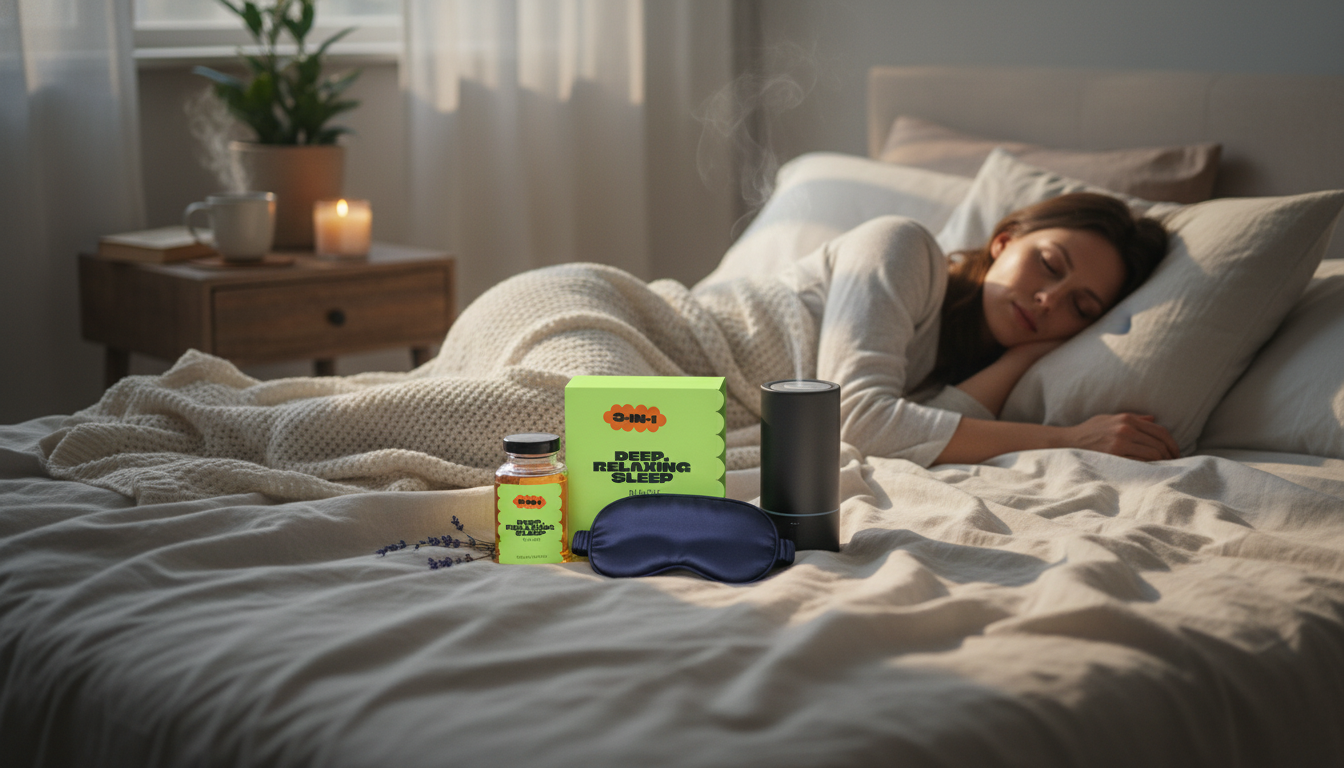
The Deep Sleep Relaxation Toolkit: 3-in-1 Bundle for Deep, Relaxing Sleep is built to function like a small system rather than a random collection of tracks.

  • A structured set of relaxation resources designed to be used together or separately depending on the night
  • Clear guidance on when to use each piece (pre-bed wind-down, in-bed settling, middle-of-the-night resets)
  • A format that supports consistency: the same sequence can be repeated until it becomes automatic

Quick guide: choosing the right tool based on the moment

Situation What to do first Goal Time range
Mind racing before bed Start with calming guidance + a slow breathing pattern Lower mental noise and reduce arousal 5–15 minutes
Body feels tense in bed Use a progressive relaxation-style practice Release muscle tension and signal safety 10–20 minutes
Woke up at 2–4 a.m. Short reset: gentle breath + brief relaxation sequence Return to sleep without frustration 3–10 minutes
Bedtime routine keeps changing Pick one repeatable sequence from the toolkit Build stable sleep cues Nightly

How to use it as a nightly routine

The goal is to make “wind-down” feel like flipping a switch—not negotiating with yourself. Keep it simple and repeatable.

  • Set a consistent start time for the wind-down (even if bedtime varies). A predictable start is often more helpful than forcing an exact lights-out time.
  • Reduce bright light and stimulating content while using the exercises. Dim the room, put the phone on a warm setting, and avoid content that spikes emotion or urgency.
  • Follow a straightforward order: decompress → relax the body → settle into sleep.
  • Commit to 10–14 nights before judging results; the body responds to repetition and familiarity.
  • If sleep is disrupted, use the shortest reset option to avoid fully waking up and turning the night into a “project.”

A practical example sequence (15–25 minutes)

  • Decompress (5–10 minutes): choose calming guidance and pair it with slower breathing.
  • Relax the body (10–15 minutes): use a progressive relaxation-style practice, especially if shoulders, jaw, hands, or legs feel braced.
  • Settle (2–5 minutes): keep attention on an easy, neutral anchor (breath, heaviness, warmth) rather than “trying to fall asleep.”

Common obstacles and small fixes

If loud snoring, gasping, or breathing pauses are part of the picture, it’s worth talking with a clinician. The Mayo Clinic’s overview of insomnia symptoms and causes is a helpful starting point for knowing when to get additional support.

What to expect over the first two weeks

Practical pairing tips (without complicating the routine)

  • Keep the bedroom slightly cool and consistent night to night.
  • Limit alcohol close to bedtime if awakenings are a major issue; it can fragment sleep even when it feels sedating at first.
  • Use caffeine earlier in the day; late caffeine can blunt relaxation practices by keeping baseline arousal elevated.
  • If pets disturb sleep, address the cause of nighttime noise or restlessness so the wind-down routine can do its job. For dog-related disruptions, see When the House Is Quiet but Your Dog Isn’t – Nighttime Barking Guide.

Bundle details at a glance

Purchase snapshot

Item Price Availability
Deep Sleep Relaxation Toolkit: 3-in-1 Bundle for Deep, Relaxing Sleep 267.99 USD In stock

FAQ

How often should the toolkit be used to notice a difference?

Use it nightly for at least 10–14 days so the sequence becomes a stable wind-down cue. On tougher nights or during wake-ups, use the shortest reset option to keep effort low and consistency high.

Can the routine help with waking up in the middle of the night?

Yes—keep it brief and boring: gentle breathing plus a quick relaxation sequence, then return attention to a neutral anchor. Avoid checking the clock or problem-solving in bed, which tends to increase alertness.

Is this suitable for people who are new to relaxation exercises?

Yes. It’s designed to be guided and step-by-step; start with the simplest practice and keep sessions short at first, then extend time as it feels more natural.

Was this article helpful?

Yes No
Leave a comment
Top

Yay! 10% Off Just for You!

Join our community and enjoy 10% off your first order. Subscribe for exclusive deals!

Shopping cart

×