Essential Items for an Emergency Car Kit Checklist
Breakdowns, weather shifts, and unexpected delays can happen on daily commutes and long road trips alike. A well-stocked car kit helps keep passengers safe, visible, warm, and able to communicate while waiting for help. Use the sections below to build a practical kit, then print a checklist to restock on a schedule and before every trip.
What an emergency car kit should do
- Keep everyone safe from traffic: improve visibility, create space, and reduce time outside the vehicle.
- Support basic medical needs: stop bleeding, protect injuries, and manage common issues until help arrives.
- Handle minor vehicle problems: get a flat changed, jump a battery, or add air safely.
- Maintain warmth, hydration, and energy: especially during delays in extreme heat or cold.
- Enable communication and navigation: power a phone, call for help, and share location when service is limited.
For additional guidance on roadside safety and emergency readiness, consult NHTSA, Ready.gov, and the American Red Cross.
Core essentials to keep in every vehicle
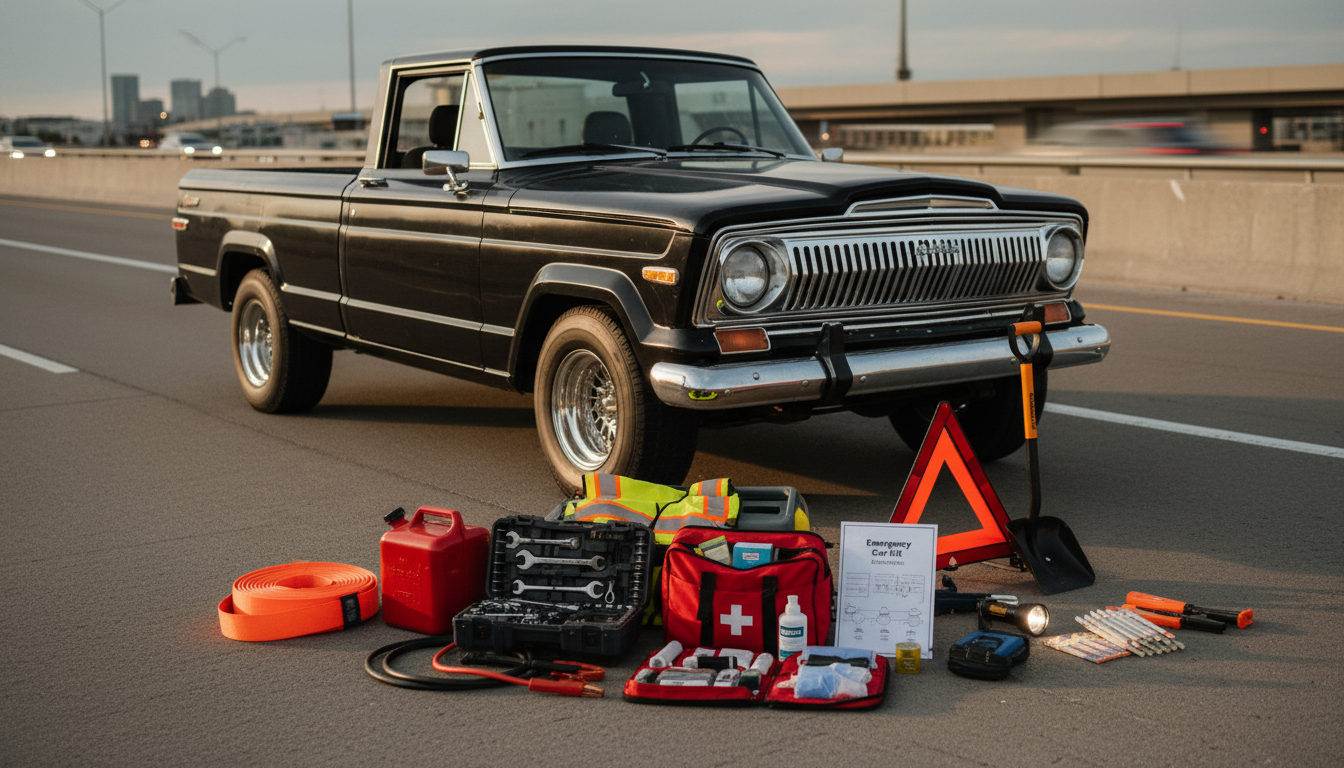
- Visibility and signaling: reflective warning triangles or flares, a high-visibility vest, a bright flashlight/headlamp, and spare batteries.
- First aid: a compact kit with bandages, gauze, tape, antiseptic, gloves, and (if available) a CPR face shield.
- Power and communication: car charger, USB power bank, charging cables, and an emergency contact card.
- Water and shelf-stable snacks: small bottles or pouches of water and non-melting, high-calorie snacks.
- Warmth and shelter: blanket or emergency bivvy, poncho/rain jacket, hand warmers in cold seasons.
- Basic tools: multi-tool, duct tape, zip ties, work gloves, and a small roll of shop towels.
- Documents and cash: copies of insurance/registration (where allowed), pen/paper, and small cash for areas with limited card access.
Printable-style emergency car kit checklist (starter set)
| Category |
Item |
Recommended quantity |
Restock/Check |
| Safety |
Reflective triangles or road flares |
1 set (3 triangles) or 3 flares |
Every 6 months |
| Safety |
High-visibility vest |
1 per driver |
Every 6 months |
| Lighting |
Flashlight or headlamp |
1–2 |
Monthly (batteries) |
| First aid |
Compact first-aid kit |
1 |
Every 6 months |
| Power |
Phone car charger + cables |
1 set |
Before long trips |
| Power |
USB power bank |
1 |
Monthly (charge) |
| Food/Water |
Water |
1–2 liters total |
Quarterly |
| Food/Water |
Shelf-stable snacks |
2–6 servings |
Quarterly (expiry) |
| Warmth |
Blanket or emergency bivvy |
1–2 |
Seasonally |
| Tools |
Work gloves + duct tape |
1 pair + 1 roll |
Every 6 months |
If you want a one-page list you can print and keep in the glove box, use the Printable emergency car kit checklist download to track quantities and restock dates without guessing.
Vehicle recovery and roadside tools
- Spare tire readiness: confirm your spare is correctly inflated and that you have the jack, lug wrench, and wheel lock key (if your wheels use one).
- Tire support: carry a tire pressure gauge, portable inflator, and a quality plug kit (for tread punctures only).
- Battery help: keep jumper cables or a portable jump starter pack; check the charge monthly if using a jump starter.
- Traction: a small bag of sand/cat litter or compact traction boards can help in snow, mud, or loose gravel.
- Basic fluids: windshield washer fluid and a funnel; consider coolant only if stored safely and aligned with manufacturer guidance.
- Tow gear: a tow strap and appropriately rated hooks only if you know proper recovery points and safe use.
Pack these items so they’re accessible without unloading everything. If you’re stuck on a shoulder, minimizing time outside the vehicle is part of the safety plan.
Seasonal add-ons for road trip safety
Winter kit upgrades
- Ice scraper and compact shovel
- Extra gloves/hat and an additional blanket
- More water (stored to reduce freezing when possible)
Summer kit upgrades
- Extra drinking water and electrolyte packets
- Sun protection (sunscreen, hat) and a cooling towel
Rain, storms, smoke, and poor air quality
- Heavier-duty poncho, waterproof bag for documents, and spare wiper fluid
- Disposable respirator masks (fit and local guidance vary) plus sealed water
Personal needs kits for passengers
- Kids: diapers/wipes, a change of clothes, small toys, and kid-friendly snacks.
- Pets: leash, collapsible bowl, pet food, waste bags, and a vaccination/contact info card.
- Medications: a small backup supply when safe and allowed; store temperature-sensitive items appropriately.
- Comfort and hygiene: tissues, hand sanitizer, wet wipes, and a small trash bag roll.
Consider “micro-kits” (one per passenger type) so you can grab exactly what’s needed without rummaging.
How to store and maintain the kit
Printable checklist option
FAQ
How often should an emergency car kit be checked or replaced?
Do a quick monthly check for power banks, flashlights, and inflators, then do a deeper refresh every season or at least every 6 months. Replace anything expired, leaking, damaged, or missing.
What should be kept in the car year-round versus seasonally?
Keep year-round basics like visibility gear, first aid, power/charging, water/snacks, and basic tools in every vehicle. Add winter or summer items based on your climate, plus storm and air-quality extras as conditions change.
Is it better to use jumper cables or a portable jump starter?
Jumper cables are affordable but require a second vehicle and safe positioning. A portable jump starter is self-contained and convenient, but it needs regular charging and must be compatible with your vehicle’s engine and battery requirements.
Recommended for you










Leave a comment