The right necklace can sharpen proportions, brighten the face, and make an outfit feel finished—while the wrong length can visually “cut” a neckline or compete with it. Below are reliable necklace pairings by neckline shape, plus quick rules for length, pendant scale, layering, and metal choices so styling feels effortless for everyday looks and special occasions.
Use these as fast starting points, then fine-tune for personal proportions and the outfit’s vibe.
| Neckline | Best lengths | Best styles | Avoid |
|---|---|---|---|
| Crew | 20–24 in | Pendant, layered chains | Tight chokers that sit on the collar |
| V-neck | 16–20 in | V pendant, Y-lariat | Round bibs that fight the V |
| Scoop | 16–18 in | Solitaire pendant, short strand | Very long pendants that drop past the scoop |
| Sweetheart | 16–18 in | Curved collar, small statement | Sharp angles that clash with curves |
| Square | 16–20 in | Bar, geometric, angular links | Overly rounded chokers (unless very minimal) |
| Off-shoulder | 14–16 in | Choker, collar, short statement | Mid-length pieces that land on the neckline edge |
| Turtleneck | 24–36 in | Long pendant, bold chain, layering | Tiny short pendants that disappear |
| Halter | 14–18 in (or none) | Minimal collar, delicate drop | Busy layering that competes with straps |
When you’re investing in pieces you’ll wear often, keep jewelry care in mind too—gentle cleaning and smart storage help preserve shine and prevent tangling. The GIA jewelry care and cleaning guide is a practical reference for everyday maintenance.
If layering is part of your everyday style, it helps to think of necklaces as design elements with a long history of signaling taste and identity—an interesting deep dive lives at Smithsonian Magazine’s history coverage.
For packing, outfit planning, or simplifying daily choices, pairing rules stay consistent even as trends shift. To keep wardrobe planning just as streamlined, pair jewelry planning with a closet system like Plan Your Perfect Year-Round Wardrobe (seasonal wardrobe checklist).
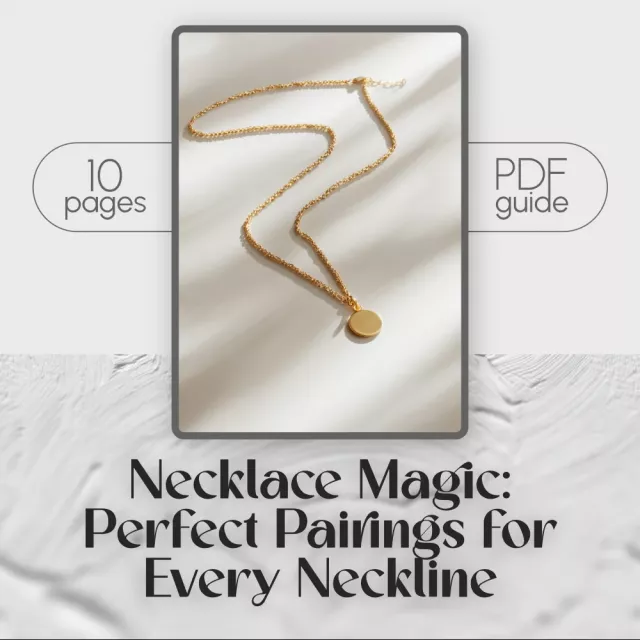
Necklace Magic: Perfect Pairings for Every Neckline (digital guide) is a quick-reference download designed to match necklace styles and lengths to neckline shapes. It includes practical tips for proportion, layering, and choosing flattering focal points—handy for everyday outfits, events, and capsule-wardrobe planning.
V-shaped pendants, teardrops, and Y-lariats look especially flattering because they mirror the neckline and create a clean vertical line. Aim for about 16–20 inches so the focal point sits centered within the V instead of landing on the seam.
Most necklaces look best below the crew collar line, usually around 20–24 inches, to avoid a crowded look at the neckline. A very fine, minimal choker can work as a deliberate styling choice, but it should sit cleanly above the collar without bunching.
Go longer—about 24–36 inches—or choose a bold chain or layered strands to add dimension over the fabric. Long lines create contrast and keep the look from feeling flat, especially with solid-colored knits.
If you have any questions, here are some useful links:











Leave a comment