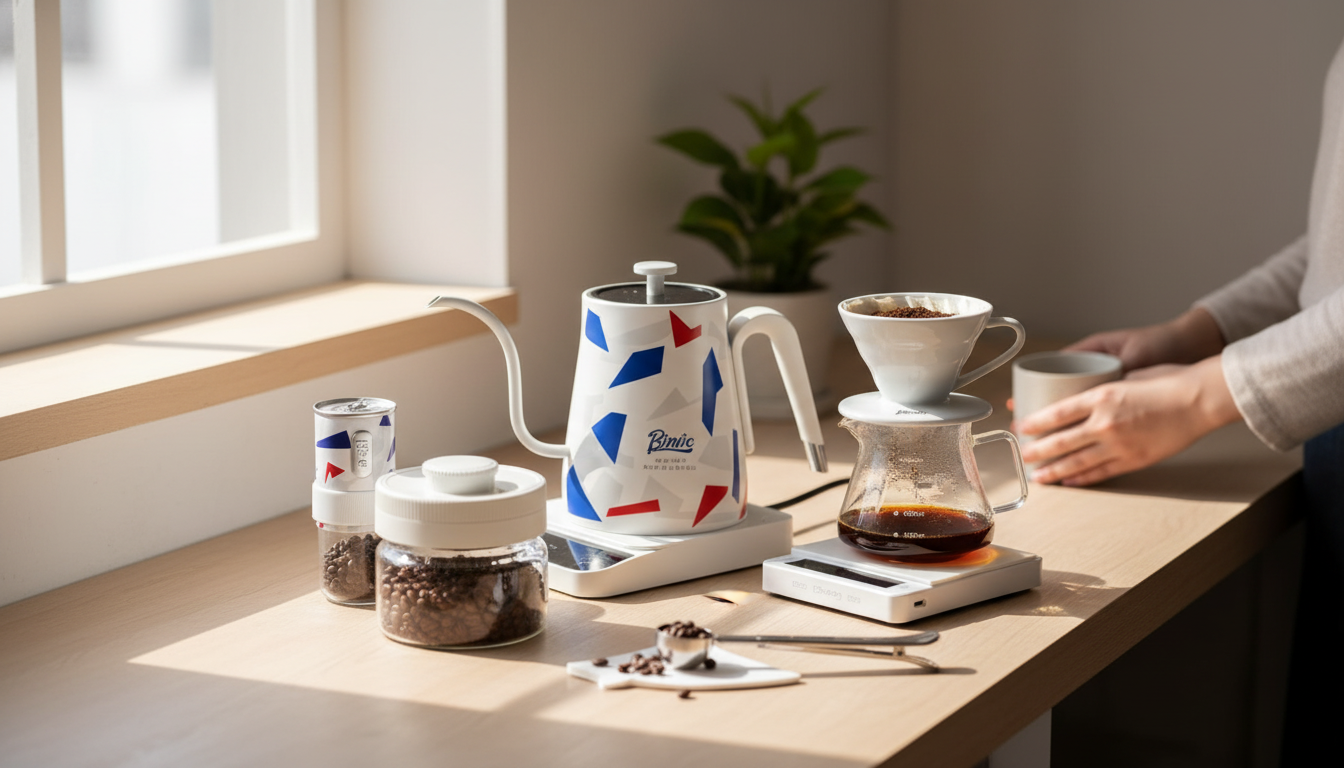
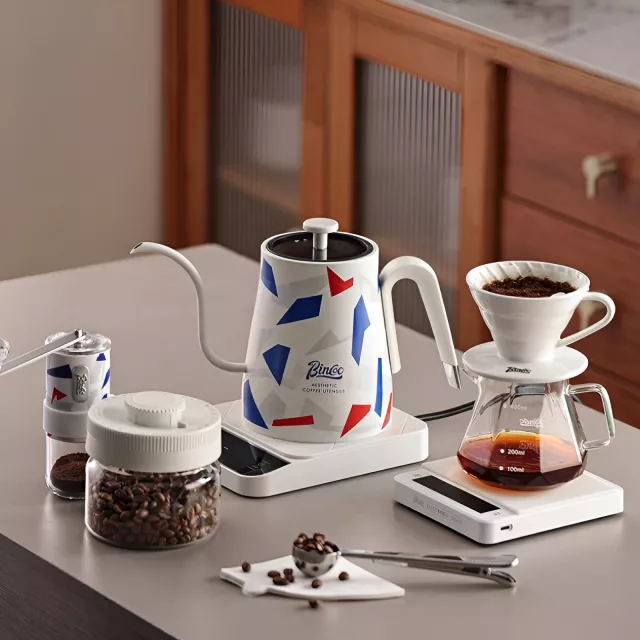
A gooseneck kettle is built for control: steady flow, accurate temperature, and repeatable results across pour-over coffee and a wide range of teas. This 1350W model pairs fast heating with precision temperature control to help dial in flavor, reduce bitterness, and make daily brewing more consistent—whether you’re chasing clarity in a V60 or keeping delicate green tea from turning sharp.
Compared with standard electric kettles, a gooseneck is designed around precision—especially when the water stream matters as much as the temperature.
If mornings are busy or you’re brewing multiple cups back-to-back, wattage and control can make the routine feel dramatically smoother.
To see current availability and details, visit the 1350W Gooseneck Electric Kettle with Precision Temperature Control for Coffee & Tea product page.
Temperature is one of the easiest levers to adjust flavor. Cooler water often highlights brightness and can reduce harshness; hotter water can increase extraction, body, and perceived sweetness—until it pushes into bitterness or astringency.
| Drink / Style | Starting temperature | Notes |
|---|---|---|
| Pour-over coffee (light roast) | 90–94°C (194–201°F) | Increase temp for more sweetness/body; decrease if bitterness appears. |
| Pour-over coffee (medium roast) | 93–96°C (199–205°F) | A common range for balanced extraction. |
| Pour-over coffee (dark roast) | 88–93°C (190–199°F) | Slightly cooler can reduce harshness. |
| Green tea | 70–80°C (158–176°F) | Too hot can taste bitter or grassy. |
| Oolong tea | 85–96°C (185–205°F) | Heavily oxidized oolongs often prefer hotter water. |
| Black tea / herbal | 96–100°C (205–212°F) | Near-boiling is typical, adjust for preference. |
A gooseneck kettle can improve pour-over results immediately, but the biggest gains come from pairing controlled pouring with a repeatable routine.
For broader brewing benchmarks and best practices, the Specialty Coffee Association’s guidance is a helpful reference: SCA Coffee Standards (Golden Cup and brewing guidance).
Product link: 1350W Gooseneck Electric Kettle with Precision Temperature Control for Coffee & Tea.
A practical starting range is about 90–96°C (194–205°F). Lighter roasts often do well slightly hotter for more sweetness and extraction, while darker roasts can benefit from slightly cooler water to reduce harsh bitterness; adjust based on taste (sour can indicate too cool, bitter can indicate too hot).
A gooseneck spout gives tighter control over flow rate and aiming, which helps evenly wet the coffee bed or tea infuser with less splashing. That control makes manual brewing more consistent and repeatable.
Most people do well descaling every 4–8 weeks, depending on water hardness and how often the kettle is used. A vinegar-and-water or citric-acid solution can remove mineral buildup; rinse thoroughly afterward so flavors stay clean.
If you have any questions, here are some useful links:












Leave a comment