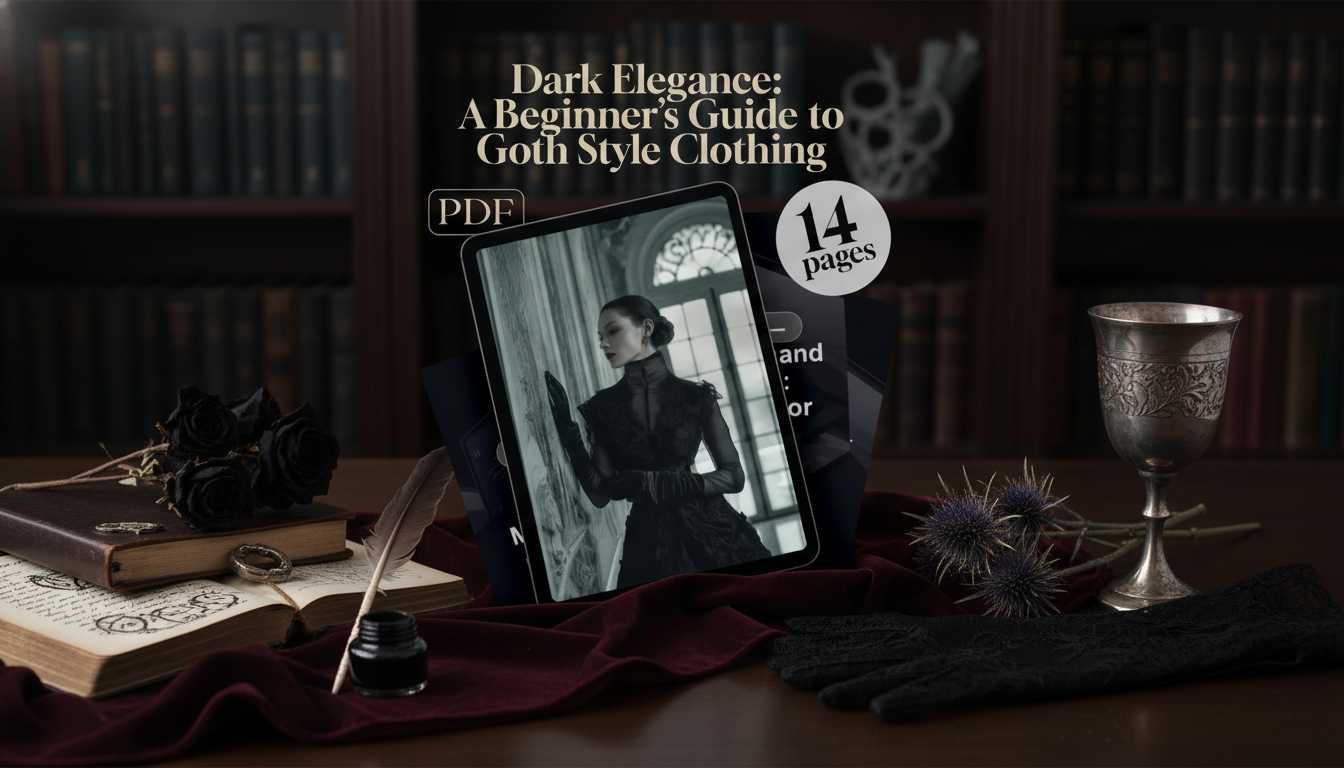
Goth style clothing blends dramatic silhouettes, dark romance, and intentional details into looks that can be subtle for everyday wear or bold for nights out. The most wearable goth wardrobes aren’t built on “more black”—they’re built on shape, texture, and a few signature elements repeated with confidence. Below are clear foundations (pieces, fabrics, accessories, and outfit formulas) so getting dressed feels creative and approachable instead of intimidating. For more guidance, see [PDF] t 9 – West Valley College.
Goth fashion is a spectrum, not a single uniform. Depending on your taste, you might lean romantic (lace and flowing lines), trad (band tees, heavy boots, strong contrast), punk-influenced (hardware and edge), Victorian-inspired (high necks and structured tailoring), minimalist (clean lines and subtle texture), or modern streetwear (oversized layers with deliberate accessories). For a quick cultural overview, see Encyclopaedia Britannica’s entry on the goth subculture and Vogue’s brief history of goth fashion. For further reading, see A Beginner’s Guide to Gothic Fashion Style – Attire Club.
Across substyles, the recurring visual themes are contrast (matte with shine, soft with sharp), “shadow and shine,” structured lines, and expressive details like lace, metal hardware, and thoughtful layering.
One misconception worth dropping early: all-black is optional. Black is a common base because it’s easy to mix, but the “goth” feeling usually comes from silhouette and texture. A charcoal trouser, an oxblood accent, or a crisp icy-white collar can read more gothic than a flat head-to-toe black outfit with no dimension.
Most importantly, goth style should fit your actual life—commute, climate, and comfort. A great wardrobe is one you can repeat without fuss, then elevate when the moment calls for drama.
If you’re starting from scratch, focus on a few versatile staples that mix easily. Think in categories: tops, bottoms, outerwear, footwear, and one “signature” item that makes your outfits feel intentional.
| Piece | Why It Works | Quick Pairing Ideas |
|---|---|---|
| Black fitted tee or bodysuit | Clean base layer for accessories and jackets | Under a blazer + trousers; with skirt + tights |
| Mesh top (layering) | Instant gothic texture without heavy styling | Over bralette with high-waist jeans; under a slip dress |
| Black jeans or trousers | Everyday foundation that can skew casual or formal | With band tee + boots; with blouse + coat |
| Midi skirt (pleated/satin) | Adds movement and romance | With chunky boots + cardigan; with corset belt + blouse |
| Longline coat or blazer | Creates dramatic silhouette and structure | Over all-black base; with silver jewelry accents |
| Combat boots or sleek ankle boots | Grounds the outfit and adds attitude | With skirt + tights; with wide-leg trousers |
To make the capsule feel personal, add one signature item: a corset-inspired belt, dramatic sleeves, a statement necklace, or an iconic coat. A single anchor piece can make simple outfits feel “styled” even on low-effort days.
Texture does the heavy lifting in goth style clothing. Mix materials like velvet, lace, mesh, faux leather, denim, satin, and rib knits to create visual depth. A simple rule that keeps outfits from looking flat: start with a matte base, then add one shine element—patent boots, satin skirt, glossy leather-look jacket, or metal hardware.
Color accents can be subtle but impactful. Oxblood, deep purple, charcoal, icy white, and dark green all work well when used sparingly: a lipstick shade echoed by a bag detail, a dark jewel-toned top under a black blazer, or a charcoal coat over black denim.
For prints and motifs, keep it intentional. Subtle stripes, damask, celestial details, roses, or minimal graphic tees can personalize your look without turning every piece into a statement.
Outfit formulas remove the guesswork. Once you have two or three you love, you can repeat them with small changes (boots, jewelry, outerwear) and still feel fresh.
Try: black tee + black jeans + combat boots + one statement accessory (a choker, a bold belt, or layered chains). Keeping the base simple makes your accessory choice feel deliberate instead of random.
Try: satin or pleated skirt + knit top + long cardigan, with lace or mesh peeking at the neckline or sleeves. This reads gothic without looking costume-y, and it’s especially wearable for daytime.
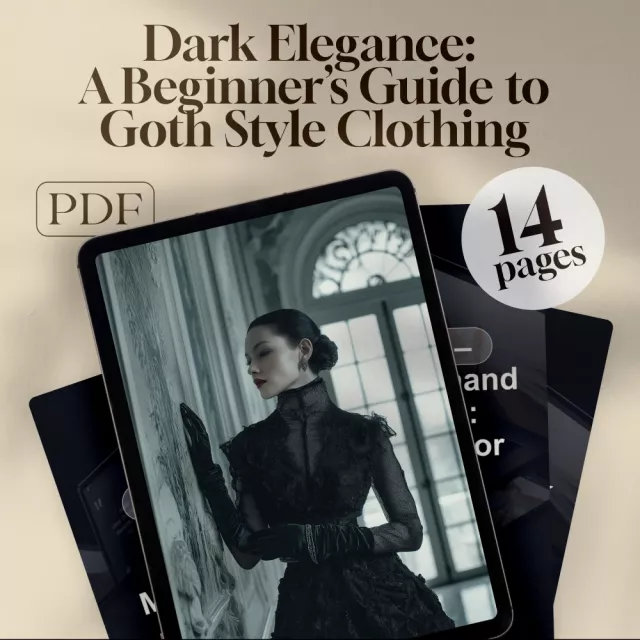
For a guided, step-by-step approach you can keep on your phone, consider Dark Elegance: A Beginner’s Guide to Goth Style Clothing (digital download), which focuses on wearable building blocks and outfit planning.
To keep your closet consistent across seasons (so you don’t buy pieces that only work for one month), use Plan Your Perfect Year-Round Wardrobe (seasonal checklist) to map what you actually need for your climate and routine.
No—black is a common base, but texture and silhouette create the gothic feel. Adding selective accents like oxblood, deep purple, or charcoal can make outfits look richer and more dimensional than flat head-to-toe black.
Start with simple formulas like tee + jeans + boots, blouse + trousers + blazer, or skirt + tights + cardigan. Finish with one statement accessory (belt, choker, or layered chains) to make the look feel intentional.
Choose tailored pieces, clean lines, and subtle textures (like rib knits or satin) with minimal hardware. Keep jewelry refined and makeup controlled—small details can read gothic while still looking polished.
If you have any questions, here are some useful links:












Leave a comment