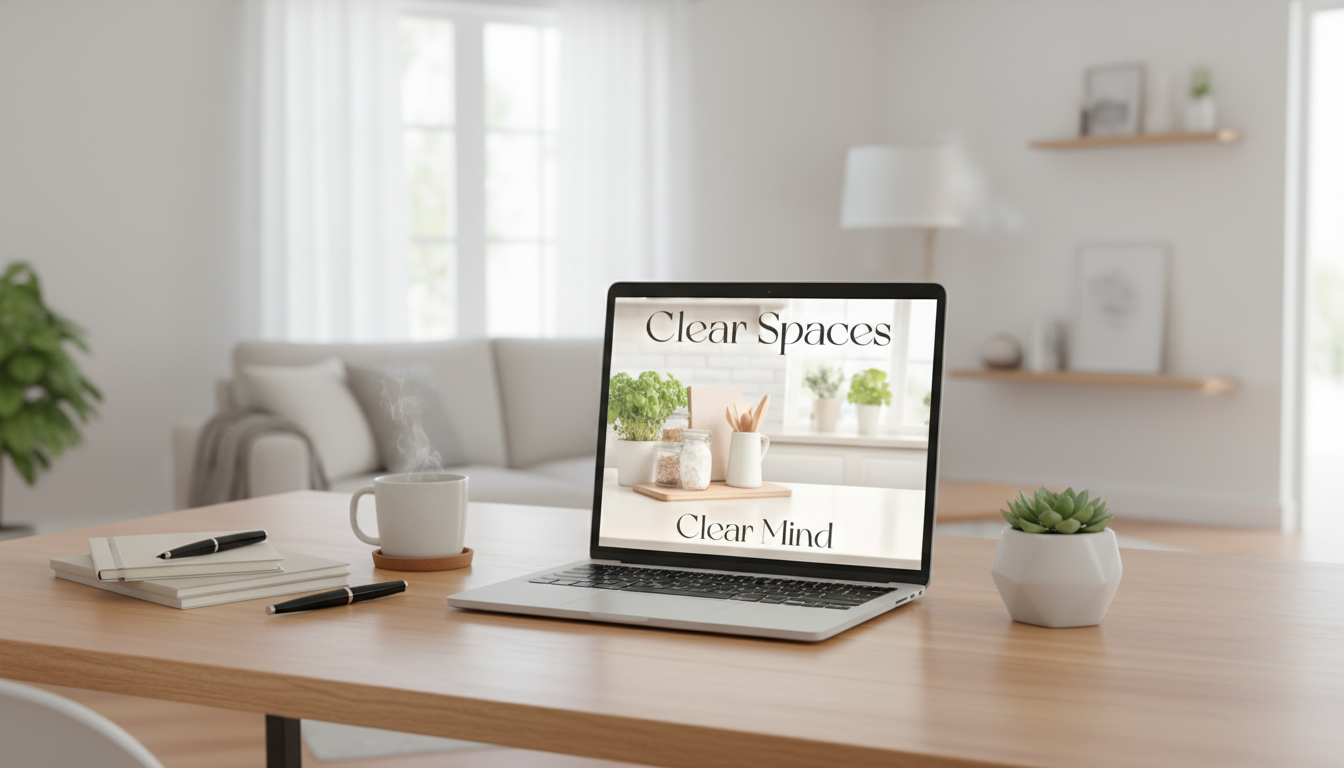
Clutter tends to collect on the same hotspots—kitchen counters, entry tables, nightstands, desks—until every “quick drop” becomes visual noise. A calmer home rarely comes from one big purge; it comes from small, repeatable surface rules that make “tidy” the default. The approach below focuses on practical resets, gentle boundaries for everyday items, and mindful routines that keep surfaces clear without perfectionism.
Surfaces are decision zones. Every item left out represents an unfinished decision: put away, process, repair, recycle, return, or toss. Flat spaces also invite “temporary” piles—mail, bags, cords, receipts—because they’re convenient and visible.
That visibility has a cost. Research links clutter with stress and overwhelm, and visual overload can make it harder to focus on the task in front of you. For a deeper look, see Cleveland Clinic on clutter and stress (source) and Princeton’s findings on how clutter can overload visual processing (source).
The goal isn’t empty countertops for their own sake. It’s creating room to cook, rest, work, and reset without friction—so your home supports you instead of constantly asking for attention.
Instead of trying to control every flat space at once, pick 2–4 surfaces that affect daily life most. Common high-impact picks include the kitchen counter, dining table, coffee table, bathroom vanity, nightstand, desk, or entry console.
| Surface | Clear baseline | Allowed items (examples) | Daily reset time |
|---|---|---|---|
| Kitchen counter | Open workspace for prep | Coffee maker, utensil crock, fruit bowl | 3–5 minutes after dinner |
| Entry table | Landing zone without piles | Key tray, small bowl for sunglasses | 2 minutes before bed |
| Nightstand | Sleep support only | Lamp, book, water, charger | 1 minute each morning |
| Desk | Ready-to-work start | Laptop/monitor, notebook, pen cup | 5 minutes end of workday |
A surface stays clear when “put away” is easier than “set down.” That usually comes down to tiny, specific homes placed where items naturally land.
Consistency beats intensity. A short reset done daily keeps surfaces from ever reaching “weekend cleanup” levels.
Habits form through repetition and reduced friction. If you want the behavioral basics behind making routines stick, the APA’s overview of building healthy habits is a helpful reference (source).
Keep a small, defined set that supports the surface’s purpose (like coffee essentials on a counter). Trays and bowls work best as boundaries: when the container is full, it’s time to put something away.
Use a 3-minute reset: toss trash and move dishes first, return easy items to their homes, and put anything uncertain into one small decision pile. Finish with a quick wipe and stop when the timer ends.
Assign every frequent-use item a clear home, reduce what comes in, and use one-touch rules (hang the coat, file the paper, plug in the device). If one spot keeps re-cluttering, tweak the system so the right action becomes the easiest action.
If you have any questions, here are some useful links:











Leave a comment