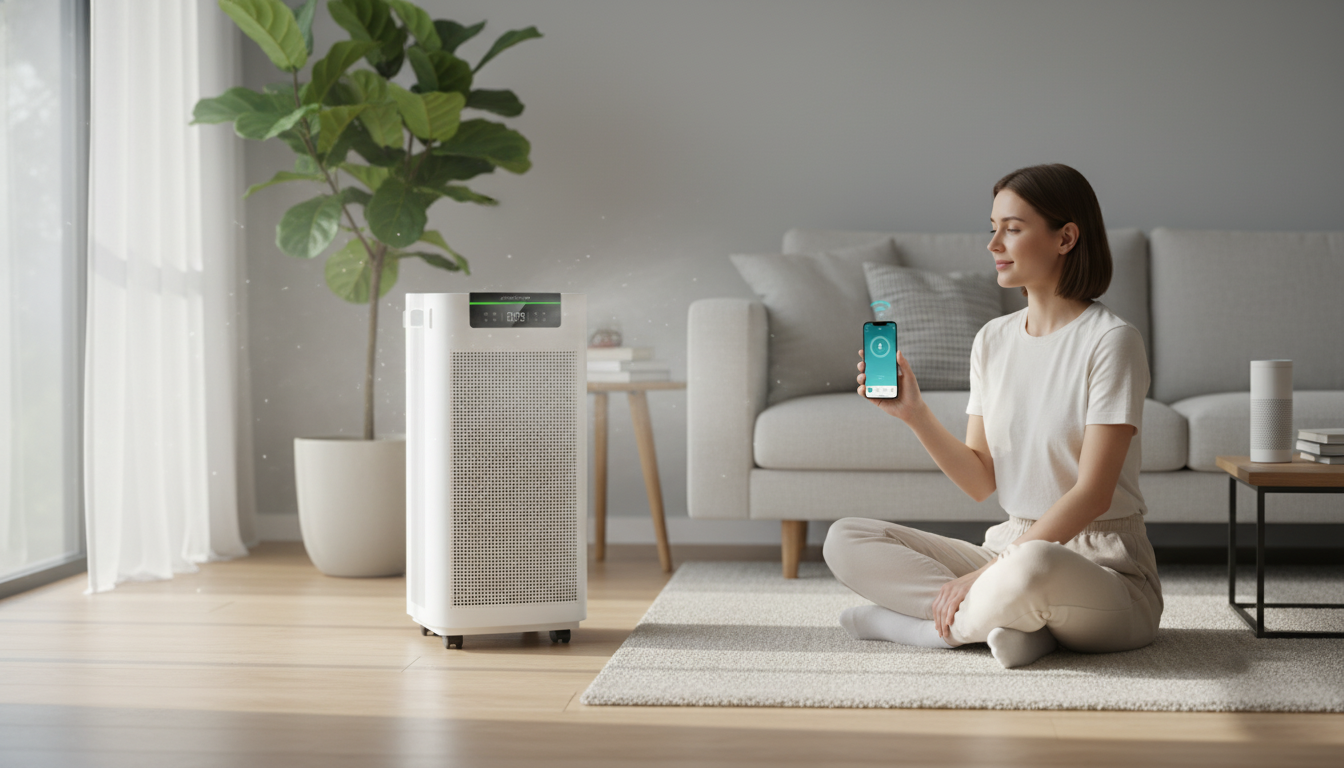
A large-room air purifier needs more than a filter and a fan—it needs the airflow to keep up with open layouts, the sensors to respond to real indoor conditions, and the controls to fit into daily routines. A smart purifier designed for big spaces can take a lot of the guesswork out of everyday air care, especially when it supports both app management and Alexa voice control.
Below is a practical guide to choosing the right coverage, placing it for the best circulation, and using smart features to keep air cleaner with less manual adjusting. For more background on how home air cleaners work and where they fit (and don’t fit) in indoor air quality, the U.S. EPA’s Guide to Air Cleaners in the Home is a helpful reference.
Large-area purifiers are a strong fit for households where air moves freely—or where indoor conditions change quickly. They’re especially useful in:
A coverage claim like “up to 3800 ft²” is a useful starting point, but real performance depends on how quickly the unit can cycle air through the space and how the home is laid out. In simple terms: bigger areas need stronger airflow to keep particle levels consistently lower, not just “some filtration happening somewhere.”
Layout details matter. Higher ceilings increase air volume. Long corridors and multiple doorways can disperse contaminants farther from the purifier. If a large space is broken up by walls and doors, cleaning will be strongest in the room where the purifier sits; adjacent rooms may see less benefit unless doors are open and air is actively mixing.
| Home layout | Best placement | What to avoid |
|---|---|---|
| Open concept (living + kitchen) | Near the center line between major zones | Tucked behind sofas, islands, or tall furniture |
| Long rectangular room | Closer to the middle of the long wall | Placing at one far end only |
| Bedrooms connected to a hallway | In the most-used bedroom or at the hallway junction | Blocking airflow near door thresholds |
| High-traffic family room | Where airflow is unobstructed and away from corners | Pushing flush against walls or curtains |
If you’re comparing models, it also helps to understand CADR (Clean Air Delivery Rate), which is a standardized measure tied to how quickly a purifier can reduce certain particles. AHAM’s overview of CADR explains how it’s used and why it matters for room sizing.
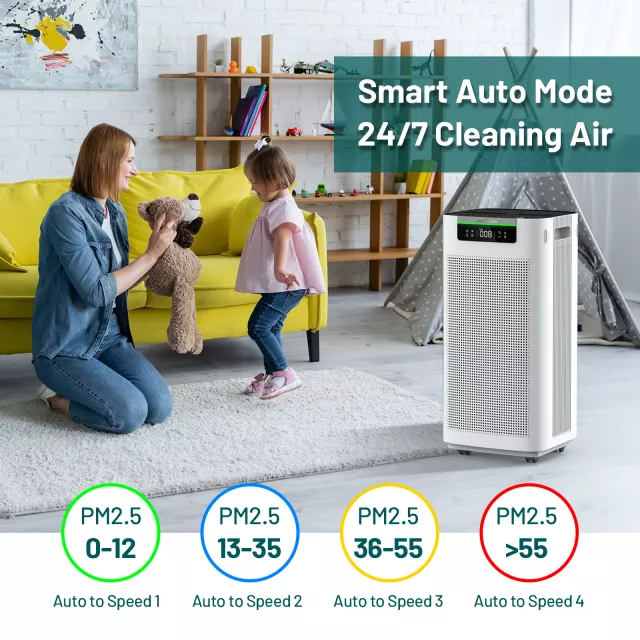
Smart controls aren’t just “nice to have” in a large home. They reduce friction—especially when the purifier is positioned for airflow rather than convenience (for example, centered between living and kitchen areas). With a solid app experience, daily use becomes simpler:
Purifiers also don’t replace ventilation. When outdoor conditions are safe, bringing in fresh air and controlling pollution sources are still important. For broader guidance on airflow and fresh air in buildings, the CDC’s page on ventilation is a solid starting point. And for humidity, a purifier isn’t a dehumidifier; for combustion safety, rely on CO alarms and proper ventilation.
If the goal is strong coverage for a big common area plus modern controls, Smart Air Purifier for Large Rooms 3800 ft² with APP & Alexa Control is built for open layouts where smaller units can’t keep up. App control supports convenient adjustments, scheduling, and quick changes when indoor conditions shift, while Alexa compatibility adds hands-free operation for routines, cooking time, and bedtime changes.
| Feature | What it helps with |
|---|---|
| Large-room coverage (up to 3800 ft²) | Supports open-concept spaces and big common areas |
| App control | Remote changes, scheduling, and at-a-glance status |
| Alexa compatibility | Hands-free operation and routine-friendly control |
| In-stock availability | Ready to ship when a replacement or upgrade is needed |
Air quality is one part of comfort; daily routines are another. If you’re also building calmer habits at home, Think Happy: Affirmations Pack – Affirmations for Positive Thinking Bundle is an in-stock digital download designed for mindset, calm, and daily motivation.
It will be strongest in the room or open area where it’s running, especially in open-concept layouts where air mixes easily. Closed-off rooms, multiple floors, and lots of shut doors usually reduce whole-home impact, so additional units or strategic placement may be needed.
Alexa can handle voice commands and some routines, but automatic responses depend on the purifier’s own sensors, app features, and supported integrations. When true “auto” actions aren’t available through voice control, schedules and in-app automation are typically the most reliable option.
Replacement timing varies with smoke exposure, pets, dust levels, and how many hours per day the unit runs. Check the manufacturer’s guidance and any app/filter indicator, and expect shorter intervals in smoky seasons or high-traffic homes.
If you have any questions, here are some useful links:











Leave a comment