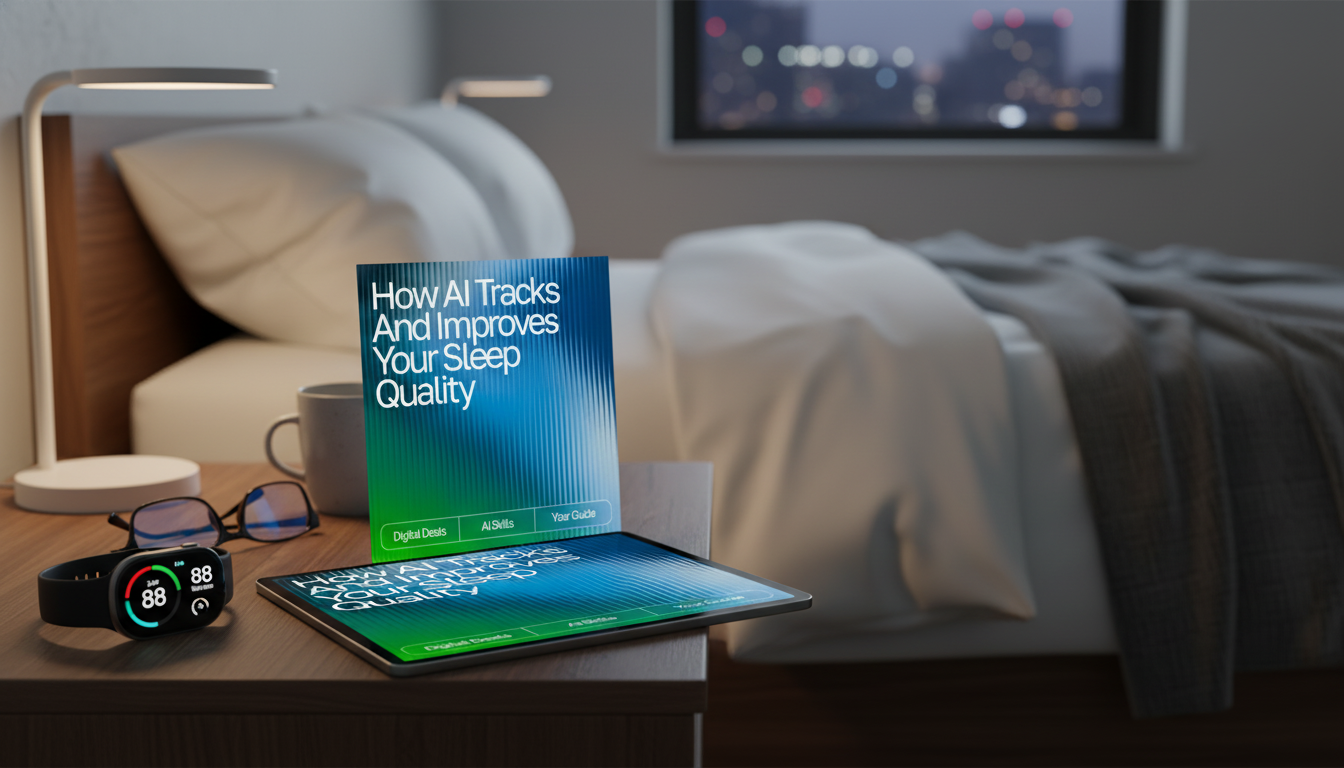
Sleep trackers have moved beyond simple “hours slept” summaries. AI-powered tracking combines sensor data (movement, heart rate, breathing patterns, and temperature) with pattern recognition to estimate sleep stages, flag disruptions, and surface habits that influence recovery. With the right setup and interpretation, AI sleep insights can guide practical changes—bedtime consistency, light exposure, caffeine timing, and stress downshifts—that add up to more restorative nights.
Most consumer sleep trackers gather a mix of signals, then use AI to translate those signals into a nightly report. Common inputs include motion (actigraphy), heart rate and heart rate variability (HRV), skin temperature trends, blood oxygen estimates (SpO₂), and sometimes breathing rate or snore detection via a microphone.
The outputs are usually estimates: sleep/wake timing, total duration, approximated sleep stage distribution (light/deep/REM), awakenings, and a composite sleep score. It’s useful data—but it’s not the same as a clinical sleep study. Consumer devices typically infer sleep stages indirectly; they do not measure brainwaves like a polysomnogram used in clinical settings.
Accuracy tends to improve when wear is consistent, the fit is correct, and permissions are enabled for features you actually want (such as snore detection). The most reliable way to use sleep tracking is to monitor trends over weeks rather than getting locked into a single-night number that can swing due to travel, stress, or a late meal.
AI sleep tracking works because it can spot patterns in messy, real-world data. First, algorithms clean signals by filtering out noise from movement spikes, loose sensor contact, or irregular sampling. Next, the system extracts features—useful markers such as resting heart rate dips, HRV changes, micro-awakening likelihood, and how stable your night appears.
Machine-learning models then classify sleep and wake periods and estimate sleep stages using patterns learned from large datasets. Many platforms also build personal baselines, comparing tonight’s data to your own history to highlight meaningful deviations (like illness, unusually high stress, alcohol, or late eating). Finally, the best apps add an “action layer,” turning correlations into practical recommendations tied to next-day outcomes like energy, mood, or readiness.
| Signal captured | What it can suggest | How to act on it |
|---|---|---|
| Movement / restlessness | Fragmented sleep, discomfort, environment issues | Adjust mattress/pillow, reduce noise/light, check room temperature, limit late screen time |
| Heart rate trend | Poor recovery, stress load, illness onset | Earlier wind-down, lighter evening meals, consider a rest day, monitor hydration and stress |
| HRV trend | Autonomic recovery and stress balance | Prioritize consistent sleep schedule, relaxation techniques, reduce alcohol, adjust training intensity |
| SpO₂ estimates | Possible breathing disruptions | Review nasal congestion/allergens, side-sleeping, consult a clinician if persistent low readings |
| Skin temperature trend | Circadian shifts, overheating, hormonal changes | Cooler bedroom, breathable bedding, earlier exercise timing, consistent wake time |
A tracker is only as helpful as the consistency of the data it captures. Start by choosing the form factor you’ll actually use nightly: a wrist wearable, ring, mattress sensor, or bedside device. Comfort wins—because missed nights create blind spots and weaker baselines.
Next, focus on wear and fit. Sensors should be snug (not tight) and placed as recommended so the device can read continuously without gaps. If your app supports it, log or confirm bedtime and wake time during the first week to help the AI learn your patterns and reduce mis-detections.
Context matters too. Connecting lifestyle logs—caffeine, alcohol, exercise timing, and late meals—gives AI the “why” behind changes in heart rate, HRV, and restlessness. Finally, protect sleep from the device itself: disable unnecessary notifications and use a consistent sleep mode to avoid wake-ups caused by vibrations or bright screens.
Also review sharing settings: integrations with fitness apps and third-party services can increase exposure. Remember the limits—consumer sleep tracking is not a medical diagnosis. If you have persistent symptoms like loud snoring with daytime sleepiness, or repeated abnormal readings, a clinician can help interpret what’s going on. For general sleep health guidance, reputable resources include the National Heart, Lung, and Blood Institute, the American Academy of Sleep Medicine, and the CDC.
Consumer AI sleep trackers estimate sleep stages using indirect signals like movement and heart rate, so they’re best for tracking trends and habit feedback over time. A clinical sleep study measures brain activity and other medical-grade signals and can diagnose sleep disorders.
Prioritize bedtime and wake-time consistency, total sleep time, and awakenings, then use resting heart rate and HRV trends to gauge recovery. Treat sleep stage estimates as helpful context rather than the main target.
SpO₂ dips or snore indicators can suggest a potential concern, but a tracker cannot diagnose sleep apnea. If readings are repeatedly abnormal or symptoms persist, a medical evaluation is the safest next step.
If you have any questions, here are some useful links:












Leave a comment