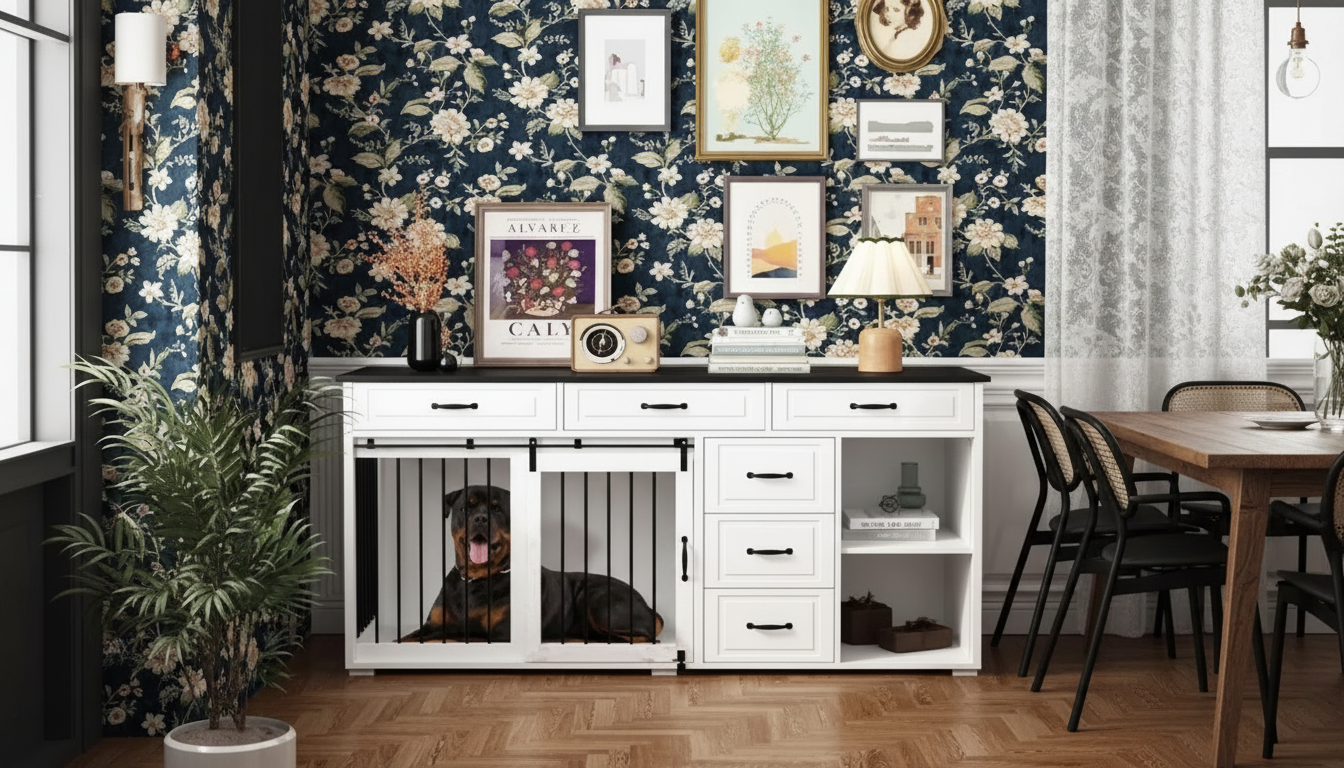
A crate can feel like a cozy den for a dog, but the look and the mess of leashes, treats, and grooming tools can take over a room. A wooden crate that doubles as furniture and adds drawers and shelves helps keep essentials close, reduces visual clutter, and blends into everyday living spaces. This guide covers what to look for, how to set it up safely, and how to keep it looking great over time.
Furniture-style wooden crates are designed to feel like a natural part of the room instead of an add-on. That matters in the places dogs actually spend time: living rooms, bedrooms, and even entryways.
That “one spot” routine is especially helpful during crate training. For training best practices and safety reminders, the American Veterinary Medical Association (AVMA) crate training guide and Humane World for Animals crate training resource are solid references.
Not every wooden dog crate table is built the same. A few quick checks up front can prevent common frustrations like a cramped interior, awkward door swing, or storage that looks good but doesn’t actually hold what you use daily.
| Need | What to measure or verify | Why it matters |
|---|---|---|
| Dog comfort | Dog length (nose to base of tail) and shoulder height vs. interior crate space | Prevents cramped positioning and improves crate acceptance |
| Room fit | Exterior width/depth/height and door clearance | Avoids blocking walkways and ensures the door opens fully |
| Noise control | Bar spacing, door rattle, foot pads | Reduces clanking that can stress dogs and disturb sleep |
| Everyday storage | Drawer depth, shelf height, weight capacity | Keeps leashes, brushes, and treats organized and accessible |
| Cleaning | Removable tray or wipeable base, sealed surfaces | Simplifies accident cleanup and odor control |
The best-looking crate won’t feel calming if it’s placed in a stressful spot or stocked with the wrong items. Aim for a setup that supports relaxation, predictable routines, and safe access to your supplies.
For broader everyday safety reminders (including what’s safe to keep within reach), the ASPCA’s general dog care guidance is a helpful baseline.
If nighttime restlessness is part of the routine you’re trying to calm down, pairing a consistent crate area with a predictable evening pattern can help. For additional guidance focused on evening noise, see When the House Is Quiet but Your Dog Isn’t – Nighttime Barking Guide.
If the goal is one clean, functional station—crate below, organization beside it—Wooden Dog Crate Furniture with Storage Drawers & Shelves combines a dedicated crate space with built-in storage for everyday supplies. It’s especially useful in entryways and living rooms where gear tends to pile up and a cleaner look is preferred.
Yes, as long as the crate is appropriately sized, well-ventilated, and your dog is comfortable with the routine. Keep the crate in a temperature-stable area (not next to strong heat or AC airflow) and maintain consistent bedtime cues so the space stays relaxing.
Store only pet-safe items, use bins or organizers to prevent spills, and keep medications or household chemicals elsewhere. If your dog is nosy or paw-happy, add childproof latches to drawers and keep sharp tools (like nail clippers) in a closed container.
A calm spot with airflow and visibility tends to work best—often a living room corner or bedroom wall where your dog can see the household without being in the middle of it. Leave enough clearance for the door to open fully and avoid placing it directly beside radiators, fireplaces, or high-blast vents.
If you have any questions, here are some useful links:












Leave a comment