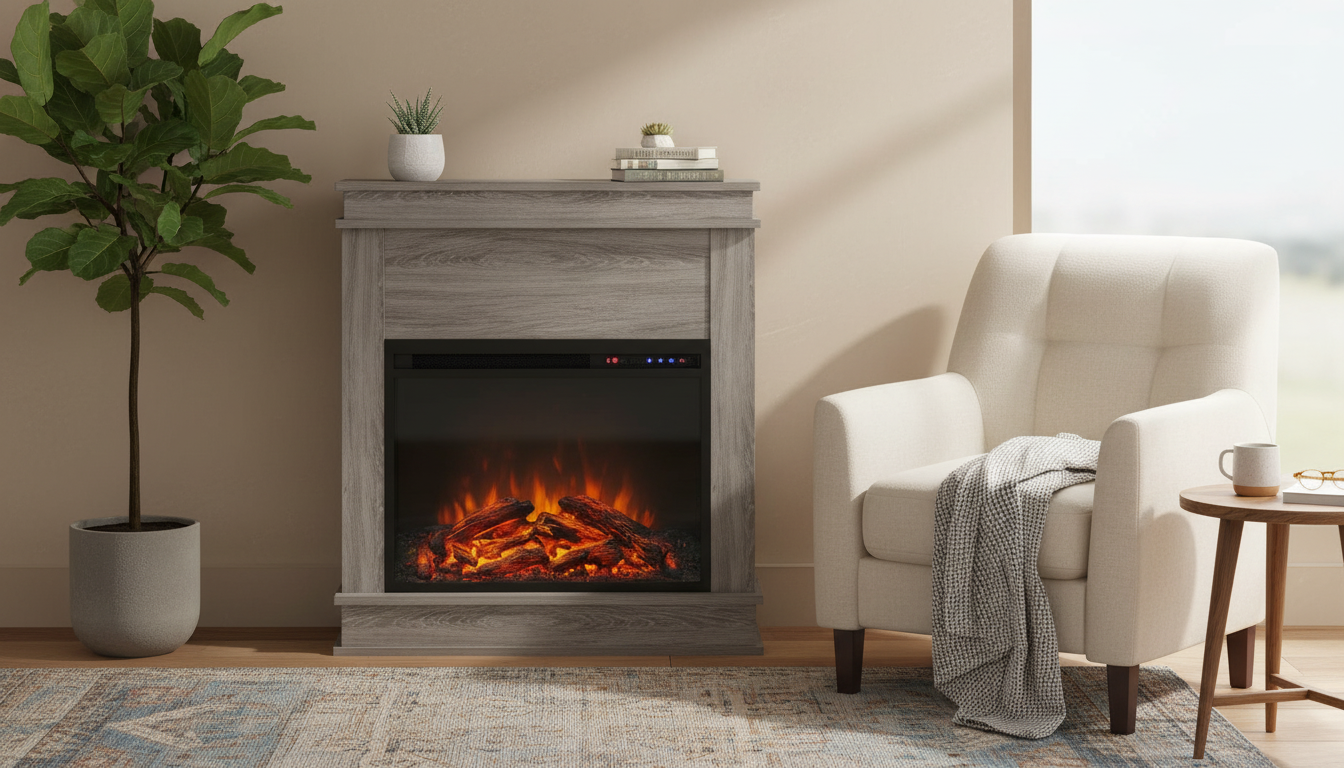
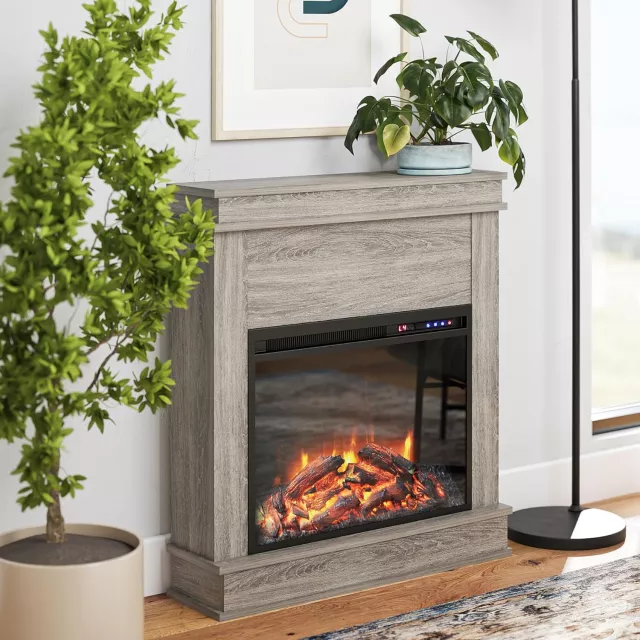
A freestanding electric fireplace with a mantel can deliver the charm of a traditional hearth without construction, venting, or ash cleanup. A 30-inch format is especially appealing for apartments, bedrooms, and cozier living rooms where a larger wall unit might feel oversized. With remote control convenience, it’s easy to enjoy flame ambiance or quick comfort heat from the couch or bed.
A mantel-style electric fireplace does more than warm the air—it helps define the room. Because it’s freestanding, it can create a “built-in” focal point without committing to a permanent installation. That flexibility is useful for seasonal rearranging, redecorating, or moving to a new home.
When an electric fireplace becomes part of everyday living, small details make the biggest difference. The freestanding format keeps setup straightforward, while the mantel silhouette adds warmth to the room even when the unit is off.
For general heating safety guidance, it’s worth reviewing recommendations from trusted sources like the U.S. Fire Administration and the NFPA, especially if the fireplace will be used frequently during winter months.
Planning ahead helps the fireplace look intentional and operate comfortably. Even with a modest 30-inch width, placement decisions affect the visual balance of the room and how warm air flows into the seating area.
| Checkpoint | Why it matters |
|---|---|
| Outlet access | Helps avoid cord hazards and keeps the installation tidy. |
| Clearance around vents | Supports safe airflow and consistent heating performance. |
| Furniture distance | Improves comfort and reduces exposure to warm air streams. |
| Wall scale and symmetry | Keeps the fireplace from looking too small or too dominant. |
| Décor on mantel | Maintains a clean look while avoiding heat-sensitive items near warm surfaces. |
A remote turns an electric fireplace from “nice to have” into something that gets used more often. Instead of waiting until you’re already up, you can turn it on for short bursts of warmth—especially helpful during mornings, after a shower, or before bed.
Electric fireplaces are generally low-maintenance, but routine care helps keep them looking sharp and running efficiently. A little attention to dust and airflow goes a long way over the season.
For additional efficiency tips and guidance on space heater use, the U.S. Department of Energy offers practical considerations on where and how supplemental heat can help.
No—electric fireplaces typically don’t require a chimney or gas venting. Proper airflow clearance around the unit still matters, so follow the manufacturer’s spacing and placement instructions.
Many electric fireplaces offer a flame-only mode for ambiance without raising the room temperature. Check the control options and the included manual to confirm the available settings.
Plugging directly into a wall outlet is generally the safest approach. If an extension cord is unavoidable, use one that’s properly rated per the manufacturer’s guidance and avoid overloading the circuit.
If you have any questions, here are some useful links:












Leave a comment