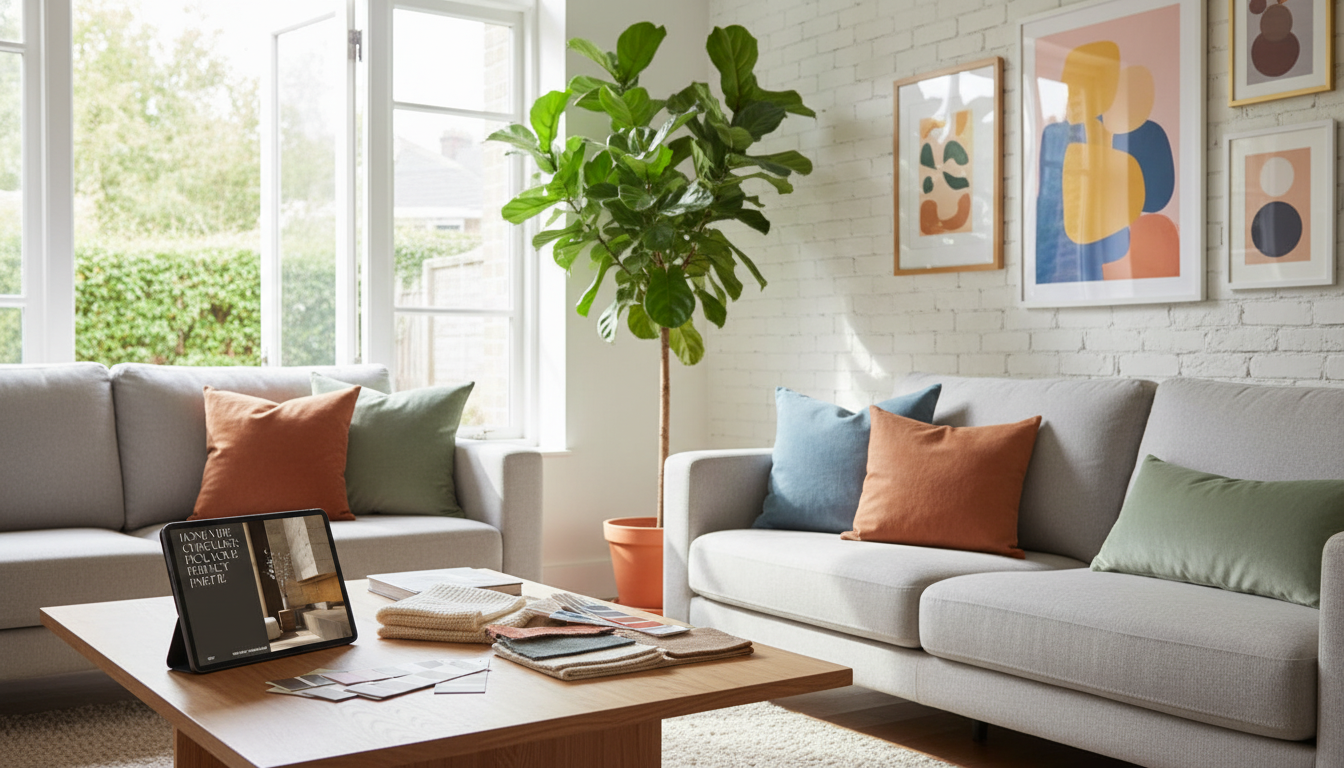
Color is one of the fastest ways to change how a room feels—before furniture moves, before art goes up, before a single pillow is swapped. A simple checklist keeps choices consistent across walls, textiles, wood tones, and lighting so each space lands on the mood it’s meant to support. Use the steps below to define the vibe, choose a balanced palette, and apply it with confidence from paint to accents. For more guidance, see Common Errors in English Usage – Wsu – Washington State University.
Strong color palettes start with a clear goal. Instead of choosing “pretty” colors in isolation, pick a mood, then let the room’s purpose and fixed finishes guide the final decisions. For further reading, see HGEC Newspaper Articles.
If you prefer a guided, fill-in-the-blanks approach, the Home Vibe Checklist: Pick Your Perfect Palette (digital color mood guide) turns these decisions into a quick repeatable workflow—helpful when choosing paint, textiles, and accents together.
A flexible palette prevents “start-over” redecorating. The easiest way to get that flexibility is to keep a simple structure and make undertones intentional.
When comparing paint options, Light Reflectance Value (LRV) can help you predict how light or deep a color will feel on large surfaces. Sherwin-Williams has a clear explainer on Understanding LRV (Light Reflectance Value).
Once the palette structure is set, choosing actual colors becomes much easier. Use these vibe cues as a starting point, then fine-tune with your room’s fixed materials (flooring, stone, cabinetry, and upholstery).
| Vibe | Best base neutrals | Strong supporting colors | Accents that work well | Avoid when possible |
|---|---|---|---|---|
| Cozy | Cream, warm greige, camel | Terracotta, olive, cocoa | Brass, matte black, rust | Icy whites, overly cool grays |
| Vibrant | Crisp white, light warm gray | Cobalt, emerald, coral, marigold | High-contrast patterns, lacquer, chrome | Too many saturated colors at once |
| Calming | Soft white, pale taupe, sand | Sage, dusty blue, misty green | Natural linen, light oak, soft charcoal | Harsh contrast, neon accents |
For a deeper look at how color associations can influence mood, Pantone’s overview of color psychology and meaning is a useful reference point.
Lighting can turn “perfect” swatches into surprises. Before committing to a wall color or major textile, evaluate it in the room’s real conditions.
For foundational lighting concepts (distribution, glare, and recommended practices), the Illuminating Engineering Society provides helpful background in its lighting fundamentals.
Recommended downloads:
Home Vibe Checklist: Pick Your Perfect Palette | Digital Color Mood Guide,
Plan Your Perfect Year-Round Wardrobe (seasonal color planning checklist),
Think Happy: Affirmations Pack.
Three to five total (including neutrals) usually feels cohesive: one base neutral, one main color, one supporting color, and one or two accents. For a finished look, repeat each key color at least twice in the space.
Use warm undertones and keep the largest surfaces (walls, big upholstery) lighter, then add depth through small dark anchors like frames, legs, or accents. Layer in texture—linen, wool, and wood—and use warm lighting around 2700K to reinforce the cozy feel.
Paint large sample swatches on multiple walls and watch them in morning, afternoon, and evening light. Compare each option next to fixed finishes like floors or counters and evaluate it under the room’s actual bulbs before buying gallons.
If you have any questions, here are some useful links:











Leave a comment